Exchange Ranking
 Top Exchanges
 24h Volume Ranking
 Popularity Ranking
 Exchange BTC Balance
 Proof of Reserves
 Decentralized Exchanges
 Funding Rate
 Funding Heatmap
 Liquidation Data
 Max Pain
 Long/Short Ratio
 Whale L/S Ratio
 Binance/Okex/Huobi L/S
 Bitfinex Margin L/S
 ETF Tracker
 Solana ETF
 XRP ETF
 Hong Kong ETF
 Bitcoin Treasuries
 Crypto Reversal
 Ethereum Reserves
 HyperLiquid Wallet Analysis
 Hyperliquid Whale Watch
 Large Transactions
 On-chain Movement
 Bitcoin ROI
 Stablecoin Market Cap
 Options Analysis
 News
 Articles
 Economic Calendar
 Features
 Wallet
 Contract Calculator


 Security
 Collections
 Watchlist
 Following
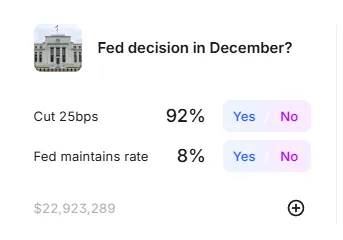
In the short term, I remain pessimistic but also optimistic about risk assets. Artificial intelligence-related capital expenditures, consumer spending driven by wealthy individuals, and still-high nominal growth are all factors that tend to be beneficial for profits, from a structural perspective.
Additionally, simply put, when the cost of borrowing decreases, “risk assets” generally perform well.
At the same time, I have serious doubts about what the future ten years hold in terms of this issue as we currently understand it:
● If sovereign debt problems aren’t addressed through measures like inflation control or unexpected events, they will inevitably arise.
● Birth rates and population structures will gradually limit real growth, while also increasing political risks.
● China and Asia will increasingly determine the scope of opportunities and potential risks.
So, yes, the journey continues. We should continue to hold onto those profitable assets. But when building our investment portfolios, we must remember that the paths of currency devaluation and population structure changes will be complex, rather than linear.
If you only look at housing evaluations, you might think we live in one of the best worlds possible within the entire macro-world.
Economic growth is “resilient,” inflation is steadily moving towards its target, artificial intelligence represents a long-term advantage, and Asia serves as a new source of diversification.
HSBC's latest outlook for the first quarter of 2026 clearly reflects this consensus: staying in the stock market bull market, increasing investments in technology and communication services, focusing on investments in artificial intelligence leaders and Asia, securing income from high-quality assets, and using alternative investments and diversified portfolios to manage volatility.
I actually agree with some of these points. But if we stop there, we’ll miss the real truth.
On the surface, we still have:
● The profit cycles created by artificial intelligence capital expenditures are far more extreme than people imagine.
● The mechanisms for transmitting monetary effects are partially ineffective, as a large amount of public debt is accumulated on private balance sheets.
● Structural time bombs—such as sovereign debt, declining birth rates, and geopolitical rearrangements—are insignificant for the first quarter, but they will be crucial for defining what constitutes “risk assets” in ten years.
This article aims to reconcile these two worlds: a clear, marketable story of resilience, with the chaotic, path-dependent reality of macroeconomics.
1. Consensus
Let’s start with the basic institutional conditions.
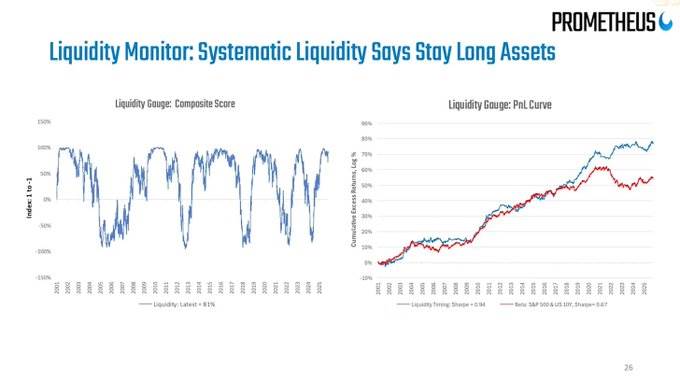
Their framework is simple:
1) The stock market bull market continues, but volatility has increased.
2) Diversification across industries/styles: increasing investments in technology and communication sectors, along with utilities (electricity demand), industrial, and financial sectors, to achieve value diversification.
3) Utilize alternative investments and diversified asset strategies to cope with market downturns—gold, hedge funds, private credit/equity investments, infrastructure investments, and volatility-driven strategies.
4) Income generation: Due to narrowing price differentials, it is recommended to shift from high-yield stocks to investment-grade stocks. Increase investments in emerging market sovereign bonds in hard currencies, as well as bonds denominated in local currencies of emerging markets, to generate royalty income and unrelated returns. Use infrastructure and volatility-driven strategies as tools for hedging against inflation.
5) Asia as a driver of diversification: Countries like China, Hong Kong, Japan, Singapore, and South Korea have high rates of obesity.
Theme: Asia’s data centers are booming. Chinese innovative companies can enhance their net asset value return ratios by using stock repurchases, dividends, and mergers and acquisitions. Additionally, high-quality Asian credit assets can be utilized.
In terms of fixed income investments, they have expressed interest in:
● Global investment-grade corporate bonds, which offer higher yields and provide opportunities to lock in profits during periods of declining policy interest rates.
● Increasing investments in emerging market local currency bonds to generate arbitrage profits, foreign exchange gains, and diversify stock investment risks.
● Due to high valuations and unique credit risks, it is recommended to reduce global high-yield bond holdings slightly.
This is a typical strategy of “early stages of a cycle but not yet over”: follow the trend, diversify investments, and let Asia, artificial intelligence, and yield-oriented investments support your portfolio.
I believe their predictions for the next 6 to 12 months are generally correct. But this is precisely where most macroeconomic analyses end—and it marks the beginning of real risks.
2. There are cracks beneath the surface…
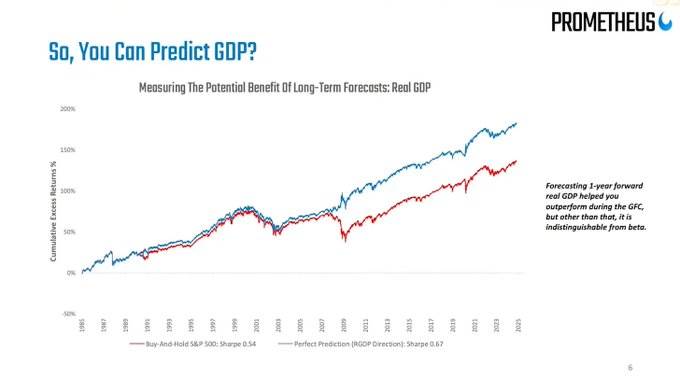
If we reconstruct the economy using the same principles as Prometheus’ Ahan—based on Kalecki-Levy identities, where profits are functions of investment, consumption, wages, and depreciation—then we will have completely different emotional responses to the same data.

(Tweet source: adamonfinance)
Overall situation:
● Nominal spending in the United States is around 4% to 5%. This spending is essentially converted into corporate revenues.
● The problem is: who is spending money, and where does the money come from?
Using savings rates as an excuse (“consumers are unable to pay back debts”) ignores the true nature of the problem. Even if wage growth slows down and employment conditions worsen, wealthy families can still continue to spend, as long as they can withdraw cash, use credit, and convert capital gains into cash. From a macroeconomic perspective, consumption exceeding income is funded through expenditures outside the balance sheet, rather than through profit and loss statements.
In simple terms, this means that a large portion of marginal demand comes from wealthy families with large balance sheets, not from broader real income growth.
This is why the data seems so contradictory:
● Total consumption remains stable.
● 劳动力市场逐渐疲软,尤其是低端市场。
● 收入和资产所有权方面的不平等现象加剧,强化了这种趋势。
这就是我与“韧性”论调的分歧所在。总体数据看起来不错,是因为它们越来越被收入、财富和资本获取渠道的顶层人群所主导。
对股票市场而言,这仍然是利好消息(利润并不在意收入来自一个富裕买家还是十个贫困买家)。但对社会稳定、政治和长期增长而言,这是一个需要慢慢消化的问题。
3、AI资本支出
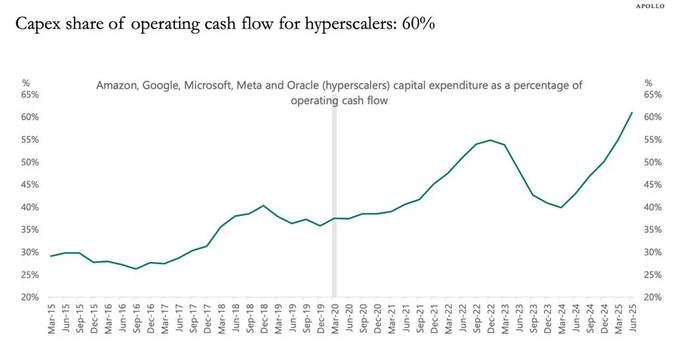
目前最被低估的动态是人工智能资本支出及其对利润的影响(通过Kalecki-Levy视角)。
简短版本:
● 投资支出是别人今天的收入。
● 相关成本(折旧)会在数年内缓慢显现,而不是立即产生。
因此,当人工智能超大规模数据中心和相关领域的参与者将总投资增加20%时:
● 收入和利润因此获得大幅前期增长。
● 随着时间的推移,折旧率会逐渐上升,大致与通货膨胀率同步。
● 数据显示,在任何时间点,利润的最佳解释因素都是总投资减去资本消耗。
This leads to a very simple yet controversial conclusion: although the wave of artificial intelligence capital expenditures continues, it actually stimulates the business cycle and promotes profit maximization.
You can’t stand in front of that train.
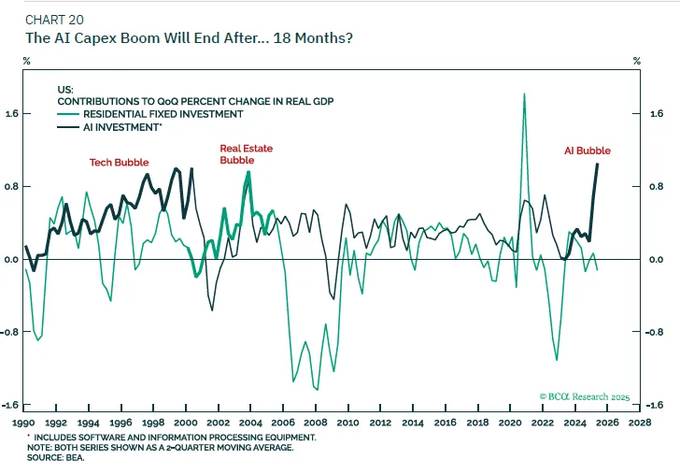
This aligns perfectly with HSBC’s heavy investment in technology sectors, as well as its emphasis on “evolving AI ecosystems”. Even if they don’t explicitly state it, they are actually achieving these profit targets ahead of schedule.
What I doubt is the narrative surrounding second-order derivatives:
● I don’t believe that relying solely on artificial intelligence capital expenditures will enable us to achieve a 6% increase in real GDP.
● Once the window for free cash flow financing narrows and the balance sheet becomes saturated, capital expenditures will slow down.
● As depreciation becomes more significant, the momentum behind “profit growth” gradually weakens. We return to the basic trends of population growth and productivity growth—in developed countries, this trend isn’t particularly noticeable.
So my position is:
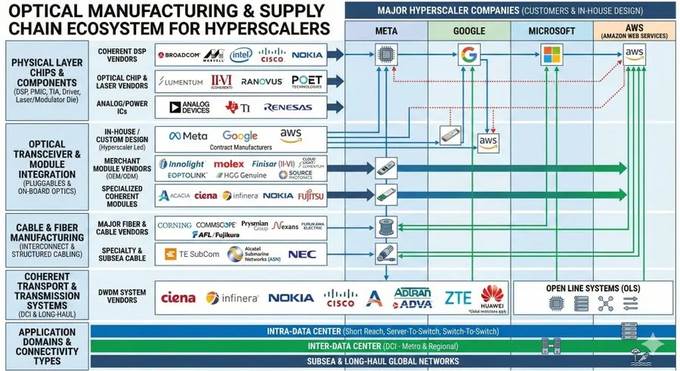
● Strategy: As total investment data continues to rise, we should remain supportive of those who benefit from artificial intelligence capital expenditures (chips, data center infrastructure, power grids, niche software).
● Strategic level: Consider this as a cyclical profit boom, rather than a permanent reset in growth trends.
4. Bonds, liquidity, and semi-effective transmission mechanisms
Things started to get strange from there on.
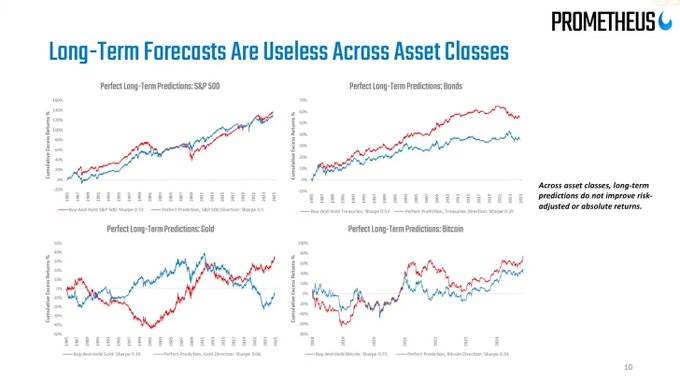
Historically, an increase of 500 basis points in interest rates would significantly reduce the net interest income of the private sector. But now, trillions of dollars in public debt are treated as safe assets on the balance sheets of private households. This relationship has been distorted:
● An increase in interest rates means that holders of government bonds and reserves will receive higher interest income.
● Many businesses and households have debts with fixed interest rates (especially mortgages).
● The result is that the net interest burden on the private sector does not behave as expected by standard macroeconomics textbooks.
So,
● The Federal Reserve now faces a dilemma: on one hand, inflation remains above target levels; on the other hand, labor market data is weak.
● The best opportunity in the interest rate market this year is the mean reversion of bond prices—buying after a sharp drop and selling after another sharp drop. This is because the macroeconomic situation never follows a clear pattern of “major cuts” or “further increases in interest rates”.
Regarding “liquidity”, my opinion is straightforward:
● Currently, the Federal Reserve’s balance sheet is essentially just a symbolic tool. Compared to other parts of the system, its net changes are too slow and insignificant to serve as a meaningful signal for trading decisions.
● The real game is played between the balance sheets of private sectors and the repurchase markets. It’s who borrows, who lends, and what the interest rate differential is that matters most.
It is not possible to reach such conclusions based solely on a chart indicating “net liquidity”. You need to consider the following factors:
● The shape of the yield curve (there should be no curvature in a highly liquid environment).
● SOFR, CP, credit spreads, and basis points.
● Risk preferences across different assets (high and low beta coefficients, high-quality versus low-quality assets).
5. Debt, population structure, and challenges faced by China
5.1. Sovereign debt: Everyone knows the outcome, but they don’t know the path to get there.
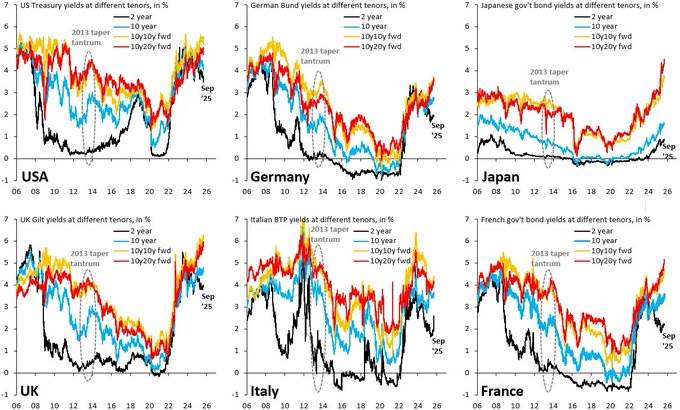
The issue of international sovereign debt is one of the most important macroeconomic problems of our time. And everyone knows the “solution”:
Devalue the currency until the proportion of debt relative to GDP becomes manageable.
The unresolved issue is the path to achieve this goal.
● Orderly financial repression: Maintain a nominal growth rate higher than nominal yields, allow inflation to rise slightly, and gradually reduce real debt.
● Chaotic periods: The market reacts strongly to changes in fiscal policies. Premiums for different maturities are suddenly re-priced. Unforeseen events involving weaker sovereign nations.
Earlier this year, due to fiscal concerns, long-term U.S. bond yields soared. We have already experienced this situation. HSBC also noted that the concept of “negative fiscal trajectory” reached its peak around the time of the OBBB Act, and then gradually subsided as the Federal Reserve shifted its focus to economic growth.
我觉得我们还没完成那部电影的制作。
5.2、生育率:缓慢发生的宏观危机
全球生育率低于更替水平,这种情况不仅发生在欧洲和东亚,现在也发生在伊朗、土耳其等地,并且逐渐蔓延到非洲部分地区,这实际上是物种层面的宏观冲击,却被包装成人口结构方面的一个脚注。
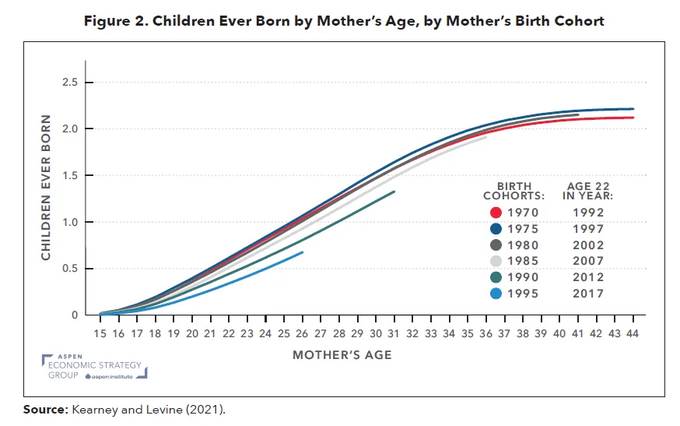
低生育率意味着:
● 较高的抚养比。
● 结构性实际增长放缓。
● 长期存在的政治压力要求进行财富再分配(因为资本回报超过工资增长)。
当你们结合使用时:
● 人工智能资本支出将带来资本深化冲击,以及
● 生育率下降作为劳动力供给冲击,
你会进入一个这样的世界:
● 从名义价值来看,资本所有者的收益非常可观。
● 政治体制变得更加不稳定。
● 货币政策陷入两难境地:既要支持经济增长,又要避免劳动力最终获得定价权时出现通货膨胀性的工资-价格螺旋式上升。
虽然这不在您标准的12个月房屋展望幻灯片中,但对于5-15年的资产配置期限来说,这绝对至关重要。
5.3、中国:被遗漏的变量
HSBC is optimistic about the Asian market. It believes that factors such as policy-driven innovation, the potential of artificial intelligence and cloud technologies, governance reforms, higher return on equity, low valuations, and the overall decline in interest rates in Asia will all contribute to the economic development of Asia.

My views:
● Over a period of 5-10 years, investing in China and North Asia without any investments at all is riskier than investing in some other areas with higher risks.
● Over a period of 1-3 years, the main risks are not macroeconomic ones, but rather policy and geopolitical risks (sanctions, export controls, restrictions on capital flows).
So, yes: I prefer Asian stocks that involve artificial intelligence, semiconductors, data center infrastructure, along with high dividends and quality credit. But this needs to be evaluated against a clear budget for policy risks, not just based on the Sharpe ratio.