Exchange Ranking
 Top Exchanges
 24h Volume Ranking
 Popularity Ranking
 Exchange BTC Balance
 Proof of Reserves
 Decentralized Exchanges
 Funding Rate
 Funding Heatmap
 Liquidation Data
 Max Pain
 Long/Short Ratio
 Whale L/S Ratio
 Binance/Okex/Huobi L/S
 Bitfinex Margin L/S
 ETF Tracker
 Solana ETF
 XRP ETF
 Hong Kong ETF
 Bitcoin Treasuries
 Crypto Reversal
 Ethereum Reserves
 HyperLiquid Wallet Analysis
 Hyperliquid Whale Watch
 Large Transactions
 On-chain Movement
 Bitcoin ROI
 Stablecoin Market Cap
 Options Analysis
 News
 Articles
 Economic Calendar
 Features
 Wallet
 Contract Calculator


 Security
 Collections
 Watchlist
 Following
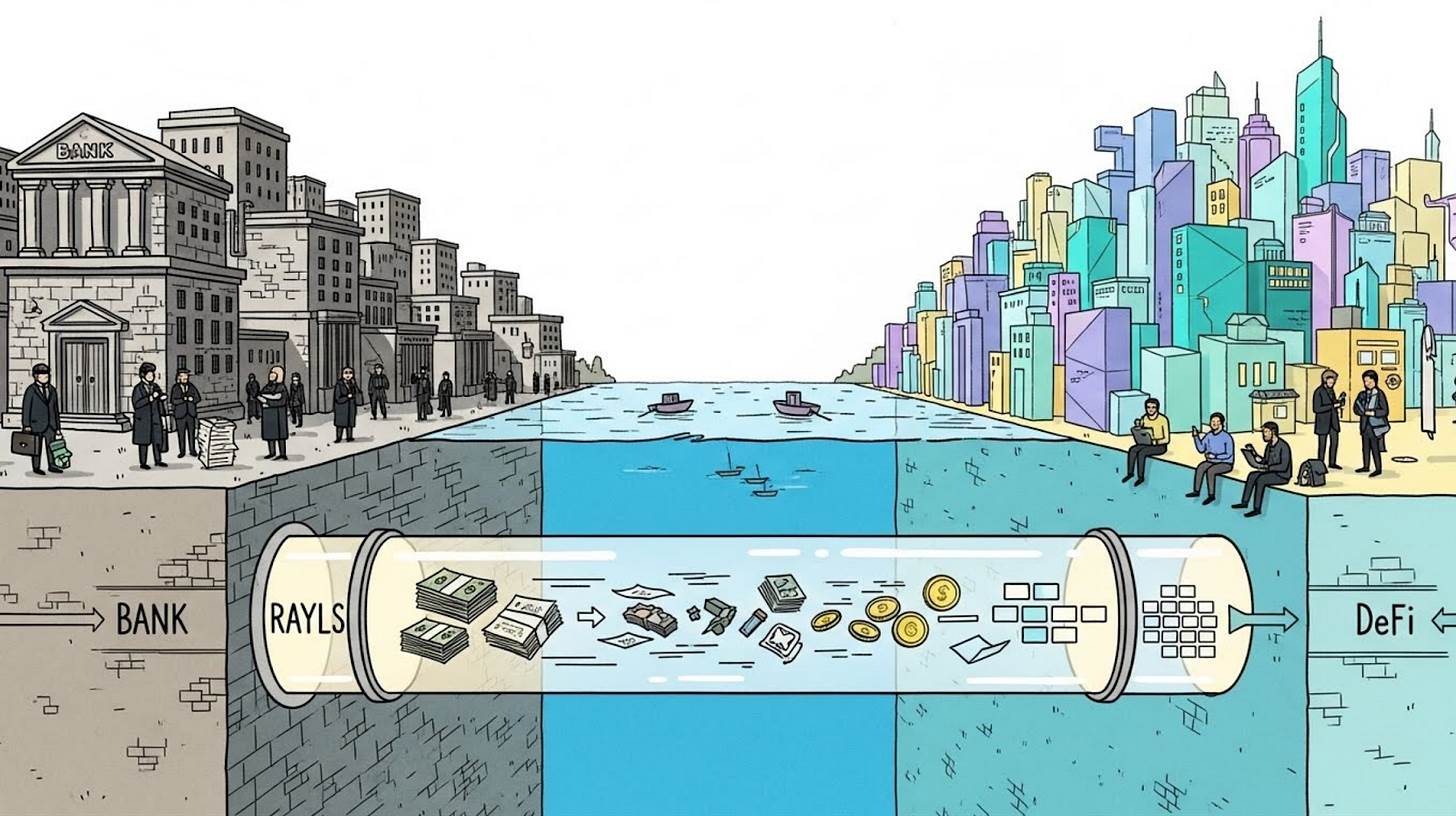
The infrastructure that connects the traditional financial system, valued at 100 trillion dollars, with DeFi represents a significant obstacle to global financial systems. This obstacle causes billions of dollars in losses each year, yet most bank users are completely unaware of this issue.
When you make international transfers, the funds actually don’t flow freely. At least not in the traditional sense. Instead, it’s a process of “message passing” between various intermediary banks. Each bank maintains its own records, charges fees, and causes delays in the transaction process. Your funds thus remain stuck in the middle. SWIFT messages are exchanged between banks, compliance officers manually check sanctions lists, and the settlement systems established in the 1970s still slowly determine the ownership of the funds.
This system is designed precisely to achieve this. Each bank operates its own database. Every transaction between banks requires verification. Every cross-border payment involves multiple intermediaries, as banks from different countries cannot access each other’s records. Technically, this infrastructure works fine. But it’s extremely slow, costly, and vulnerable to security threats.
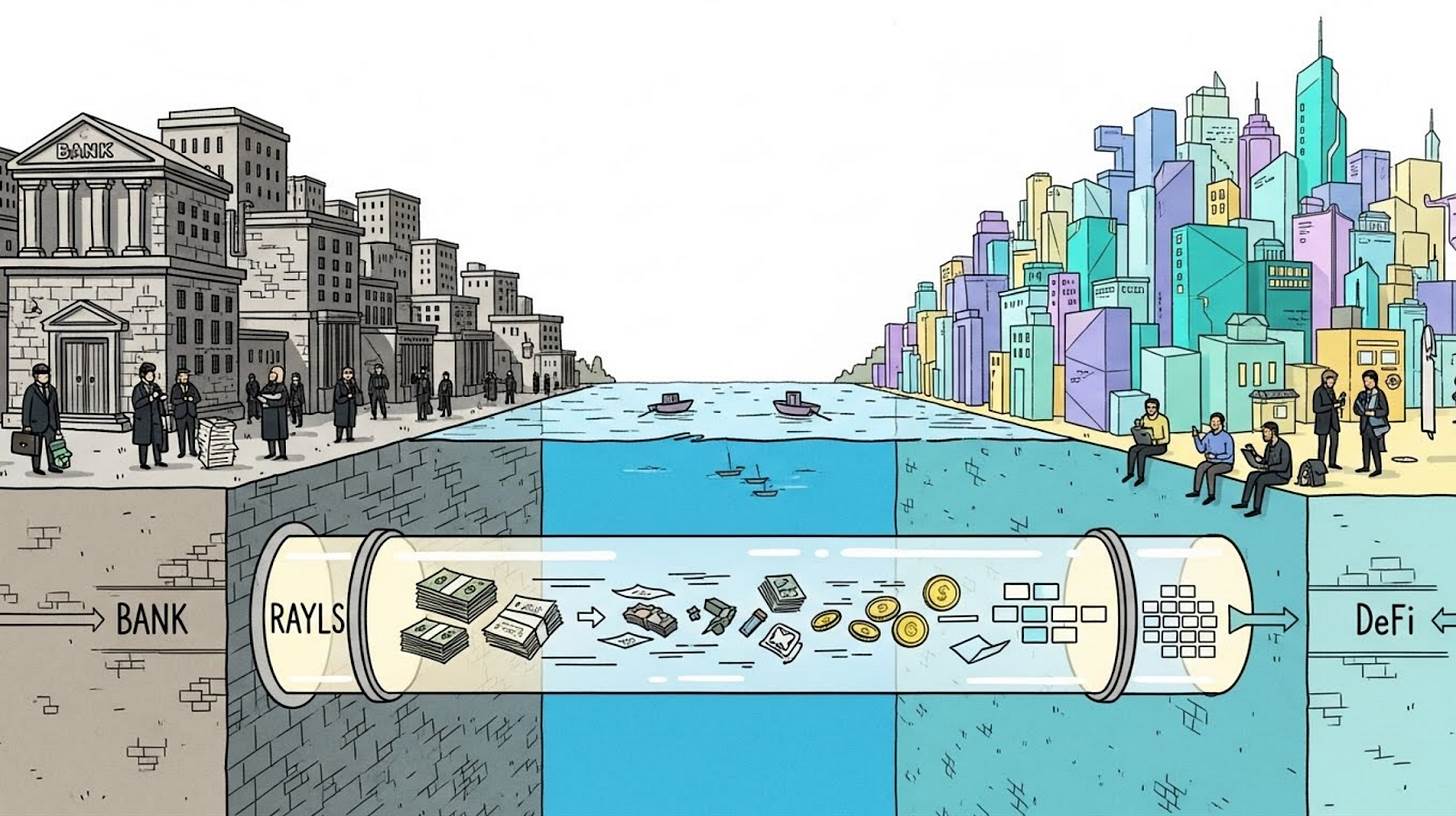
The slogan of blockchain technology is always: “We can solve this problem.” A shared ledger, immediate settlement, no intermediaries needed. All we need to do is place all transactions on Ethereum, and then those obstacles will disappear.
But banks cannot do this. They cannot store customers’ deposits on public blockchains where transaction amounts can be viewed by anyone. They also cannot route payments through networks where authorized wallets act as validators. They cannot operate on infrastructure whose gas fees may fluctuate dramatically due to the NFT boom or DeFi settlement cascades. They also cannot explain to regulators why they should trust billions of dollars in funds into a system maintained by anonymous validators from unknown jurisdictions.
Thus, we have been stuck in a deadlock for ten years. Blockchain developers have created amazing technologies, but banks are reluctant to get involved. Banks have conducted pilot projects on private blockchains, but these pilots have never been connected to any real systems. The trillions of dollars trapped in the traditional financial system remain trapped within that old framework, while decentralized finance (DeFi) remains isolated within its own ecosystem.
Rayls believes they have found a way to end this impasse.
When privacy is not something optional…
The core issue isn’t technical. The blockchain itself is feasible. The problem is that blockchain is suitable for decentralized finance precisely because it features transparency, no need for permissions, and state sharing. These features make blockchain unsuitable for use by banks.