Exchange Ranking
 Top Exchanges
 24h Volume Ranking
 Popularity Ranking
 Exchange BTC Balance
 Proof of Reserves
 Decentralized Exchanges
 Funding Rate
 Funding Heatmap
 Liquidation Data
 Max Pain
 Long/Short Ratio
 Whale L/S Ratio
 Binance/Okex/Huobi L/S
 Bitfinex Margin L/S
 ETF Tracker
 Solana ETF
 XRP ETF
 Hong Kong ETF
 Bitcoin Treasuries
 Crypto Reversal
 Ethereum Reserves
 HyperLiquid Wallet Analysis
 Hyperliquid Whale Watch
 Large Transactions
 On-chain Movement
 Bitcoin ROI
 Stablecoin Market Cap
 Options Analysis
 News
 Articles
 Economic Calendar
 Features
 Wallet
 Contract Calculator


 Security
 Collections
 Watchlist
 Following
The nervousness preceding the interest rate cut is spreading across the world. From Wall Street to the crypto market, everyone is waiting for the Fed’s final interest rate decision this year. What is even more worrying than the interest rates themselves is the growing disagreement within the Fed and the secret battles over who will become its next chairman. With inflation declining and employment data continuing to weaken, markets are betting that policies will shift towards easing measures. At the same time, they are also confused about future policy directions. This world’s most influential central bank seems to be at a crossroads filled with uncertainties—any move could have a significant impact on global assets.
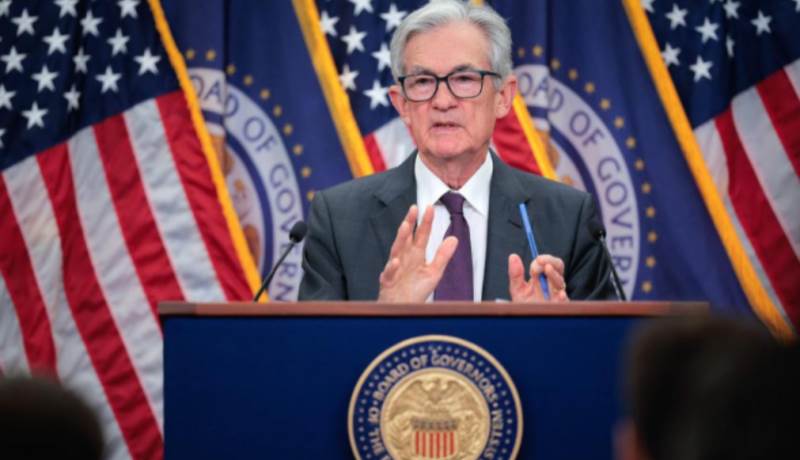
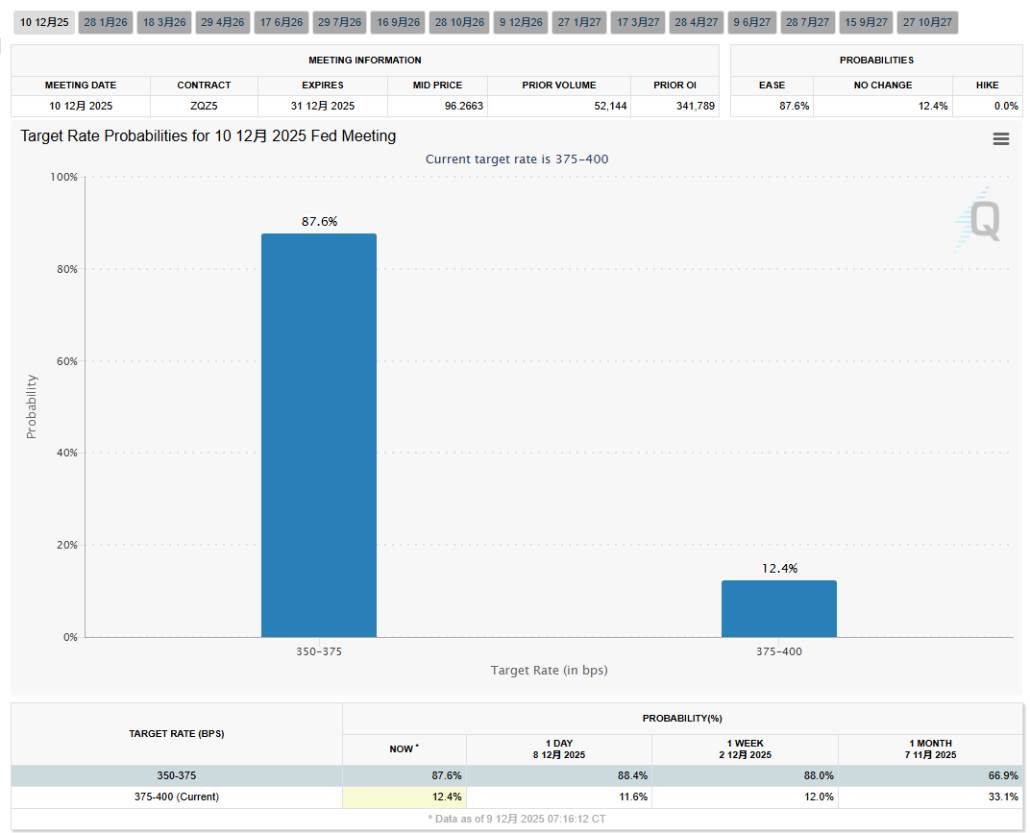
Tonight, the Fed will announce its December interest rate decision. Market expectations are that the rate will be cut by 25 basis points. This could be another victory for the “moderates” under the current chairman Powell, as he struggles to balance the sharp opposition between the “hawks” and “doves”.
Meanwhile, a power game that will determine the Fed’s direction for the next few years is reaching its final stage. President Trump has canceled the scheduled final interview, hinting that he already has a candidate in mind. Kevin Hassett, one of the most popular candidates, openly stated before the meeting that there is “ plenty of room” for further rate cuts, with the potential for reductions of up to 25 basis points.

One “dividing” interest rate cut…
● The last Fed interest rate meeting in 2025 began in an atmosphere of high division and uncertainty. Markets generally expected the Fed to announce its third rate cut this year, with the target range for the federal funds rate lowered to 3.50%-3.75%. However, this rate cut was far from consensus-driven. Disagreements within the Federal Open Market Committee reached their worst level in years.
● Out of the 12 voting members, as many as 5 opposed or questioned further rate cuts. The Dutch International Group expects that there may be four votes against the decision tonight. This division stems from the conflict between two core goals of the Fed: achieving a “2% inflation rate” and maintaining full employment, which pose direct challenges in today’s economic environment.
● The “pessimistic” view supports rate cuts, arguing that the job market has already shown signs of trouble. Recent private sector employment data have been weak, and the Fed’s褐皮书 also paints a pessimistic picture of the economy. New York Fed Chairman Williams believes that cutting rates without risking inflation targets can help prevent a decline in the job market.
● On the other hand, the “hawkish” faction remains focused on high inflation levels. Kansas City Fed Chairman Schmid pointed out that inflation remains widespread and above target levels, while economic growth is strong. He warned that premature rate cuts could lead to uncontrolled inflation expectations.
Second, this is not an isolated incident; it reflects the long-term tensions within the Fed that have come to the surface. This “civil war” reached its peak in July this year.
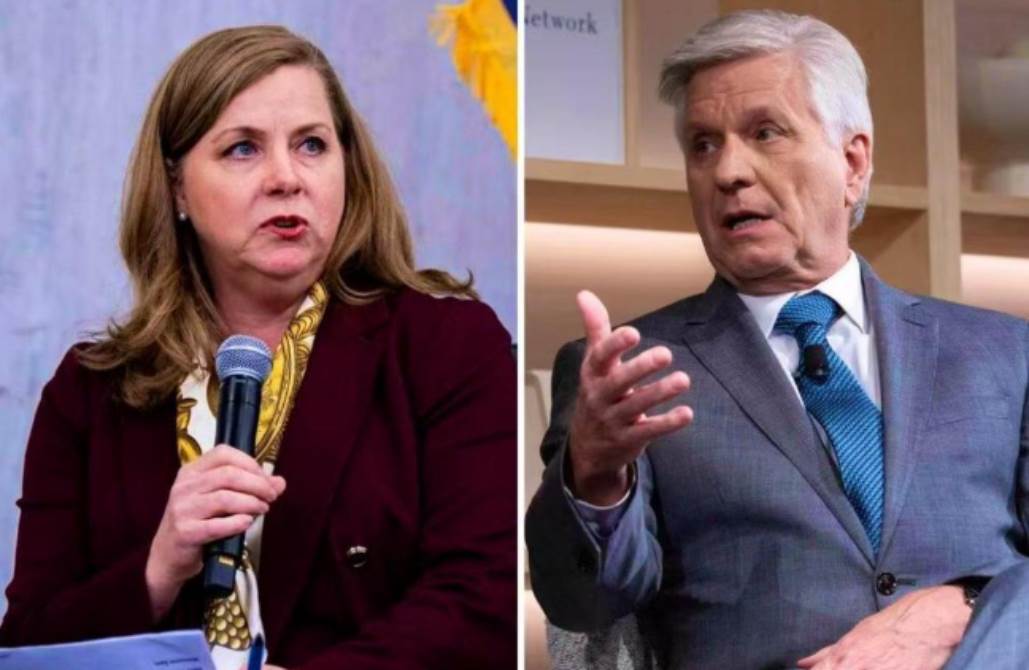
● On July 30th this year, the Federal Reserve decided to keep interest rates unchanged for the fifth time in a row. However, two directors appointed by Trump—Michelle Bowman and Christopher Waller—opposed the decision, recommending an immediate cut of 25 basis points. This is the first time in 32 years that two directors have opposed a rate decision together since 1992, indicating that the internal policy debate has become more intense.
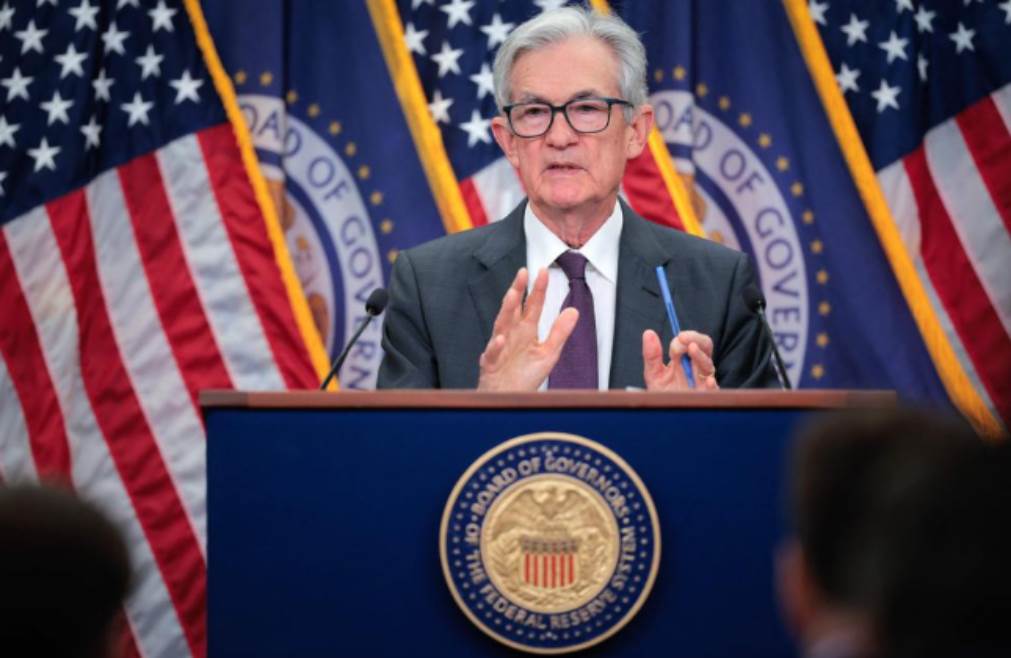
● Powell struggled to maintain balance during the press conference. On one hand, he said that “the current monetary policy stance puts the Federal Reserve in a favorable position.” On the other hand, he acknowledged that economic growth had slowed in the first half of the year. If this trend continues, it could provide grounds for further rate cuts in the future.
He attributed the contradiction to external factors, noting that trade tariffs had increased prices of certain goods. He suggested that about 30% to 40% of core inflation could be due to these factors.
● This public disagreement caused market uncertainty. After the July meeting, traders’ expectations for a rate cut in September dropped from 68% before the meeting to just 45%. It’s likely that similar developments will occur again at the December meeting.
Thirdly, who will be the next leader?
● As the current leadership faces a deadlock in decision-making, a personnel change that will determine the direction of the economy is likely to occur soon. The most significant event happened at the beginning of December: The Trump administration suddenly canceled the final interviews for candidates to become Federal Reserve chairmen, which were originally scheduled to begin this week.
● This move has been widely interpreted as indicating that Trump has already selected a candidate. At a White House meeting, he confirmed that the list of candidates has been narrowed down to one person. He specifically mentioned that Kevin Hassett, the director of the White House National Economic Council at that time, is a potential candidate for the position of Federal Reserve chairman.
● Hassett’s leading position is clear, but it doesn’t mean everything is settled. Latest reports indicate that Trump and Treasury Secretary Sebastian are planning to interview Kevin Wash, a member of the Federal Reserve Board, on Wednesday (December 10th). This suggests that there are still uncertainties regarding the final decision. Other candidates on the list include Christopher Waller, currently a member of the Federal Reserve Board, Michel Bowerman, another board member, and Rick Riedel, a senior executive at BlackRock.
● Secretary Sebastian is the main driver behind this selection process. He has submitted a short list to the White House. Although Trump has repeatedly expressed his desire for Sebastian to take on the role, Sebastian has clearly stated that he has no intention of stepping into this position.
Fourth, a “politically inclined” economist?

● Among all the candidates, Kevin Hassett undoubtedly attracts the most attention and controversy. As Trump’s long-time economic advisor and former chair of the White House Economic Advisory Board, if Hassett becomes the Federal Reserve chairman, it would signify a fundamental change in the relationship between monetary policy decisions and executive power.
Hassett’s recent remarks clearly reflect his policy preferences. He stated publicly that if he became the Federal Reserve chairman, he would “immediately cut interest rates,” because “data shows that we should do so.”
● At the Wall Street Journal CEO Council event, he explicitly stated that the Federal Reserve has “plenty of room” to cut interest rates significantly. When asked whether this meant that the rate cuts could exceed the market’s expectation of 25 basis points, he replied, “Yes. These statements are in line with Trump’s demands. Trump has long criticized Powell for being hesitant to cut rates, and he openly expressed his desire for the next Fed chairman to focus on lowering interest rates. He even mentioned his wish to bring the cost of borrowing in the U.S. down to 1%.
● However, Hasset tries to find a balance between a radical stance and maintaining the independence of the central bank. In response to the question of whether he would fully comply with Trump’s wishes, he said, “You just need to do the right thing.” He cited an example: if inflation rises from 2.5% to 4%, then rate cuts wouldn’t be possible.
● The market is skeptical about this. Some bond investors have warned that Hasset, who has close ties to the president, might cut rates without any consideration for the consequences, thereby destabilizing the $30 trillion-dollar U.S. debt market.
Fifth, the path ahead: different candidates, different directions. Who will become the next Fed chairman will determine the monetary policy direction for the United States and the world over the next few years. The policy plans of different candidates differ greatly.
● If Hasset takes office, market expectations suggest a more rapid and significant cycle of rate cuts. His recent argument that “artificial intelligence will significantly boost productivity” could provide a new theoretical framework for maintaining low interest rates.
● Another major competitor, Kevin Wash, represents a different approach. He has previously criticized Powell sharply and advocated for “thorough, top-down reforms” of the Federal Reserve. His policy preferences seem to be more traditional and cautious.
● If current chairman Christopher Waller is elected, it could signify the most significant continuity in policy decisions. Although he recently expressed support for lowering interest rates, he also emphasized the need for caution, reflecting the current mainstream position within the Federal Reserve—one that relies heavily on data-driven analysis.
● It’s worth noting that there are discussions regarding a possible special term for Haselet as chairman. Some government officials have suggested that Haselet might serve a shorter term than the usual four years. This could potentially pave the way for Secretary Bates to take over the role at some point in the future.
Six, it’s not just about interest rates
● Regardless of tonight’s decision or who becomes the next chairman, any changes in the leadership of the Federal Reserve will have profound implications. In the short term, if Haselet’s dovish stance prevails, it could boost stock markets, especially tech stocks that are sensitive to interest rates. However, this could also increase long-term inflation expectations and weaken the value of the dollar.
● In the long run,, the Federal Reserve’s independence and credibility are facing the most severe challenges in decades. If markets assume that Federal Reserve decisions are influenced by politics, its role as a “anchor” of the global financial system will be weakened, potentially leading to broader fluctuations in asset prices.
● Additionally, the balance sheet policy, a tool equally important as interest rates, also faces uncertainties. The Federal Reserve ceased its balance sheet reduction process on December 1st. In the future, whether the Fed will maintain the current size of its balance sheet or begin to expand it again will be a crucial question that the new chairman must answer.
On the trading screens in Wall Street, bets on interest rate futures continue to rise, indicating that the probability of interest rate cuts is now close to 90%. But in Washington, the power game has just begun. Trump holds the power to rewrite the history of the Federal Reserve. Kevin Hassett’s statement about “enough room for further interest rate cuts” has already set the stage for possible policy changes in the future.
Whether interest rates will be cut tonight or not, the Fed is heading towards an unknown territory shaped by political games and internal divisions. What the global markets can do is to wait patiently.