Exchange Ranking
 Top Exchanges
 24h Volume Ranking
 Popularity Ranking
 Exchange BTC Balance
 Proof of Reserves
 Decentralized Exchanges
 Funding Rate
 Funding Heatmap
 Liquidation Data
 Max Pain
 Long/Short Ratio
 Whale L/S Ratio
 Binance/Okex/Huobi L/S
 Bitfinex Margin L/S
 ETF Tracker
 Solana ETF
 XRP ETF
 Hong Kong ETF
 Bitcoin Treasuries
 Crypto Reversal
 Ethereum Reserves
 HyperLiquid Wallet Analysis
 Hyperliquid Whale Watch
 Large Transactions
 On-chain Movement
 Bitcoin ROI
 Stablecoin Market Cap
 Options Analysis
 News
 Articles
 Economic Calendar
 Features
 Wallet
 Contract Calculator


 Security
 Collections
 Watchlist
 Following
 BTC
Another “awakening” from the early days of Bitcoin has once again shaken the market. Chain-level data shows that a wallet that had been inactive since 2010 recently transferred 150 Bitcoins, worth over ten million dollars. This transfer of these “ancient coins” has sparked widespread speculation in the community: Is it a return of old players, or is it the work of institutional entities? With Bitcoin prices continuing to fluctuate and market sentiment warming up, such transactions that occur rarely are often seen as signals of trends. It also makes people question whether the true “long-term players” in Bitcoin have never really left the market.
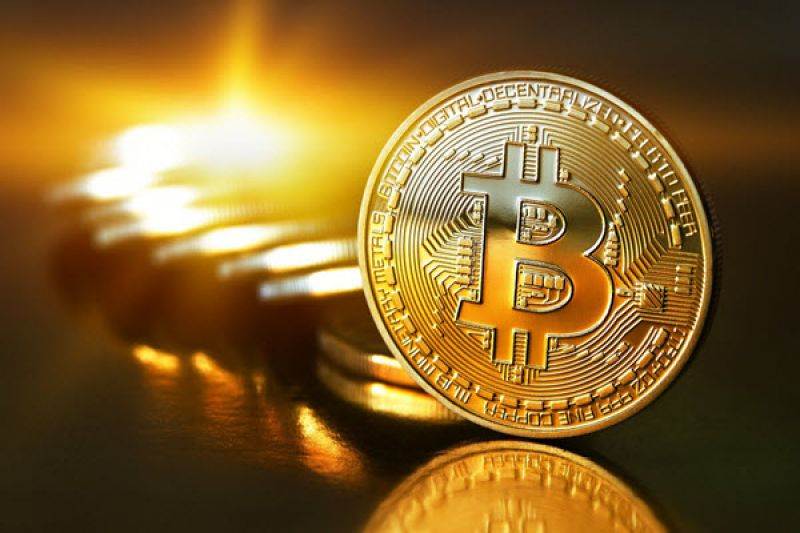
● In 2009, a Bitcoin wallet became active again after 14 years, transferring 150 Bitcoins worth approximately 16 million dollars.
● Analysts believe this isn’t a sale, but rather a technical restructuring of assets.
● Although symbolic, its impact on the market is minimal, and it mainly affects psychological factors.
Remnants from the early days of Bitcoin have suddenly surfaced. An address dating back to the mysterious era of Satoshi Nakamoto transferred 150 Bitcoins after being inactive for over 14 years. This unexpected transfer has once again raised questions about miners who disappeared, keys that were forgotten, and possible reactions from the market. But how dangerous could this awakening be to the cryptocurrency market?
A memory of Bitcoin’s history
Another "wake-up" from the early days of Bitcoin has once again shaken the market. Chain-level data shows that a wallet that had been inactive since 2010 recently transferred 150 Bitcoins, worth over ten million dollars. This transfer of these "ancient coins" has sparked widespread speculation in the community: Is it a return of old players, or is it the work of institutional operators? With Bitcoin prices continuing to fluctuate and market sentiment warming up, such infrequent chain-level transactions are often seen as signals of trends, and they also prompt people to reconsider that the true "long-term players" of Bitcoin have never really left the market.
A Bitcoin wallet dating back to 2009 has become active for the first time in 14 years. It is said that this address mined approximately 4,000 Bitcoins during the early days of Bitcoin. This week, it transferred another 150 Bitcoins, worth about 16 million dollars. This is the first transfer since June 2011—at that time, Bitcoin was still little known, and few enthusiasts believed in its future.
The Bitcoins mined at that time were worth slightly less than 68,000 dollars at the time of their last mining. Now, this amount of money represents a significant fortune. This process demonstrates how rapidly the value of Bitcoin has increased since its inception, and it also shows how many early miners became millionaires through patience or forgetfulness.
Rare activities during the era of Satoshi Nakamoto
Such actions during the "era of Satoshi Nakamoto" are extremely rare. According to data from analysis company Glassnode, only a few wallets from before 2011 are still active today. This often piques people's interest, as these coins were mined during the time when Satoshi Nakamoto himself was still discussing and posting on the network.
Every change in the old currency regime sparks speculation—could it be done by Satoshi himself, or by one of the early contributors? Historically, such changes often lead to short-term market turmoil, as investors fear a sell-off. But so far, there has been evidence that most of these transfers are purely for technical or organizational reasons.
It’s more about psychological factors than market shocks.
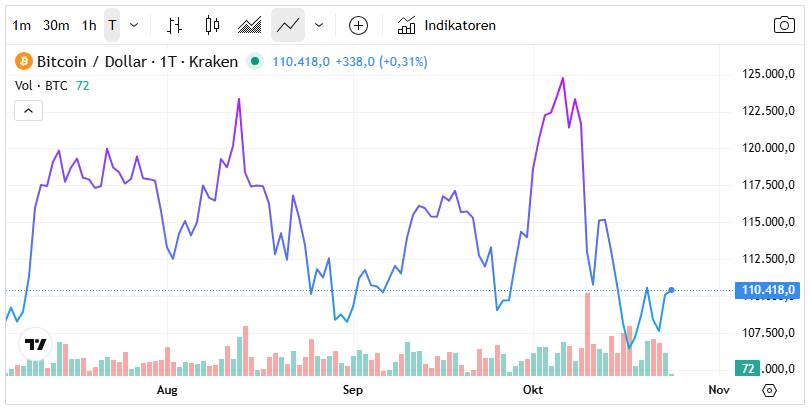
The timing of this transfer is noteworthy. Currently, the price of BTC is around $110,000, having fallen from its earlier high of over $126,000 at the beginning of this month. The market has recently experienced one of the largest liquidation events in history, with liquidation positions reaching nearly $19 billion.
In such a sensitive environment, any change in the number of old positions can cause psychological fluctuations. However, from a purely factual perspective, this transaction isn’t very significant. 150 BTC accounts for a tiny portion of the daily trading volume, which exceeds $20 billion. Therefore, its impact lies not in the market mechanisms, but in public perception.
Why transfer the coin now?
Analysts have identified several possible reasons for this move. It’s possible that the owner has transferred his BTC to a more modern and secure wallet, to protect it from losses or technical risks. Alternatively, it could be due to inheritance arrangements or simply a need to test the functionality of the old wallet.
So far, there is no evidence indicating that these tokens have been sent to exchanges. This suggests that there is a plan to sell them in the future. Previous cases, such as those in 2021 and 2023, also failed to cause any significant price fluctuations. Usually, token holders simply adjust their balances.
The current market situation is cautious overall. After a significant drop in prices at the beginning of this month, BTC is currently trading within a narrow range between $108,000 and $111,000. Many investors are waiting for new momentum to drive prices upward, while analysts are discussing possible corrections.
At this stage, data from the blockchain should be given special attention. Changes in old wallets remind us of the origins of the network and the vast wealth that early miners possessed. This indicates that a large portion of the total supply of BTC remains in the hands of a small group with a long history.
Symbolism outweighs substance
Ultimately, the revival of this 14-year-old wallet is unlikely to have a fundamental impact on the market. This event is more of a symbol of the resilience of cryptocurrencies and history than a signal of impending selling.
For many investors, this provides a glimpse into the early development of Bitcoin, reminding us that digital assets can last for decades. As long as these currencies aren’t traded on exchanges, such fluctuations are just statistical data, and there’s no need for panic. This story also serves to illustrate one thing: how long Bitcoin has existed, and how far Bitcoin has come as a project.
This also means that new projects based on Bitcoin, and leveraging its security and reliability—such as Bitcoin Hyper—still have potential in the future.