Exchange Ranking
 Top Exchanges
 24h Volume Ranking
 Popularity Ranking
 Exchange BTC Balance
 Proof of Reserves
 Decentralized Exchanges
 Funding Rate
 Funding Heatmap
 Liquidation Data
 Max Pain
 Long/Short Ratio
 Whale L/S Ratio
 Binance/Okex/Huobi L/S
 Bitfinex Margin L/S
 ETF Tracker
 Solana ETF
 XRP ETF
 Hong Kong ETF
 Bitcoin Treasuries
 Crypto Reversal
 Ethereum Reserves
 HyperLiquid Wallet Analysis
 Hyperliquid Whale Watch
 Large Transactions
 On-chain Movement
 Bitcoin ROI
 Stablecoin Market Cap
 Options Analysis
 News
 Articles
 Economic Calendar
 Features
 Wallet
 Contract Calculator


 Security
 Collections
 Watchlist
 Following
In this era of numerous “AI+blockchain” projects, x402 is gradually shifting from being a controversial concept to a real-world application. Recent data shows that both the ecosystem’s activity and the frequency of interactions on the blockchain have increased significantly. The number of community users has grown by over 40%, and developer participation is also rising. With the growing demand for decentralized computing power and data privacy, x402 needs to rely not just on conceptual appeal, but also on real-world applications and sustainable business models to gain market trust.

Key points:
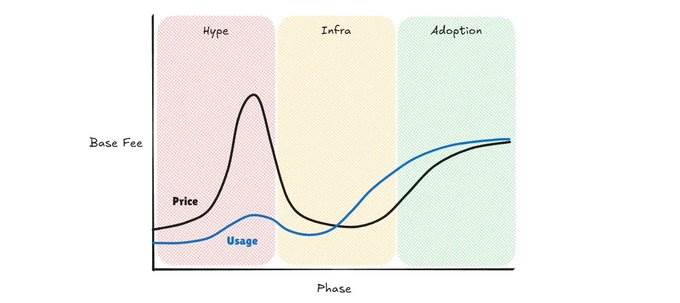
● In the cryptocurrency industry, most new concepts go through three stages: hype, infrastructure development, and practical application. However, many new concepts fail to transition from the hype stage to the infrastructure development stage, thus losing their attention in the market.
● x402 is a protocol developed by Coinbase for AI agents. It enables AI agents to make payments and access paid resources easily through the blockchain, without any human intervention.
● Based on the recent surge in x402-related tokens, it seems that x402 has entered the hype stage. However, what sets x402 apart from other typical crypto projects is that companies like Cloudflare, Google Cloud, and Anthropic are actively adopting it. This indicates that the infrastructure development phase is progressing rapidly.
● Considering the tremendous potential of agent-based commerce, it is likely that the x402 model will progress to the application stage. However, the main obstacle lies in the transformation of consumer psychology and trust structures. Accenture believes that the biggest barrier to the widespread adoption of agent-based commerce is consumers’ lack of trust in artificial intelligence agents.
● Nevertheless, Gartner predicts that by 2030, transactions controlled by artificial intelligence agents could reach $30 trillion. Therefore, agent-based commerce will become an inevitable large market in the future. This would mark blockchain as the second major global market leader, following stablecoins.
1. Hype, infrastructure, and adoption cycle
1.1. Until new concepts are adopted
The cryptocurrency industry is constantly changing. New concepts emerge and disappear within just a few months, and their attention spans are even shorter than those of any other industry. From a macro perspective, keywords like NFTs, gaming, the metaverse, and modular blockchains follow a similar pattern. At a micro level, recent examples like Futarchy appear briefly but soon disappear from the market.
With countless new concepts emerging in the cryptocurrency industry, new ideas need to overcome many obstacles to be effectively implemented. I divide this process into three stages:
● Hype phase: This is a stage where a new concept begins to gain widespread attention. During this period, the prices of existing projects related to this concept, newly launched small-scale projects, as well as related meme coins, often rise by dozens or even hundreds of percentage points. If the concept successfully transitions to the next stage, prices may remain stable. However, in most cases, prices will plummet within weeks or months, and the related projects will eventually disappear.
● Infrastructure phase: Once the potential and relevance of a new concept are confirmed, developers begin developing meaningful products based on it. Product development takes a long time—ranging from several months to over a year. Therefore, vague or weak concepts often fail to survive beyond this stage. But if the concept is truly valuable, it can maintain stable interest, create real use cases, and ultimately drive the entire industry towards growth.
● Adoption phase: Congratulations if you’ve managed to reach this stage! In the world of cryptocurrencies, few concepts can make it through to this stage—for example, AMMs, CLOBs, lending protocols, equity-related protocols, and stablecoins. Concepts that reach this stage have proven their practical value, so over time, new protocols will continue to emerge, and many users will become actively involved in them.
1.2 Examples in the cryptocurrency realm?
So, what’s the current situation with the topics that have gained significant attention on CT recently?
● Futarchy: As mentioned above, Vitalik once discussed the concept of “Future Coin” and it was briefly hyped up, but later it gradually faded from people’s attention. Recently, with the launch of Solana’s ICO platform, this concept has once again gained attention. However, within a few weeks, its popularity quickly declined. The reason is that “Future Coin” involves complex governance issues, and it would be difficult for it to be widely adopted without significant changes in human society over generations.
● Decentralized Energy: Around last year, decentralized energy became a hot topic, and many companies received investments from venture capital firms. Recently, Daylight received $75 million in investment from Framework and a16zcrypto, which again sparked interest in this area. But market interest didn’t last long. This is because decentralized energy requires a long time to develop its infrastructure.
● Robotics Technology: Robotics technology also follows a similar pattern. Although the combination of cryptography and artificial intelligence is attracting attention, projects like Openmind, which involve robotics, have also generated interest among investors. Many small and medium-sized projects and meme tokens have seen significant price increases, but it will take time before they become widely used. Nevertheless, given the huge potential of blockchain technology in robotics, many developers, including those working on Openmind, are actively developing related products.
From these examples, it seems that the transition from a new concept to widespread adoption in the crypto industry is quite challenging.
However, the x402 concept, which has recently attracted widespread attention in the context of CT, seems to be on its way to becoming widely adopted. What makes x402 different?
2. Can x402 really succeed?
2.1. Overview of x402
x402 is an open payment protocol developed by Coinbase. Its purpose is to allow AI agents to make payments and complete transactions independently, without any human intervention. x402 enables AI agents to use stablecoin payments across multiple blockchains to pay for various services, with immediate settlement—without the need for complicated processes like creating accounts, subscribing to services, or using API keys.
Source: Coinbase
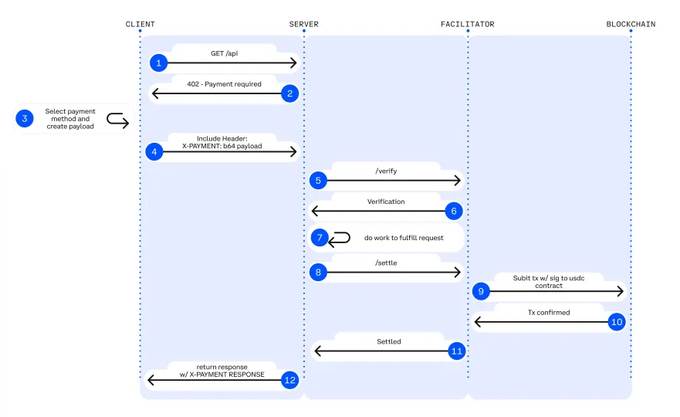
HTTP 402 is a status code indicating “payment required.” However, this code has been rarely used over time. x402 utilizes HTTP 402: when an AI agent sends an API request, the server returns HTTP 402, indicating that payment is required. Then, the AI agent interprets this response and uses the stablecoin to pay the required amount. The specific process is as follows:
● When an AI agent attempts to access paid services (such as news articles, APIs, or data), the server returns HTTP 402, indicating that payment is required. This response not only contains information about the need for payment but also details the payment method, amount, and recipient’s wallet address.
● Based on the information provided by the server, the AI agent generates a transaction for the specified amount, adds a digital signature, and then sends it back to the server.
● The server then forwards this transaction to the coordinator, who verifies the payment and processes it on the blockchain.
● 付款完成后,服务器将授予 AI 代理访问服务的权限。
x402 的意义远不止简单地提供一个使 AI 代理能够进行支付的标准。由于支付使用基于区块链的稳定币进行,它实现了以前不可能实现的微支付,允许 AI 代理根据使用情况实时调用 API 或支付服务费用。x402 还允许人类用户绕过 API 密钥管理或帐户创建等复杂流程,从而实现基于微支付的内容访问。
2.2、炒作阶段
来源:a16zcrypto
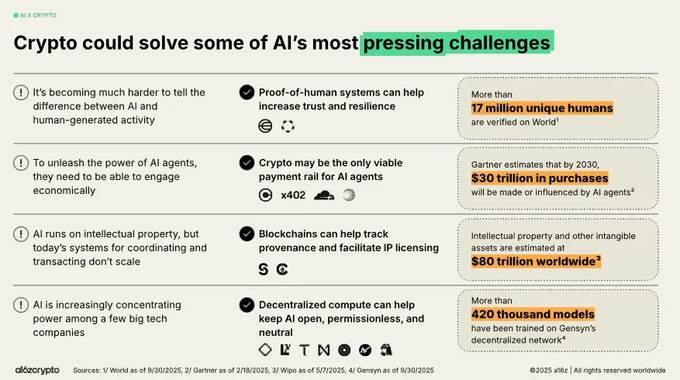
x402 于 2025 年 5 月推出,最初只获得了中等程度的关注。然而,在 a16zcrypto 的“2025 年加密货币现状:加密货币走向主流的一年 ”报告。据 Gartner 预测,到 2030 年,代理商务市场规模将达到 30 万亿美元,a16z 表示,x402 可能成为人工智能代理的主要支付渠道。
x402 进入炒作阶段最明显的迹象是相关代币价格的大幅上涨。例如,$虚拟每当人工智能代理叙事重新出现时就会做出反应,在短短两天内上涨了 40%,其他相关代币的价格也出现了大幅上涨,如下所示。
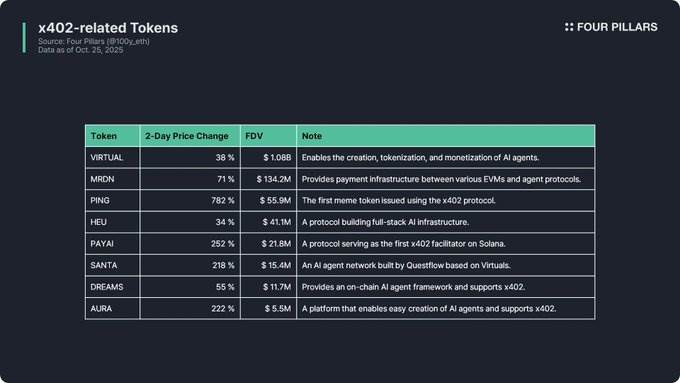
这使得 x402 看起来像是另一个典型的加密概念——空洞、肤浅,纯粹由炒作驱动。事实上,许多新的加密概念都是这样出现的,导致小型项目和 meme 代币价格大幅飙升,最终销声匿迹。
However, what sets x402 apart from other topics is the following: 1) The topic of AI agents for payment is highly relevant not only in the cryptocurrency field, but also across the broader AI industry, making it a promising area of development; 2) Many Web2 companies are actively engaging with and adopting x402. These factors indicate that x402 may not remain in the hype stage for long, but could quickly move towards the infrastructure phase.
2.3 Infrastructure Phase
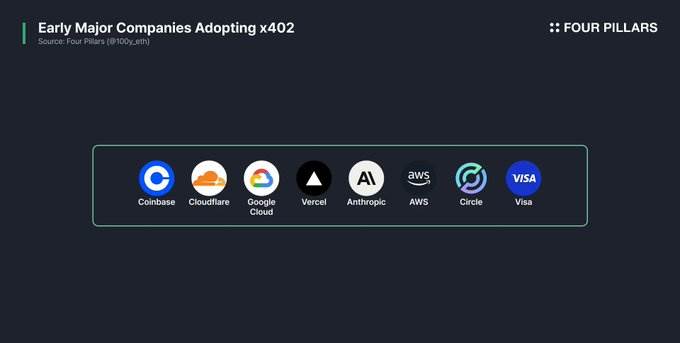
Currently, x402 is in both the hype stage and the infrastructure construction phase. In fact, even before x402 entered the hype stage, many Web2 and Web3 companies were already working on building infrastructure for x402 and integrating it into their services. Therefore, it can be said that x402 begins its journey from the infrastructure construction phase.
Interestingly, unlike typical crypto stories, x402 has attracted the attention of major Web2 technology companies, who are actively adopting it.
● Cloudflare
Cloudflare is a company that provides Internet infrastructure and security solutions. Recently, the company has introduced services like the “Agents SDK,” which allow developers to easily create and deploy AI agents. It also offers “Workers AI,” an environment for running AI model inference.
Cloudflare and Coinbase jointly established the x402 foundation, and both companies remain highly active within the x402 ecosystem. Cloudflare supports x402 through its “Agents SDK” service, enabling AI agents to access payments via the internet with ease.
It’s worth noting that Cloudflare recently launched a stablecoin called NET Dollar, designed specifically for AI agents. AI agents built using the “Agents SDK” will likely use x402 and NET Dollar to conduct business transactions.
● Vercel
Vercel is a cloud platform company dedicated to helping developers quickly and easily build and deploy web applications. Vercel has recently introduced services such as the “Vercel AI SDK” and “Vercel MCP,” allowing developers to easily create and deploy AI agents, and access projects through the MCP. In September this year, Vercel released x402-mcp, which enables AI agents to automatically process payments using x402 when accessing paid APIs or resources through the MCP.
● Google Cloud
Google Cloud previously introduced A2A, a protocol that allows AI agents to communicate and collaborate with each other. A2A includes an extension called AP2 (Agent Payment Protocol), which enables agents to make autonomous payments. x402 is integrated into this system as a payment engine, allowing AI agents to perform actual transactions.
● Anthropic
Anthropic is a renowned artificial intelligence company that developed the Claude LLM. Users can utilize this tool to create artificial intelligence agents. Anthropic has also introduced an open-source standard called MCP, which defines how artificial intelligence models can access external tools and data. The Claude MCP supports x402, allowing Claude to automatically handle payments when accessing paid MCP tools.
● Visa
Visa, the world’s largest credit card payment network, recently announced a partnership with Cloudflare to develop a “Trusted Agent Protocol”. This protocol helps verify the authenticity of AI requests in agent-based commerce, and enables payments to be processed via x402.
● Other
According to Coinbase’s announcement, companies like Circle and AWS are also collaborating with x402.
In addition to companies and protocols that use x402, developer-friendly tools such as x402 scanners have also emerged. These tools visualize server, transaction, and payment processes using x402, enabling users to see which services are provided by which providers and on which networks transactions take place. As the x402 ecosystem continues to grow, more companies and tools are expected to join, further enriching the ecosystem.
3. Can x402 truly enter the adoption phase?
3.1 Challenges in adopting x402
Source: x402scan
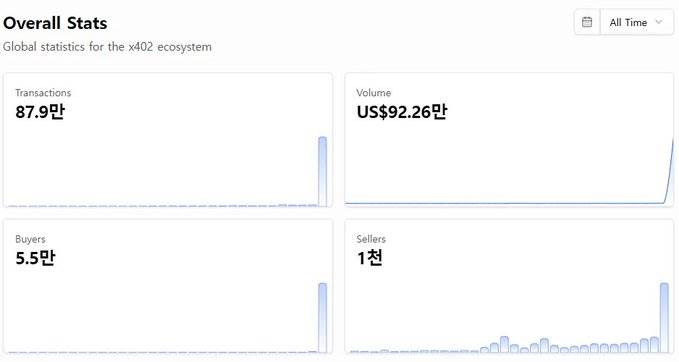
Based on the significant increase in the price of related tokens, and the fact that many companies have started to use x402, it seems that x402 has entered the stage of speculation and infrastructure development. The remaining question is whether x402 can truly become widely used. According to data from x402scan, so far, approximately 55,000 buyers have conducted around 879,000 transactions with about 1,000 sellers. These numbers are impressive, but the total transaction volume is only around $923,000. This indicates that x402 is still far from becoming widely adopted.
3.2: Conditions for entering the adoption phase
What conditions are needed for x402 to enter the application phase? One of the most frequently mentioned factors is consumer psychology and trust structure. Even someone like me, who writes articles about x402, is satisfied with the ability of artificial intelligence agents to provide advice in business contexts. However, I still hesitate to fully trust them in managing my funds.
Even the most updated masters in law sometimes provide incorrect information or unsatisfactory answers. Therefore, from a psychological perspective, it’s difficult for consumers to trust artificial intelligence agents based on such models to handle payments. In fact, according to a survey conducted by Accenture Financial Services, 87% of people believe that consumers lack trust in artificial intelligence-based payments. Additionally, 78% of people are concerned that artificial intelligence robots might engage in unauthorized payments or participate in fraud.
The second factor relates to the state of enterprise infrastructure. According to Accenture’s findings, 85% of financial institutions report that their existing legacy systems are not suitable for handling large-scale proxy payments. In particular, the lack of systems capable of dealing with fraudulent proxy payment transactions is one of the major obstacles in this field.
In general, for x402 to enter the adoption phase, companies need to develop systems optimized for proxy commerce operations, and also build trust among consumers regarding these systems. However, developing such infrastructure and changing consumer behavior requires significant time. Therefore, it may take longer for x402 to reach the adoption phase than expected.
What does this mean for the blockchain industry?
Gartner predicts that by 2030, AI-powered proxies will influence transactions worth $30 trillion. Although the AI proxy payment market is still in its early stages, it is encouraging that x402 seems to be becoming an industry standard. This aligns with the fact that large IT companies like Google, Anthropic, and Cloudflare have already adopted x402 for AI-powered proxy payments.
What can we expect from the cryptocurrency market as x402 becomes more widespread? One possible prediction is that the recent surge in tokens related to x402 may not continue for long. Since the rise of cryptocurrencies in the field of AI, it has gradually become a meaningful concept, with several new initiatives being introduced. However, most of the small-scale projects and meme tokens that saw significant price increases during the initial hype phase have performed disappointingly over time.
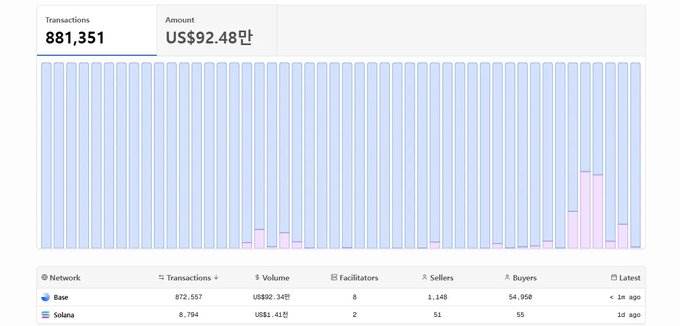
Source: x402scan[x402] One significant advantage of the blockchain industry is that all payments made through AI agents will be conducted on the blockchain network. Currently, most transactions take place on the Base network, while some transactions occur on the Solana network. However, x402 is designed to work across various networks, meaning it can be used on any platform. This means that as the x402 ecosystem expands, payments will be driven by supply and demand between buyers and sellers, across multiple networks—not just Base and Solana.
Agent-based commerce represents a huge market opportunity in the future, with all payments eventually being processed via x402 on the blockchain. This would mark another milestone for blockchain technology, following the success of stablecoins.