Exchange Ranking
 Top Exchanges
 24h Volume Ranking
 Popularity Ranking
 Exchange BTC Balance
 Proof of Reserves
 Decentralized Exchanges
 Funding Rate
 Funding Heatmap
 Liquidation Data
 Max Pain
 Long/Short Ratio
 Whale L/S Ratio
 Binance/Okex/Huobi L/S
 Bitfinex Margin L/S
 ETF Tracker
 Solana ETF
 XRP ETF
 Hong Kong ETF
 Bitcoin Treasuries
 Crypto Reversal
 Ethereum Reserves
 HyperLiquid Wallet Analysis
 Hyperliquid Whale Watch
 Large Transactions
 On-chain Movement
 Bitcoin ROI
 Stablecoin Market Cap
 Options Analysis
 News
 Articles
 Economic Calendar
 Features
 Wallet
 Contract Calculator


 Security
 Collections
 Watchlist
 Following
 BTC
Dragonfly's managing partner questioned the AI cryptographic threat theory, calling it "doomsday"
Haseeb Qureshi, managing partner of Digital Asset investment platform Dragonfly, recently challenged Ethereum researcher Justin Drake's warning that artificial intelligence (AI) could pose a potential threat to protecting cryptographic signatures of cryptocurrencies. Qureshi criticized Drake's "bunker model" strategy as a "cryptographic doomsday" and argued that moving tokens to new wallet addresses was not an effective solution to AI-driven security threats.
Industry concerns about AI and cryptographic security
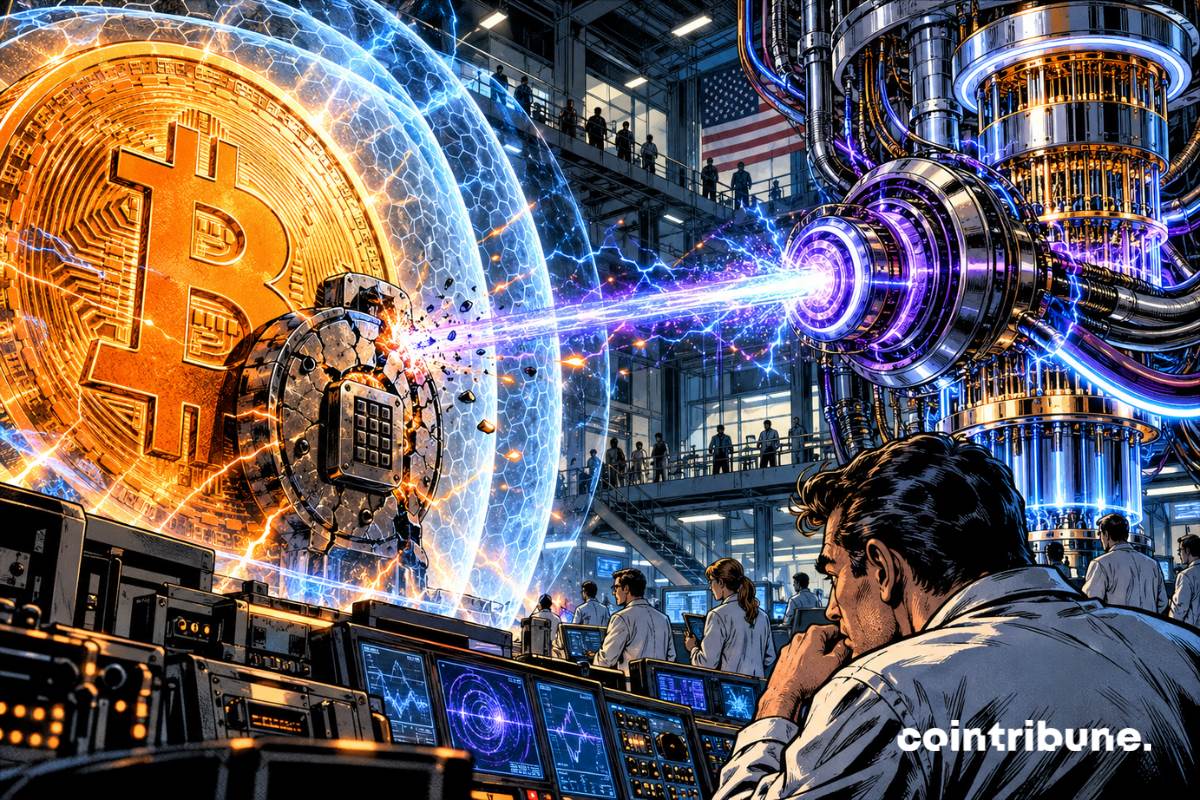
As a principal researcher focusing on the development of the Ethereum protocol, Justin Drake expressed concern about enhanced AI capabilities that may soon crack the Elliptic Curve Digital Signature Algorithm (ECDSA) used to protect digital assets. According to Drake, a recent OpenAI report noted that mathematical advances driven by AI may accelerate threats to cryptographic security.
Drake said in a statement issued on Wednesday: "It is reasonable to expect that ECDSA could be breached before quantum computing arrives, and in the worst case, in months rather than years." He cited the possibility that AI may surpass quantum computers in breaking through cryptographic protections.
Drake insists that users should gradually move positions to new addresses where public keys are protected, because advances in AI may compromise the security of these assets more quickly than quantum computers.
Ethereum co-founder Vitalik Buterin also commented on the discussion. He agreed that ecosystems should address threats originating from "AI-accelerated mathematics", but warned users not to rush to move money, recommending prudent responses when the industry evaluates mitigation strategies.
The solution proposed byand the limitations of the "bunker model"
Qureshi criticized the "bunker model"-the practice of transferring funds to a new location-as a limited defense. He believes this measure only provides protection when assets are dormant. If a large-scale exploit occurs, coins in the new address will depreciate in a market that has been turbulent by large-scale hacking attacks.
Qureshi proposed that blockchain networks should develop a "cryptographic recovery model" that uses a hash-based backup signature scheme that maps to user addresses and allows verifiers to trigger a recovery mechanism when core cryptography fails.
He emphasized that proactive upgrades rather than passive transfers of funds would provide systematic protection against emerging threats from AI.
The fragility of Bitcoin supply highlighted
With increasing discussions about the security of digital assets, blockchain analysis company Glassnode reported that if encryption protection fails, more than 31% of Bitcoin's circulating supply may be at risk. Data on Thursday showed that 6.26 million BTC remained in addresses considered vulnerable to these kinds of attacks.
Of these, approximately 4.33 million BTC were exposed due to address reuse, a vulnerability that can be mitigated by moving coins to new addresses. An additional 1.94 million BTC are vulnerable due to specific address formats.
Glassnode co-founder Rafael Schultze-Kraft pointed out that a significant portion of the exposed supply-nearly 1.8 million BTC-was deposited on cryptocurrency exchanges. This accounts for more than half of all balances currently on major trading platforms.
These statistics highlight the scale of assets involved if AI or future quantum computers break through the crypto systems that support Bitcoin and other cryptocurrencies.
Glossary: Elliptic Curve Digital Signature Algorithm (ECDSA)
ECDSA is a cryptographic technology used to ensure the security of cryptocurrency transactions by verifying ownership and authorizing transfers without exposing the user's private key.