Exchange Ranking
 Top Exchanges
 24h Volume Ranking
 Popularity Ranking
 Exchange BTC Balance
 Proof of Reserves
 Decentralized Exchanges
 Funding Rate
 Funding Heatmap
 Liquidation Data
 Max Pain
 Long/Short Ratio
 Whale L/S Ratio
 Binance/Okex/Huobi L/S
 Bitfinex Margin L/S
 ETF Tracker
 Solana ETF
 XRP ETF
 Hong Kong ETF
 Bitcoin Treasuries
 Crypto Reversal
 Ethereum Reserves
 HyperLiquid Wallet Analysis
 Hyperliquid Whale Watch
 Large Transactions
 On-chain Movement
 Bitcoin ROI
 Stablecoin Market Cap
 Options Analysis
 News
News Articles
 Economic Calendar
 Features
 Wallet
 Contract Calculator


 Security
 Collections
 Watchlist
 Following
Capital concentration in large rounds: In the first half of 2026, blockchain financing in Southeast Asia exceeded the whole year
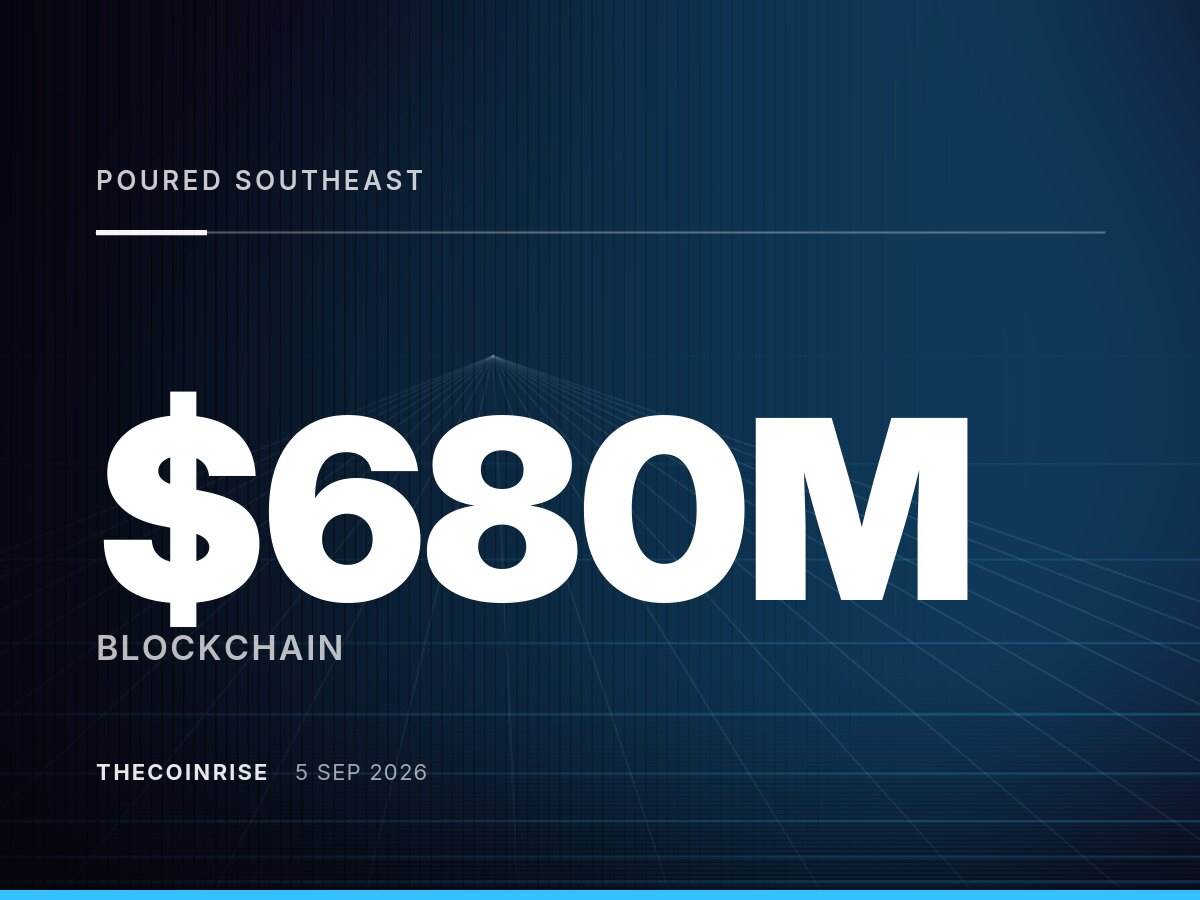
According to data quoted by industry media, in the first half of 2026, blockchain and cryptocurrency companies in Southeast Asia raised a total of US$680 million. This figure has exceeded the region's total financing for the whole of 2025, an increase of approximately 113% from the previous comparative cycle.
What is remarkable about this surge is that it occurs against the backdrop of a decline in transaction volumes. During this period, the number of transactions completed decreased, but the total capital deployed increased significantly. This combination suggests that investors are concentrating their money in a few companies rather than spreading it widely among early types of venture capital investments.
This model echoes broader shifts in the global venture capital landscape over the past two years. Not just in the crypto industry, investors in all industries have become more cautious. Many investors are concentrating their money in companies that are considered closer to product maturity or regulatory clarity. The combination of an increase in average transaction size and a decline in transaction numbers is often seen as a signal that selective investment strategies in a particular region are taking effect.
Over the past few years, Southeast Asia has built a reputation as an active hub for blockchain infrastructure, payment and transaction platforms. Singapore has become a base for regional licensing and institutional activities. Countries including Vietnam, the Philippines and Indonesia have shown strong retail adoption rates of cryptocurrency assets. This combination of regulatory infrastructure in some markets and grassroots use in other markets has allowed global investors to focus on the region even as financing conditions elsewhere tighten.
This growth scale is particularly prominent against the background of uneven investment and financing in global crypto ventures. Some areas have seen a correction due to regulatory uncertainty in key markets, while others have gained renewed attention due to institutional products and stablecoin infrastructure. The region's year-on-year growth more than doubled, while trading volumes fell, suggesting that Southeast Asia may be attracting different types of capital than in previous cycles. Larger, more concentrated rounds typically involve late-stage companies or infrastructure providers rather than early seed-stage start-ups.
Current reports do not specify which individual companies or financing rounds make up the majority of the US$680 million total. Without detailed breakdowns, it is unclear whether the increase reflects several huge financing rounds or broader trends in multiple areas of the region's blockchain economy. Analysts tracking regional venture capital activity may determine in subsequent quarters whether the momentum in the first half continues or whether the total is driven by a small number of concentrated transactions.
Market Impact
A doubling of regional financing and a decrease in the number of deals often suggests that investors prioritize size and perceived stability over extensive experimentation. For founders in Southeast Asia, this means that the funding environment for early projects will be more competitive, although late-stage or companies focusing on infrastructure will find larger capital pools available.
For the broader crypto industry, continued investment in specific regions often heralds increased activity on localized exchanges, custody services and payment channels in that market. If this trend continues in the second half of 2026, Southeast Asia may further enhance its influence as a hub for blockchain infrastructure development, regardless of price fluctuations in major cryptocurrency assets.
The amount of US$680 million marks one of the strong financing periods for the blockchain sector in Southeast Asia in recent years. As data for the full year of 2026 becomes available, it will become clearer whether this rate persists or reflects a temporary concentration of large transactions.
FAQs
How much blockchain funding has Southeast Asia raised in the first half of 2026?
Companies in the region raised a total of $680 million, based on industry data cited in multiple reports.
Why does financing increase when fewer transactions are completed?
Thereport shows that fewer individual transactions were completed during this period, which means that the average size of each transaction increased significantly, resulting in a higher overall total.
How does this compare to 2025?
According to reports, the total amount in the first half of 2026 is more than double the total amount of financing recorded in Southeast Asia for the whole year of 2025.
Which countries in Southeast Asia are most active in blockchain investment?
The report does not break down funding by country, but Singapore, Vietnam, the Philippines and Indonesia have historically been important regional hubs for cryptocurrency activity and licensing.
Does this increase in funding reflect broader global crypto investment trends?
The report does not directly compare with global data, but the "bigger, less" trading pattern is consistent with trends seen in the broader venture capital market over the past two years.