Exchange Ranking
 Top Exchanges
 24h Volume Ranking
 Popularity Ranking
 Exchange BTC Balance
 Proof of Reserves
 Decentralized Exchanges
 Funding Rate
 Funding Heatmap
 Liquidation Data
 Max Pain
 Long/Short Ratio
 Whale L/S Ratio
 Binance/Okex/Huobi L/S
 Bitfinex Margin L/S
 ETF Tracker
 Solana ETF
 XRP ETF
 Hong Kong ETF
 Bitcoin Treasuries
 Crypto Reversal
 Ethereum Reserves
 HyperLiquid Wallet Analysis
 Hyperliquid Whale Watch
 Large Transactions
 On-chain Movement
 Bitcoin ROI
 Stablecoin Market Cap
 Options Analysis
 News
News Articles
 Economic Calendar
 Features
 Wallet
 Contract Calculator


 Security
 Collections
 Watchlist
 Following
How does Coinbase tokenized stocks work?
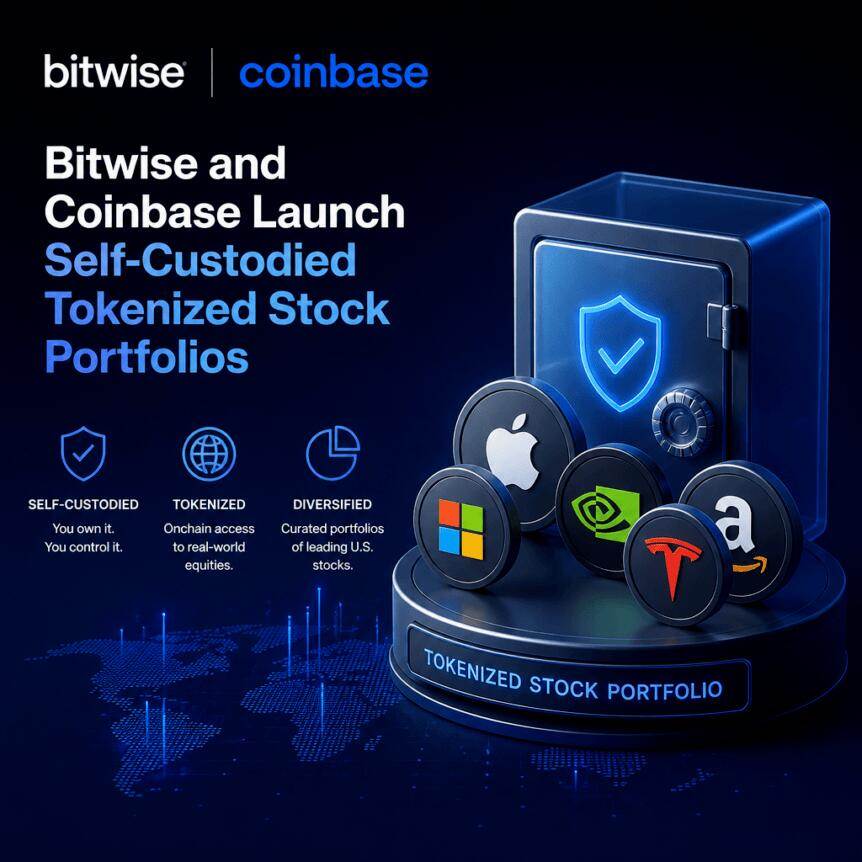
Coinbase has launched tokenized U.S. stocks on its Base blockchain, with the first batch including Apple, Nvidia, Meta and Alphabet. The move comes as multiple cryptocurrency exchanges compete to introduce traditional stocks into the chain market. These tokens are open to qualified investors outside the United States and are endorsed 1:1 by underlying shares held by regulated brokers and custodian Alpaca. Coinbase said that after the initial launch, more stock varieties will be added.
According to Coinbase's B20 framework, institutional market makers need to first purchase the underlying shares and then issue corresponding tokens on the Base chain. These shares are held by Alpaca in a bankruptcy isolation structure, with each token giving the holder direct claim to the underlying equity. The product is regulated by the Abu Dhabi global market, and Coinbase established the International Tokenization Center in Abu Dhabi this year, providing a regulatory basis for providing tokenized securities to qualified investors outside the United States.
This structure is significant because tokenized stocks may represent different legal and economic relationships. Some products provide synthetic price exposure, while others use derivatives or debt instruments. Coinbase links its tokens directly to stocks in custody, giving investors exposure to the endorsement of actual stocks, rather than just fluctuations in their prices.
What operations can investors do on stocks on the Base chain?
After issuance, tokens can be freely transferred between wallets without the need to whitelist each receiving address. Investors can keep it in a self-managed wallet and trade it around the clock through supported on-chain platforms such as Aerodrome. Corporate behavior is also factored into the structural design, and Coinbase said dividends and stock splits will be reflected in the tokens to maintain its economic link to the underlying stock.
The biggest difference betweenand traditional brokerage accounts is that these stocks can interact with decentralized financial applications. A tokenized Nvidia or Apple position can theoretically be deposited into a loan agreement, used as collateral to borrow money, or traded with other blockchain assets without first being transferred back through a traditional broker. Coinbase has connected to Chainlink to provide ongoing pricing data for tokenized stocks. These data sources enable decentralized exchanges, lending agreements, and other applications to obtain the stock prices needed to calculate transactions, collateral values, and clearing thresholds.
Investor Points
Tokenized stocks have gone beyond simple round-the-clock price exposure. Coinbase is trying to make stocks practical in DeFi, making them interactive collateral and integrating into the blockchain market. Its popularity will depend on liquidity, legal rights, and whether investors believe there is sufficient value in moving shares onto the chain.
Why did cryptocurrency exchanges enter into tokenized stocks?
Coinbase has joined exchanges such as Kraken and Binance to expand the tokenized stock business beyond cryptocurrency trading. Public shares provide exchanges with a larger pool of assets while also allowing existing cryptocurrency users to manage traditional investments through blockchain infrastructure. Tokenization has expanded rapidly in other areas of finance, with banks and asset management companies migrating tens of billions of dollars in U.S. Treasury bonds, private credit and investment funds to blockchain networks. Citi predicts that by 2030, the tokenized securities market could reach US$5.5 trillion.
Public stocks provide another huge potential market, but also raise more complex issues about custody, investor rights and regulation. As a result, the success of individual products may equally depend on their legal structure and blockchain technology. Coinbase's decision to adopt a 1:1 endorsement and regulated custody structure appears to be a direct solution to this issue. This also provides exchanges with a different path than traditional stock trading, where users typically hold securities through brokerage accounts rather than transferable blockchain tokens.
Can tokenized stocks become a DeFi asset class?
Long-term opportunities are not simply extending stock trading from traditional markets to all-weather markets. Tokenization could make stocks an essential building block of blockchain finance, just as stablecoins and cryptocurrencies are already widely used in lending and transaction protocols. This creates new potential uses for stocks, but also brings additional risks. A token may rely on its underlying custodian, issuer, smart contract, price data sources, and the DeFi protocol that uses it. The liquidity of decentralized exchanges may also differ significantly from the liquidity of the U.S. underlying stock market.
Regulatory access remains another constraint. Coinbase's initial offering excluded U.S. investors, although the tokens represent shares of U.S. listed companies. This suggests that even if it runs on an open network, blockchain distribution may still be subject to securities regulations. The first four stocks will be an early test of whether investors crave something beyond tokenized price exposure. If users start trading, borrowing and mortgage these assets on the Base chain, Coinbase has reason to expand rapidly beyond Apple, Nvidia, Meta and Alphabet. If activity remains concentrated in traditional brokerage markets, building technology may be easier to achieve than the needs needed to support it.