Exchange Ranking
 Top Exchanges
 24h Volume Ranking
 Popularity Ranking
 Exchange BTC Balance
 Proof of Reserves
 Decentralized Exchanges
 Funding Rate
 Funding Heatmap
 Liquidation Data
 Max Pain
 Long/Short Ratio
 Whale L/S Ratio
 Binance/Okex/Huobi L/S
 Bitfinex Margin L/S
 ETF Tracker
 Solana ETF
 XRP ETF
 Hong Kong ETF
 Bitcoin Treasuries
 Crypto Reversal
 Ethereum Reserves
 HyperLiquid Wallet Analysis
 Hyperliquid Whale Watch
 Large Transactions
 On-chain Movement
 Bitcoin ROI
 Stablecoin Market Cap
 Options Analysis
 News
 Articles
 Economic Calendar
 Features
 Wallet
 Contract Calculator


 Security
 Collections
 Watchlist
 Following
 BTC
 ETH
 SOL
 XRP
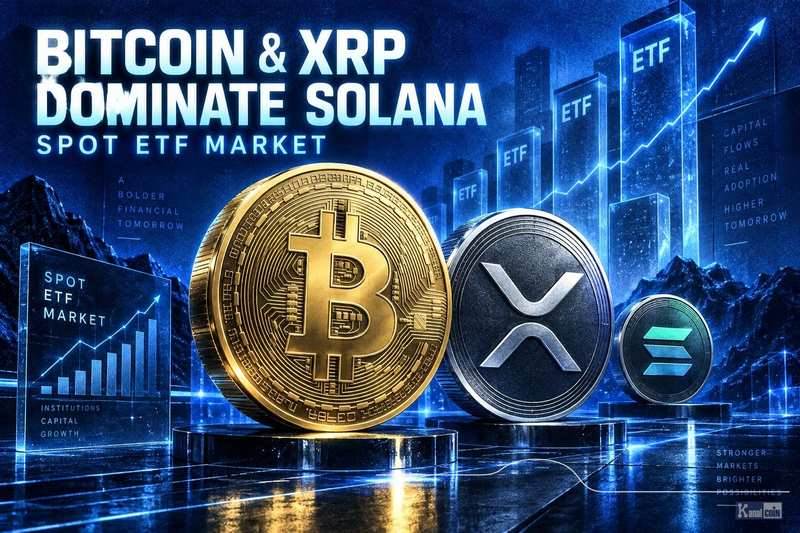
Bitcoin and XRP lead the spot ETF market, and institutional funds continue to focus on two mainstream assets.
In the spot ETF market, Bitcoin (BTC) and XRP have attracted the largest proportion of institutional attention, and their popularity has surpassed Solana and a series of emerging cryptocurrency fund products. As investors continue to prioritize the two most recognizable assets in the space, this divergence reflects the growing appeal of regulated cryptocurrency investment vehicles in global markets, including Southeast Asia.
Bitcoin and XRP lead the trend of spot ETFs
According to relevant reports, among the spot ETF products currently available to investors, Bitcoin and XRP have become the leading forces. This trend reflects the market's preference for assets with longer regulatory records and deeper liquidity. Institutional investors and retail platforms in markets such as Singapore, Thailand and the Philippines often prioritize assets with these characteristics when evaluating fund products.
Bitcoin's status has long been established. Despite the wide variety of cryptocurrency ETF products approved by the SEC in 2026, bitcoin-backed funds remain the benchmark for all other products. XRP has been able to enter the leading echelon thanks to the resolution of its long-term regulatory uncertainty that had previously put institutional products linked to the token on a wait-and-see basis.
Key Points
- Bitcoin and XRP lead the demand for spot ETFs, outperforming Solana and other cryptocurrency fund products.
- Although Solana spot ETFs exist, they attract relatively little institutional capital.
- This hierarchical structure reflects investors 'preference for assets with clearer regulatory status and a longer market history.
Solana's comparison with other spot ETFs
Solana's position in the spot ETF lineup
Solana spot ETFs exist in the approved product portfolio, but lag behind Bitcoin and XRP in terms of attention and positioning. Although the advantages of Solana's network, such as high throughput and an evolving developer ecosystem, have been well documented, these advantages have not translated into the same level of fund-level demand. For Southeast Asian exchanges such as Indodax and Tokocrypto, product choices often follow global institutions, so this gap is critical when deciding which ETF-linked products to show to local users. [TAG
This difference is partly due to structural factors. Bitcoin benefits from the longest history of spot ETFs, with large institutional holders accumulating significant bitcoin positions through regulated channels. XRP's recent regulatory clarity provides a shortcut to its rapid achievement of comparable status. Solana's ETF narrative, by contrast, is still maturing.
What does the broader "other spot ETF" group represent?
In addition to Solana, the broader portfolio of spot ETF products includes assets such as Ethereum and several altcoins. This group faces uneven demand, with funds mainly concentrated in Bitcoin and XRP. ETF outflows affecting both Bitcoin and Ethereum products suggest that the broader ETF category remains sensitive to macro conditions and that Bitcoin tends to recover faster than its peers.
Regional development is also shaping this pattern. Thailand's allowing local listings of Bitcoin and Ethereum ETFs is an example of Southeast Asian regulators establishing their own framework. These frameworks typically center approvals around two globally dominant asset classes, namely Bitcoin and Ethereum, before being later extended to other assets such as Solana.
What the ETF hierarchy means for cryptocurrency investors
Key factors to monitor spot ETF coverage
The current hierarchy-Bitcoin and XRP lead Solana and the wider ETF space-reflects regulatory status and institutional familiarity rather than a fixed judgment of long-term value. Readers following the development of spot ETFs should pay attention to changes in capital flows, any new country-level approvals in ASEAN markets, and whether Solana ETF products are beginning to attract comparable investment allocations as asset classes mature.
For the 700 million people in Southeast Asia who have access to cryptocurrencies through regional platforms, the ETF hierarchy also sends a signal about which products are most likely to gain access locally first. Platforms that operate under frameworks such as the Singapore MAS Guidelines or the Indonesian OJK Rules tend to follow the same asset prioritization found in the global spot ETF market, making Bitcoin and XRP possible entry points for any new regulated fund products in the region.