Exchange Ranking
 Top Exchanges
 24h Volume Ranking
 Popularity Ranking
 Exchange BTC Balance
 Proof of Reserves
 Decentralized Exchanges
 Funding Rate
 Funding Heatmap
 Liquidation Data
 Max Pain
 Long/Short Ratio
 Whale L/S Ratio
 Binance/Okex/Huobi L/S
 Bitfinex Margin L/S
 ETF Tracker
 Solana ETF
 XRP ETF
 Hong Kong ETF
 Bitcoin Treasuries
 Crypto Reversal
 Ethereum Reserves
 HyperLiquid Wallet Analysis
 Hyperliquid Whale Watch
 Large Transactions
 On-chain Movement
 Bitcoin ROI
 Stablecoin Market Cap
 Options Analysis
 News
 Articles
 Economic Calendar
 Features
 Wallet
 Contract Calculator


 Security
 Collections
 Watchlist
 Following
 BTC
Bitcoin price forecast: Standard Chartered Bank adheres to its year-end target of US$100,000, and ETF funds continue to flow out.
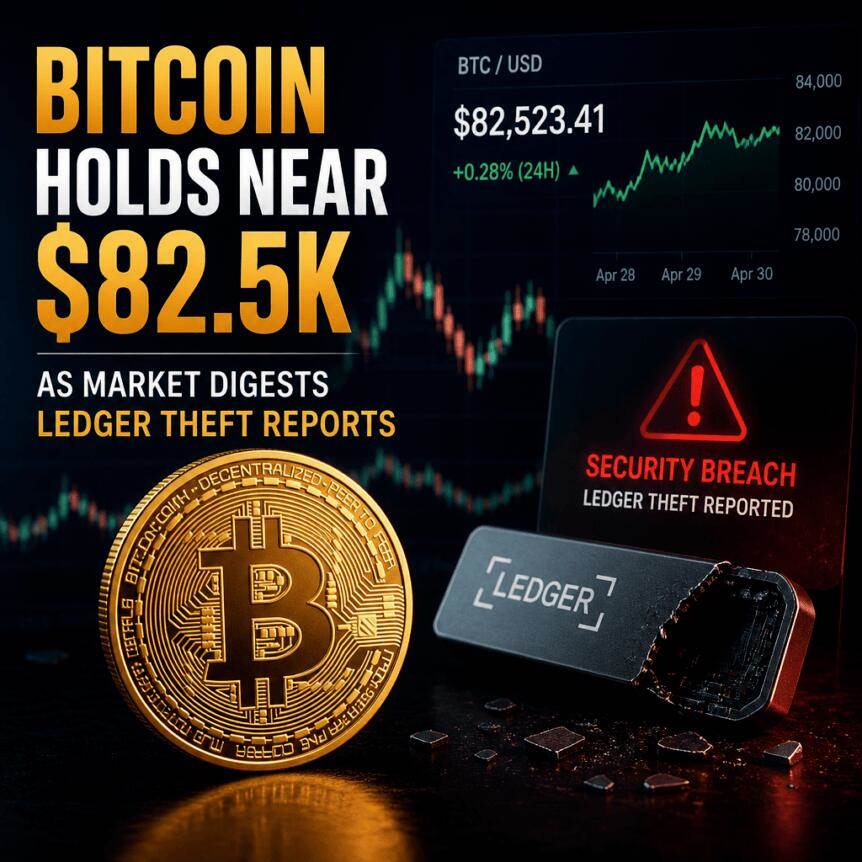
At noon on Friday, October 9, 2026, the Bitcoin trading price will be approximately US$83,100. The previous day (Thursday), prices had dropped to $80,337, the lowest level since mid-September. Still, Standard Chartered Bank of the UK maintains its year-end price target of $100,000. To achieve this goal by December 31, current prices need to rise by about 20%, and ETF investors are currently tending to withdraw funds rather than increase their holdings.
Net outflow of US$729 million in two days
According to daily data from Farside Investors, the U.S. spot Bitcoin ETF had a net outflow of US$484.9 million on Wednesday, October 7, and a further net outflow of US$244.1 million on Thursday, October 8. Among them, BlackRock's iShares fund reported an outflow of $207.7 million on Wednesday alone; on Thursday, the largest single outflow came from Fidelity funds, with a total amount of $197.1 million. So far, the cumulative net outflow in the first six trading days of October was approximately US$407 million, in sharp contrast to the net inflow of US$2.65 billion achieved in September.
We analyzed the reasons why prices fell below $81,000 on Thursday in our report on the collapse of the crypto market, and discussed in detail the factors behind the first large outflow of funds in our ETF divestment analysis.
Standard Chartered Bank: Year-end target of US$100,000
According to Yahoo Finance, Geoffrey Kendrick, head of digital assets at Standard Chartered Bank, confirmed its year-end target of $100,000 at the end of September. It is worth noting that this target is the result of two downward adjustments: Kendrick had previously predicted that Bitcoin would reach US$200,000 by the end of 2025. However, among the three annual goals for 2023, 2024 and 2025, Bitcoin fell short of his expectations.
At current prices, reaching $100,000 requires an increase of about 20% in just 12 weeks. This is not impossible. In the third quarter, Bitcoin prices rose from $58,566 to $83,576, an increase of approximately 43% in three months (based on CoinMarketCap daily closing price). At that time, billions of dollars were pouring into the market through ETFs every month. However, this tailwind did not appear in October.
Analysis of key technical levels
Upper resistance level: About US$87,100. Bitcoin hit this level on October 2 and has not exceeded it since the summer. Compared with today's price, the distance is less than 5%. Only by standing above this level can we show that the buyer has regained the initiative after the correction.
Lower support: Around US$80,300, which is Thursday's intraday low. The 50-day moving average is slightly lower below it, at about $79,800. If the region stabilizes, Thursday's decline can be seen as a normal correction in the uptrend since the summer.
Long-term support: The 200-day moving average is at approximately US$75,800 (based on daily closing prices). If the area near $80,000 falls, this will be the next major support level, about 9% lower than today's price.
Two paths to the end of the year
The path to US$100,000: The key is the flow of funds. If ETF funds turn into net inflows again and Bitcoin closes firm above $87,100, the $100,000 target will be within reach. The last time Bitcoin traded near this price was in mid-November 2025. The all-time high of approximately US$126,000 set on October 6, 2025 is about 52% higher than the current price and belongs to another order of magnitude.
Risk of falling back below US$80,000: If outflows continue, the 200-day moving average (approximately US$75,800) will become the focus of attention, and Standard Chartered Bank's target will be postponed to the next year as it has in the past three years. As long as the area around $80,000 remains solid, the uptrend since July remains intact.
What it means for European investors
For German retail investors, it is generally not possible to directly trade U.S. spot Bitcoin ETFs. If you wish to purchase Bitcoin directly, our Bitcoin Savings Plan Comparison List provides information on relevant providers and their fees. The fixed investment strategy can spread entry time and avoid timing problems, which is especially important in a volatile week.
When it comes to taxation, the holding period rule still applies: in Germany, Bitcoin gains held for more than one year are exempt from tax. The Bundestag rejected a motion to cancel the holding period on Thursday, and we have compiled the details of the vote. If you still hold the Bitcoin you bought at last year's high, our Bitcoin tax article explains what to consider in the current loss situation.
Summary
The current situation can be summarized into three points: First, the target of US$100,000 still exists, but only if an increase of about 20% is achieved within 12 weeks, and Kendrick's year-end targets for three consecutive years have not been fulfilled; Secondly, the flow of ETF funds reversed in October, with an outflow of US$729 million in just two days after an inflow of US$2.65 billion in September; Third, as long as the area around $80,000 remains solid, the upward trend since July will not change, and stabilizing at $87,100 will be the next wave of upward signs.
Cryptocurrency assets are highly volatile and there is a risk of total loss. This article does not constitute any advice on buying and selling Bitcoin.