Exchange Ranking
 Top Exchanges
 24h Volume Ranking
 Popularity Ranking
 Exchange BTC Balance
 Proof of Reserves
 Decentralized Exchanges
 Funding Rate
 Funding Heatmap
 Liquidation Data
 Max Pain
 Long/Short Ratio
 Whale L/S Ratio
 Binance/Okex/Huobi L/S
 Bitfinex Margin L/S
 ETF Tracker
 Solana ETF
 XRP ETF
 Hong Kong ETF
 Bitcoin Treasuries
 Crypto Reversal
 Ethereum Reserves
 HyperLiquid Wallet Analysis
 Hyperliquid Whale Watch
 Large Transactions
 On-chain Movement
 Bitcoin ROI
 Stablecoin Market Cap
 Options Analysis
 News
 Articles
 Economic Calendar
 Features
 Wallet
 Contract Calculator


 Security
 Collections
 Watchlist
 Following
 LIT
临近年末,情绪最热的名字非Lighter莫属。随着币安、OKX先后开启LIT盘前交易,市场迅速给出“定价锚点”,Polymarket数据显示其TGE后估值站上30亿美元的概率已过半,链上一次性转移2.5亿枚LIT更是直接点燃FOMO。但在估值博弈、积分收益测算和空投预期之外,真正值得追问的是:这些热度究竟来自真实交易量与用户黏性,还是短期激励堆出来的流量泡沫?当Perp DEX赛道进入正面竞争期,Lighter的狂热,或许正是整个去中心化衍生品能否走向可持续的关键试金石。
估值锚点与0费率陷阱
在2025年Perp DEX赛道的群雄混战中,Lighter走出了一条与众不同的扩张路径。相比于Hyperliquid凭借极致的运营能力和零VC背书的公平叙事突围,以及Aster背靠币安生态的品牌溢价,Lighter选择深度拥抱顶级资本。
根据RootData数据,Lighter于今年11月完成了由Founders Fund和Ribbit Capital领投、Robinhood参投的6800万美元巨额融资,其Pre-TGE估值已高达15亿美元,在此之前更有Dragonfly、Haun Ventures等老牌机构为其背书。

从账面指标来看,Defillama显示Lighter的未平仓合约(OI)达15.72亿美元,月度收入1027万美元,年化收入直逼1.25亿美元。在交易量维度,Lighter近30天录得2271.9亿美元,甚至压过了赛道标杆Hyperliquid(1750.5亿美元)与Aster(1890.34亿美元),一度被市场认定为今年perp DEX的一匹黑马。
市场分析认为,Lighter的野心远不止于一家单纯的永续合约交易所,而是致力于构建去中心化的交易基础设施,旨在接入券商、金融科技公司及专业做市商。在零售端,Lighter推行类似Robinhood的“零手续费”策略,但其存在200-300毫秒延迟,这无疑为高频做市商创造了极佳的套利窗口,冲着“低费”而来的普通散户虽免去了显性手续费,却可能在隐性滑点中付出数倍于正常水平的交易代价。
因此,市场对其商业模式存在一定争议,对其估值逻辑也超出单纯的Perp DEX维度比较。尽管Polymarket显示其TGE后估值预期落在20亿至30亿美元区间,但其是否能撑起长期的机构级叙事,仍需打上一个问号。
On the other hand, historical experience has repeatedly shown that the fate of “peak performance from day one” is inevitable for many VC-backed projects. Data from 2025 shows that the performance of these projects in the secondary market is severely inconsistent with their valuation. For example, Humanity Protocol, which was valued at $1 billion by VC investors, currently has a market value of only $285 million. Fuel Network and Bubblemaps, respectively valued at $11 million and $6 million by VC investors, have market values that are dozens of times lower. Other projects like Plasmas and DoubleZero have market values that are only 10% to 30% of their VC valuations. In the face of these “vanity metrics” created under the influence of capital, Lighter may just be another example of such cases.
The false prosperity of Prep DEX
The ongoing concerns regarding Lighter essentially reflect the deep-seated bottlenecks in the Perp DEX sector.
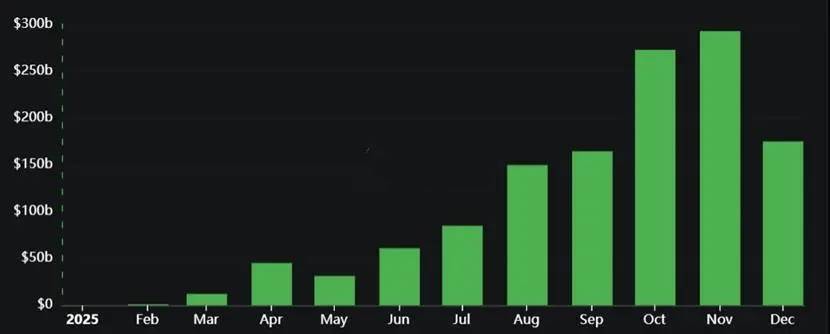
First of all, the core user group of Perp DEX should be leveraged traders and institutional arbitrageurs. However, actual activity levels are far below expectations. According to DeFiLlama data, even in October when monthly trading volume reached a record high of $1.2 trillion, the number of truly active users globally remained at only tens of thousands to hundreds of thousands. This is a significant gap compared to the hundreds of millions of users on CEXs like Binance and Bybit.
The reason for this is that while users choose DEXs primarily for low fees and on-chain privacy, most individual investors are not very concerned about privacy issues. Moreover, with Hyperliquid establishing a strong liquidity advantage through its own Layer 1 infrastructure, it becomes difficult for new players to compete on the same level.
The limitations of the user base mean that growth in these projects relies heavily on “temporary users” rather than loyal customers. According to CoinGecko’s reports, arachid drop farming will be prevalent by the end of 2025. Most of these new users are attracted to the platform for rewards rather than long-term trading purposes, resulting in significantly reduced retention rates after token issuance. Take Lighter as an example: although its second season attracted over 500,000 new users, analysis shows that 80% of these users belonged to multiple wallet Sybil accounts. The actual number of active users is far lower than what seems on the surface.
Additionally, the current state of these projects reflects a situation where various parties are involved in short-term games of thrones: project developers need TVL and trading volume to support their valuation narratives, while they use rewards and low transaction fees to attract users. Venture capitalists aim for high valuations to maximize their returns, while users flock to earn rewards and withdraw money after receiving arachids.
Forklog analysis indicates that while this “game of interests” boosts financial figures, it essentially involves short-term battles between different parties, rather than sustainable development for all stakeholders. A typical example is Aster, which, after adjusting its reward multipliers in November 2025, saw 400,000 wallets quickly switch to Lighter. This led to a sharp increase in gas fees and a complete collapse of the platform.
Stephan Lutz, CEO of BitMEX, warns that the trend of Perp DEXs may not be sustainable, as CEXs still hold 95% of open orders. DEX models rely too much on incentive mechanisms, making their business logic extremely fragile. 21Shares’ mid-2025 report also emphasizes that although Perp DEXs’ market share increased from 5% at the beginning of the year to 26%, this growth was driven by bullish sentiment, leading to fierce competition and fragmentation.
Additionally, the surge in transaction volume on Perp DEXs is driven by users motivated by incentives related to points. By the end of 2025, the popularity of mining activities related to point-based rewards became even more intense, which explains why both Lighter and Aster achieved monthly transaction volumes exceeding $180 billion. Although Aster has already issued tokens, it still needs to rely on continuous reward programs to maintain its growth. This “subsidy-driven retention” strategy essentially amounts to borrowing future profits.
It turns out that projects that rely on capital support and point-based incentives often face harsh valuation adjustments after a public offering. Looking back at projects like Vana, which were backed by top VC firms, it can be seen that despite a temporary increase in FDV after their TGE in 2024, their value quickly dropped by 70% due to the loss of incentive support, turning them into “ghost projects” with no liquidity left. Lighter and Aster’s current success seems to follow the same path as these valuation-distorted VC projects.
In today’s market landscape, the leading position of Perp DEXs is largely established. Hyperliquid dominates the market with its early-stage revenue and stable performance, while other players must compete in narrow niches such as mobile optimization, insurance mechanisms, or RWA integration to survive.
Ultimately, the Perp DEX market is still in a stage of competition among existing players. For small investors who are less sensitive to privacy concerns, DEXs still lack sufficient motivation to switch. Behind the surface-level excitement, the actual value may be much less than what the data suggests.
Conclusion
In this prosperous ecosystem built upon integrations, VC investments, andird projects, Perp DEX seems to be trapped in a self-sufficient illusion. However, when the subsidies dry up, those “dark horses” that rely solely on capital-driven narratives will eventually be exposed as weaklings in the face of liquidity challenges in the secondary market.
Lighter’s story continues, but it serves as a reminder to crypto investors that the DeFi sector never lacks exciting opportunities. What’s lacking is the ability to withstand the bubbles along the way. As we chase the next big moment, it’s important to ask ourselves: Who really benefits from this carnival?