Exchange Ranking
 Top Exchanges
 24h Volume Ranking
 Popularity Ranking
 Exchange BTC Balance
 Proof of Reserves
 Decentralized Exchanges
 Funding Rate
 Funding Heatmap
 Liquidation Data
 Max Pain
 Long/Short Ratio
 Whale L/S Ratio
 Binance/Okex/Huobi L/S
 Bitfinex Margin L/S
 ETF Tracker
 Solana ETF
 XRP ETF
 Hong Kong ETF
 Bitcoin Treasuries
 Crypto Reversal
 Ethereum Reserves
 HyperLiquid Wallet Analysis
 Hyperliquid Whale Watch
 Large Transactions
 On-chain Movement
 Bitcoin ROI
 Stablecoin Market Cap
 Options Analysis
 News
 Articles
 Economic Calendar
 Features
 Wallet
 Contract Calculator


 Security
 Collections
 Watchlist
 Following
 BTC
Recently, the price of Bitcoin has been fluctuating below its high levels, with increasing divergence in short-term trends. In the market, some institutions have issued bearish predictions, warning investors to be cautious about potential pullbacks. Meanwhile, Wall Street giants and leading venture capitalists have expressed more optimistic views, focusing on long-term improvements in liquidity and opportunities for institutional investors to enter the market. With various opinions coexisting, understanding the core logic behind these views can help identify structural changes in the market and potential investment opportunities.
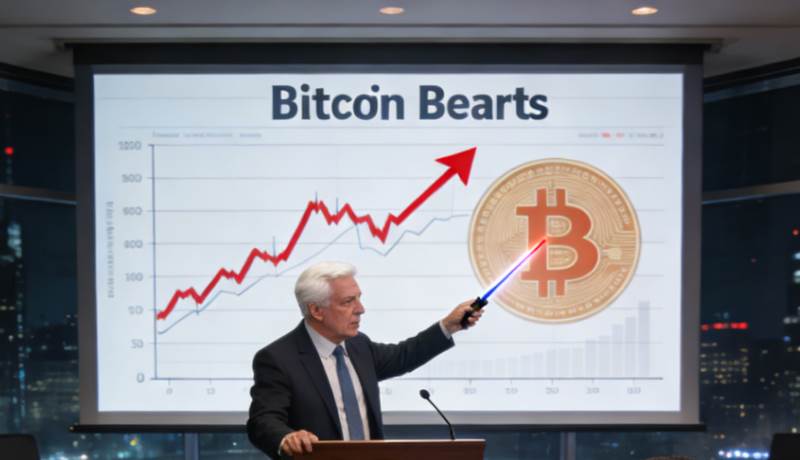
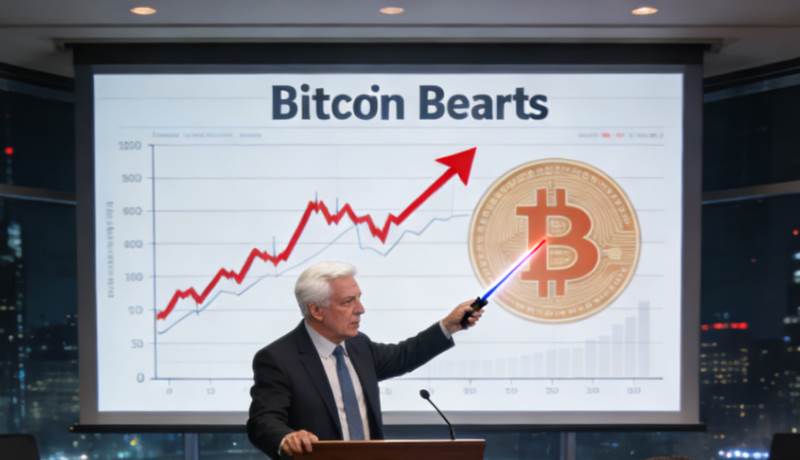
I. Bearish camp: Dwindling demand and technical breakdown
CryptoQuant, known for its analysis based on blockchain data, and Fundstrat, renowned for its strategic analysis, have both issued bearish warnings. Their main arguments revolve around the stagnation of demand growth and the breakdown of key support levels.
1. CryptoQuant: The demand cycle has peaked, marking the beginning of a bear market
In its report released on December 20th, CryptoQuant bluntly stated that demand for Bitcoin has slowed significantly, indicating that the market is transitioning towards a bear market.
● The wave of demand has passed: The report analyzes that three major factors that drove price increases since 2023—the launch of US spot ETFs, the results of the 2024 U.S. presidential elections, and companies incorporating Bitcoin into their financial reserves—have now reached their peak. Since early October 2025, demand growth has consistently been below trend levels.
● Institutional behavior has reversed:一个关键的微观证据是,美国现货比特币ETF在2025年第四季度已转为净卖出,持仓量减少了约2.4万枚比特币。这与2024年同期的强劲净买入形成鲜明对比。同时,持有100至1000枚比特币的地址(通常包含ETF和上市公司)增长也低于趋势,此现象与2021年底熊市开启前的情况类似。
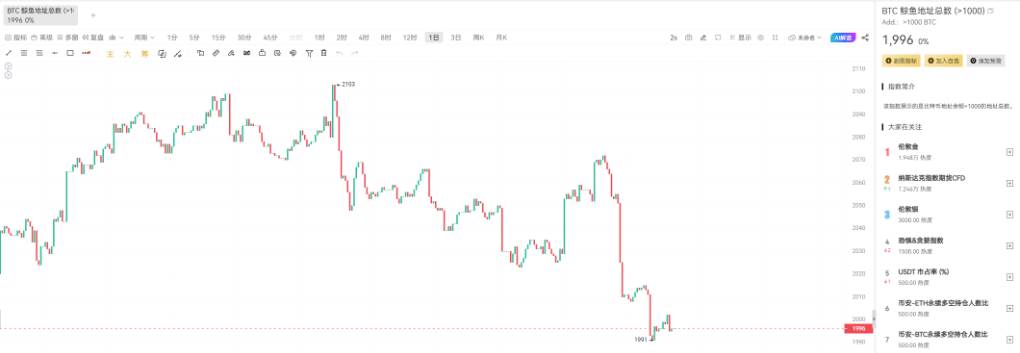
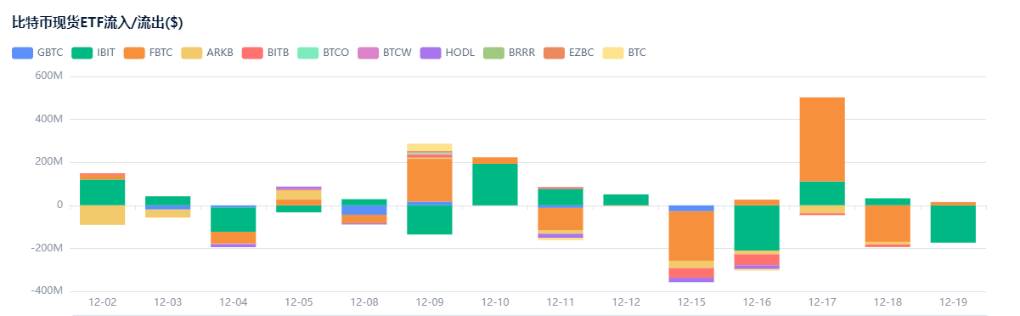
● 衍生品市场降温:永续期货合约的365日移动平均资金费率已降至2023年12月以来的最低水平。从历史上看,资金费率的持续下降反映市场维持多头头寸的意愿降低,这是熊市环境的典型特征,而非牛市。
● 关键技术位失守:比特币价格已跌破其365日移动平均线(动态支撑位),这在历史上常被视为牛市与熊市的分界线。
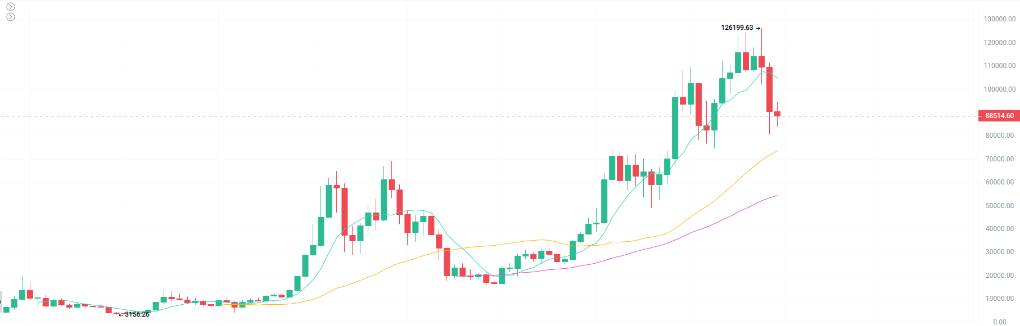
基于上述判断,CryptoQuant给出了具体的价格预测:中期支撑位在7万美元附近。若下跌趋势持续,长期来看,比特币的熊市底部通常与“已实现价格”(当前约5.6万美元)重合,这意味着从近期高点最大可能回落约55%——尽管如此,这仍可能是有记录以来最小的熊市回撤幅度。
2、Fundstrat:预期深度回调,为下半年布局提供机会
Fundstrat, a consulting firm under Tom Lee, has also predicted that the market will face pressure in the short term. Sean Farrell, the head of digital asset strategies at Fundstrat, outlined his predictions in a report titled “Cryptocurrency Outlook for 2026.” According to this report, Bitcoin could fall back to the range of $60,000 to $65,000 in the first half of 2026. Other major cryptocurrencies are also expected to experience significant declines: Ethereum (ETH) could drop to $1,800 to $2,000, while Solana (SOL) could fall to $50 to $75. Farrell believes that these corrections will provide more attractive entry opportunities for investors looking to invest before the end of 2026. He remains optimistic about Bitcoin and Ethereum’s potential values at the end of the year, setting targets of around $115,000 for Bitcoin and $4,500 for Ethereum. However, he advises investors to remain cautious if these predictions do not materialize, and to wait for confirmation signs of a strengthening trend. Interestingly, this contradicts Tom Lee’s own optimistic statements during public appearances, where he predicted that Bitcoin and Ethereum would reach new highs in January. This highlights the significant disagreement among market participants regarding short-term trends. On the other hand, some institutional investors believe that these corrections could represent an opportunity to invest in certain assets. In contrast to the pessimistic views mentioned above, traditional financial giants and some venture capital firms have reached different conclusions based on broader cyclical patterns and capital flows. For example, Citibank believes that Bitcoin has great potential for growth, with a target price of $114,000.On the same day as CryptoQuant released its bearish report, analysts at Citibank presented a multi-scenario forecast. Their baseline estimate was significantly higher than the current price level.
● Three scenario predictions: Citibank estimated the target price for Bitcoin over the next 12 months at $143,000. They also identified an optimistic scenario of $189,000 and a pessimistic scenario of $78,500.
● Key driving factors: The report emphasized that sustained inflows of ETF funds and the improving regulatory environment were key drivers of upward movement. It was noted that if Bitcoin could break through key technical levels, such as the 50-day moving average, it could create further room for growth. It’s worth noting that the pessimistic scenario of $78,500 is roughly equivalent to the $70,000 medium-term support level mentioned by CryptoQuant, indicating that different institutions agree on the importance of this level as a support point.
2. IOSG Ventures: Currently, it’s a period of “institutional accumulation,” not the peak of a bull market.
Jocy Lin, co-founder of IOSG, a leading cryptocurrency venture capital firm, shared her views on social media platforms, offering a groundbreaking perspective on market cycles.
● Paradigm shift: Jocy believes that 2025 marks a fundamental structural change in the crypto market, shifting from a system dominated by retail investors to one where institutional asset allocation becomes more important. Core data shows that institutional ownership has reached 24%, while retail investors have significantly decreased.
● The logic of “buying more when prices fall”: He pointed out that this current stage is not the “peak of a bull market,” but rather a “phase of institutional accumulation.” Institutions continue to buy at high prices, focusing on the cycles that will unfold over the next few years, rather than short-term price movements. Therefore, although Bitcoin’s price will show a downward trend in 2025, spot Bitcoin ETFs have recorded a significant net inflow of approximately $25 billion.
● Policy-driven market outlook: Based on the US political cycle, he predicts that the first half of 2026 will be a “policy honeymoon period,” during which markets are driven by institutions and policies. The target price range is between $120,000 and $150,000 per unit. Political uncertainties in the second half of the year could increase market volatility.
III. Disagreements among institutional KOLs and insights into market structure
In addition to professional analysis reports, the views of key opinion leaders (KOLs) who have institutional backgrounds or significant market influence also deserve attention.
● Macroeconomic factors and KOL influence: Michael Saylor, CEO of MicroStrategy, has been recognized as the “ultimate KOL” in the industry due to his company’s continuous large-scale purchases of Bitcoin and his optimistic statements. His remarks significantly affect market sentiment and trading volume.
● Warning signs regarding altcoin valuations: Pranav Kanade, portfolio manager at VanEck, pointed out a serious issue in his earlier presentation: Most of the assets in the altcoin market are overvalued, lacking long-term value. This suggests that if the market turns bearish, altcoins may experience more severe adjustments than Bitcoin. Investors should be vigilant about potential risks.
IV. Conclusion: The market is currently in a phase of complex negotiations and structural reshaping
Based on various perspectives, it is clear that the current market is at a stage of complex negotiations and structural reshaping:
● Short-term consensus versus long-term divergence: In the short term (next 3-6 months), many institutions agree that the market faces pressure to pull back. The range of $65,000 to $75,000 is generally considered an important support level for the medium term. However, there is significant disagreement in the long term (12 months or more): some believe the market will fall to $56,000, while others expect it to rise to $189,000. The range is quite wide.
● Differences in interpretation of data: The same data can be interpreted differently by different analysts. Those who are bearish view ETF net outflows and price drops below annual resistance levels as signs of declining demand and the beginning of a bear market. On the other hand, those who are bullish see the large net inflows of ETFs during price declines, along with increased institutional cash holdings, as signals of healthier market structure and strengthened long-term foundations. This divergence stems from the clash between the “cycle peak theory” and the “institutionalized medium-term theory”.
● Changes in investment logic: Jocy, a partner at IOSG, has offered insightful views. He argues that the valuation logic of past cycles may be losing effectiveness. As pricing power gradually shifts from retail investors to institutions that follow different evaluation criteria and risk preferences, the patterns of market fluctuations and the characteristics of peaks and troughs may change. The current turmoil might not be simply a transition from bull to bear markets, but rather a painful transition between old and new market structures.
For investors, in the midst of such a complex array of opinions and signals, it may be more appropriate to focus on the fundamentals: carefully consider one’s own investment cycle and risk tolerance, understand the structural changes taking place in the market, avoid simply applying historical patterns, and maintain sufficient flexibility in the face of great uncertainty.