Exchange Ranking
 Top Exchanges
 24h Volume Ranking
 Popularity Ranking
 Exchange BTC Balance
 Proof of Reserves
 Decentralized Exchanges
 Funding Rate
 Funding Heatmap
 Liquidation Data
 Max Pain
 Long/Short Ratio
 Whale L/S Ratio
 Binance/Okex/Huobi L/S
 Bitfinex Margin L/S
 ETF Tracker
 Solana ETF
 XRP ETF
 Hong Kong ETF
 Bitcoin Treasuries
 Crypto Reversal
 Ethereum Reserves
 HyperLiquid Wallet Analysis
 Hyperliquid Whale Watch
 Large Transactions
 On-chain Movement
 Bitcoin ROI
 Stablecoin Market Cap
 Options Analysis
 News
 Articles
 Economic Calendar
 Features
 Wallet
 Contract Calculator


 Security
 Collections
 Watchlist
 Following
岁末市场被一份“并不完整”的通胀数据点燃。美国劳工统计局公布的11月CPI明显低于预期,整体与核心通胀双双降至近年低位,瞬间引发美元走弱、黄金拉升。尽管报告因政府停摆缺失部分数据,被视为参考价值有限,但市场仍迅速押注通胀降温与政策转向预期升温。在美元回落、避险与风险资产同步波动的背景下,比特币等加密资产的宏观敏感度也再度被推到聚光灯下。

一、数据爆冷
● 美国11月的通胀数据让市场措手不及。整体CPI同比增速仅为2.7%,核心CPI同比增速为2.6%,双双显著低于此前市场的主流预期。
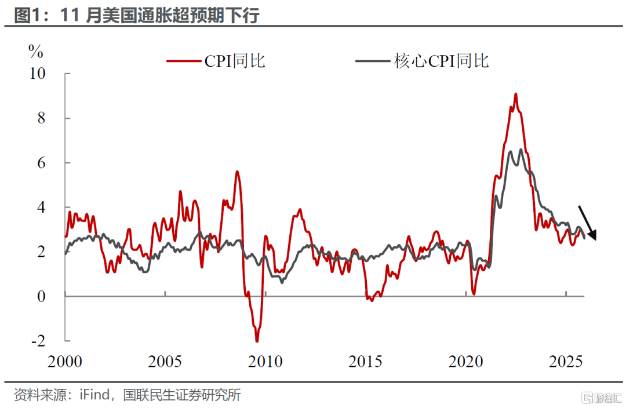
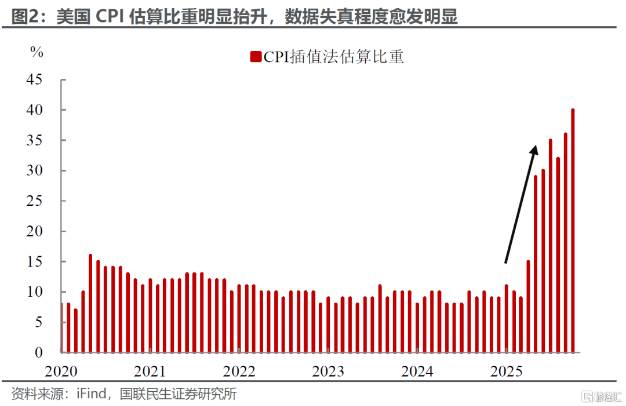
● 这份报告的特殊性在于其统计背景。由于美国政府在10月份经历停摆,劳工统计局被迫取消了当月的CPI报告,并在计算11月数据时,将10月份的CPI变化假定为零。
● 投资机构瑞银指出,这一统计处理可能导致最终报告出现约27个基点的下行偏差。如果剔除这一因素,实际通胀数据可能更接近3.0%的市场预期水平。因此,数据本身存在明显的统计“噪音”。
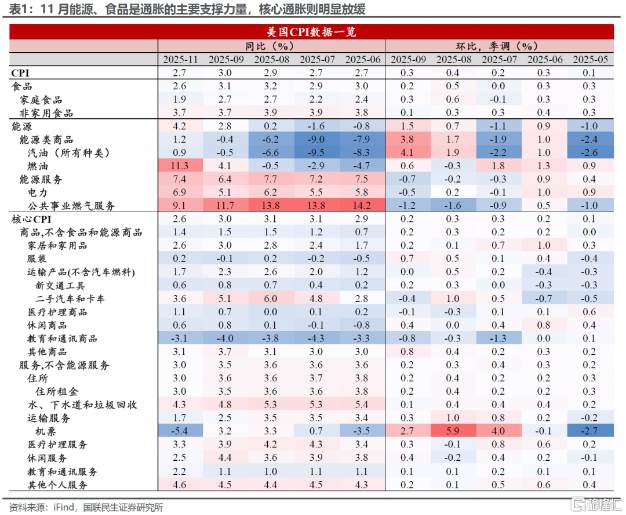
● Nevertheless, there are indeed signs of a cooling inflation trend, from a structural perspective. Core service inflation has become the main factor driving the overall decline in core inflation. In particular, housing inflation decreased significantly, from 3.6% in the previous period to 3.0%.
II. Market Reactions
● After the data was released, financial markets responded quickly. U.S. stock futures rose across the board, with the NASDAQ 100 index futures increasing by more than 1%. At the same time, U.S. government bond prices rose, while their yields fell accordingly.
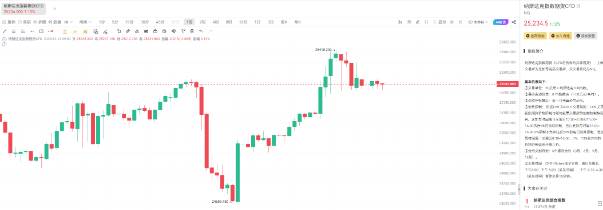
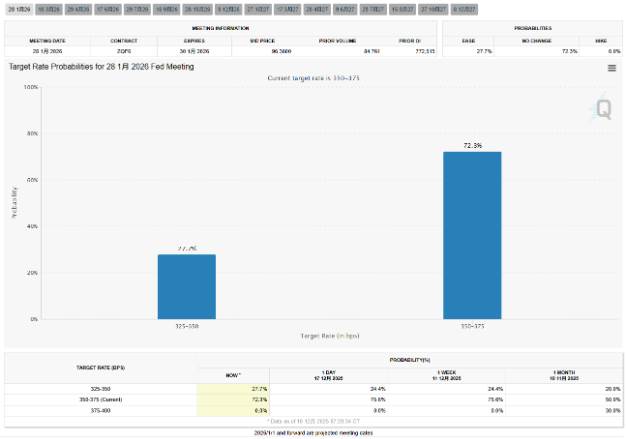
● Expectations of a shift in Federal Reserve policy have increased significantly among interest rate futures traders. Data shows that the market’s belief that the Fed will cut rates in January next year has risen from 26.6% to 28.8%. Additionally, market expectations are that policy rates will be further reduced by another 3 basis points by the end of 2026. It is estimated that the Fed will implement approximately 62 basis point rate cuts next year.
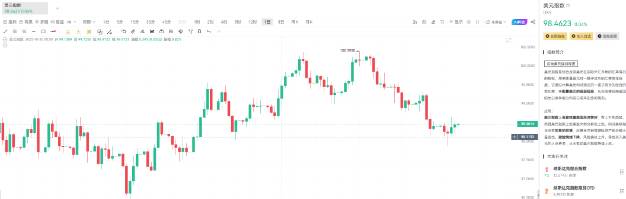
● The U.S. dollar weakened, with the USD index falling by 22 points, reaching a low of 98.20. Non-U.S. currencies generally increased in value. The euro rose by nearly 30 points against the U.S. dollar, while the U.S. dollar fell by nearly 40 points against the Japanese yen.
● Brian Jacobson, chief economic strategist at Annex Wealth Management, said, “Some people might dismiss this inflation report as being ‘less reliable than before,’ but ignoring it comes with its own risks.”
III. Internal Divisions within the Federal Reserve
In the face of this unusual inflation report, there may be a new round of debates between the hawkish and dovish factions within the Federal Reserve. The low levels of CPI data undoubtedly provide stronger arguments for the dovish side.
● In fact, internal disagreements became apparent during the recent Fed meetings. The December interest rate decision was passed with 9 votes in favor and 3 against, resulting in a 25-basis-point reduction in rates. This is the first time in six years that there were three dissenting votes. , Kansas City Fed Chairman Schmid and Chicago Fed Chairman Goolsbee opposed the rate cut, advocating for keeping rates unchanged. Meanwhile, Fed Governor Milan supported a much larger rate cut.
,,  ,
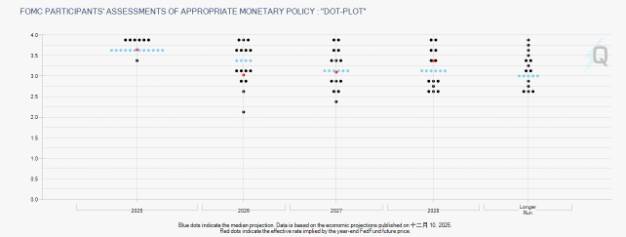
● This disagreement is also reflected in the Fed’s latest projection chart. The projection chart shows that Fed officials’ median forecast for interest rates in 2026 is 3.4%, and 3.1% in 2027, consistent with September’s predictions. This means there will be another 25-basis-point rate cut in each of the next two years.
,● However, beyond the projection chart, there are significant differences among Fed officials’ personal views. Atlanta Fed Chairman Bostic even stated that he did not include any rate cuts in his 2026 forecast. He believes that the economy will perform better at a GDP growth rate of around 2.5%, so policies still need to remain restrictive.
,IV. The policy path behind the projection chart
,● Although the projection chart provides a collective forecast by Fed officials regarding future interest rate trends, it reflects complex policy considerations and economic judgments. The current interest rate range of 3.50%–3.75% is the result of three consecutive rate cuts by the Fed.
,,  ,
● BlackRock’s analysis suggests that the most likely policy path for the Federal Reserve is to lower interest rates to near 3% by 2026. This prediction differs slightly from the median rate of 3.4% predicted by the point forecast, highlighting the gap between market expectations and official guidelines.
● The evolution of the Federal Reserve’s policy framework is also worth noting. In the fourth quarter of 2025, the Fed officially ended its quantitative tightening measures, which had been in place for nearly three years. Starting in January 2026, a new mechanism called “Reserve Management Purchases” will take effect.
● Although the Fed defines RMP as a “technical measure” aimed at ensuring sufficient liquidity in the financial system, markets tend to view it as a form of “covert easing” or “quasi-quantitative easing.” This shift in policy may become another important factor affecting future interest rate trends.
V. The Threshold for Interest Rate Cuts and Economic Observations
● With inflation data showing unexpectedly weak trends, the threshold for further interest rate cuts has become a focus of market attention. In its December statement, the Fed indicated that the threshold for continued rate cuts has significantly increased, and that the “amount and timing of future rate cuts” will depend on changes in economic conditions.
● The performance of the labor market will be a key decision-making factor. Although inflation data in November showed a slower decline than expected, the number of people filing for unemployment benefits at the beginning of the month was 224,000, lower than the expected 225,000, reversing the surge seen in the previous week. This indicates that the labor market remained stable in December.
● Zou Yin International Securities analyzed that the U.S. employment market has weakened slightly, but the situation has not deteriorated significantly yet. The number of people receiving unemployment benefits for the first time and those continuing to receive benefits remains low, and there has been a slight improvement since October.
● The institution predicts that inflation will continue to decline in the first half of 2026, possibly due to lower oil prices and a slowdown in wage and rent increases. The Federal Reserve may consider cutting interest rates once again in June as a form of political statement. However, inflation could rebound in the second half of the year, and the Fed might keep interest rates unchanged.
Six. Various predictions from Wall Street
● There is significant disagreement among analysts on the interest rate path for 2026. BOC International expects the Fed to cut interest rates by 50-75 basis points by 2026, bringing rates back to a “neutral” level around 3%.
● Morgan Stanley, on the other hand, holds a more cautious optimism. It believes that the resilience of the U.S. economy, especially strong non-residential fixed investments, will support economic growth. Therefore, they expect the rate cuts to be more limited, with policy rates likely to stabilize around 3%-3.25% by mid-2026.
● ING depicts two extreme scenarios:
The first scenario involves a substantial deterioration in economic fundamentals, leading the Fed to implement aggressive easing measures to counter the risk of recession. In this case, the yield on 10-year U.S. bonds could drop significantly to around 3%.
Secondly, it is possible that the Federal Reserve may, under political pressure or due to a misjudgment of the situation, loosen monetary policy too early and excessively, even when the economy has not shown any clear signs of slowing down. This could seriously damage the credibility of the Federal Reserve and trigger deep concerns among market participants regarding inflation失控情况. As a result, the yield on 10-year U.S. bonds could skyrocket, potentially even reaching levels above 5%.
Seventh, future prospects and investment insights
● Looking ahead, changes in the leadership of the Federal Reserve could introduce new uncertainties into monetary policy decisions. The term of office of Chairman Powell will expire in May 2026, and the appointment of a new chairman could influence the Federal Reserve’s policy direction and communication strategies.
● According to analysts at Guolian Minsheng Securities, although the CPI data in November may not change the Federal Reserve’s decision to delay interest rate cuts until January next year, it will undoubtedly increase the number of dovish voices within the Federal Reserve. If December’s data continues the current slow growth trend, it might prompt the Federal Reserve to reconsider its interest rate cut path for next year.
● For investors, BlackRock recommends considering several fixed-income investment strategies under the current macroeconomic conditions: investing cash in 0-3 month Treasury bonds or diversifying short-term bond investments; increasing the proportion of intermediate-term bonds; constructing bond portfolios to lock in returns; and seeking higher returns through high-yield bonds and emerging market bonds.
Kevin Flanagan, head of fixed-income strategies at WisdomTree, pointed out that there is already a “divided house” within the Federal Reserve. The threshold for further monetary easing is very high. He emphasized that, given inflation still being about one percentage point above the target level, it will be difficult for the Fed to make decisions regarding continuous interest rate cuts, unless the labor market cools significantly. When the US dollar index fell after the data was released, gold prices quickly increased. Traders are now re-evaluating the interest rate path for 2026. Although this inflation report has statistical flaws, it at least provides some hope to the market. Whether this is a statistical anomaly or a real decline in inflation, the Fed’s next steps will depend on economic data in the coming months. The seemingly smooth path of interest rate cuts faces both economic realities and market expectations as challenges.