Exchange Ranking
 Top Exchanges
 24h Volume Ranking
 Popularity Ranking
 Exchange BTC Balance
 Proof of Reserves
 Decentralized Exchanges
 Funding Rate
 Funding Heatmap
 Liquidation Data
 Max Pain
 Long/Short Ratio
 Whale L/S Ratio
 Binance/Okex/Huobi L/S
 Bitfinex Margin L/S
 ETF Tracker
 Solana ETF
 XRP ETF
 Hong Kong ETF
 Bitcoin Treasuries
 Crypto Reversal
 Ethereum Reserves
 HyperLiquid Wallet Analysis
 Hyperliquid Whale Watch
 Large Transactions
 On-chain Movement
 Bitcoin ROI
 Stablecoin Market Cap
 Options Analysis
 News
 Articles
 Economic Calendar
 Features
 Wallet
 Contract Calculator


 Security
 Collections
 Watchlist
 Following
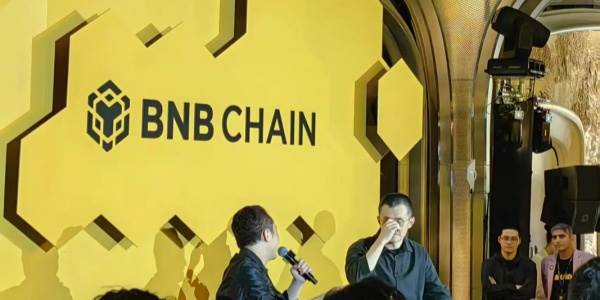
The BNB Chain once again becomes the focus of attention. This time, it’s due to a plan aimed at reducing gas fees. As the volume of transactions on the chain continues to increase, the community believes that the high level of activity alone is sufficient to support this proposal. If efficiency and low costs are the core aspects of competition among public blockchains, then the BNB Chain is trying to use this measure to strengthen its leading position.
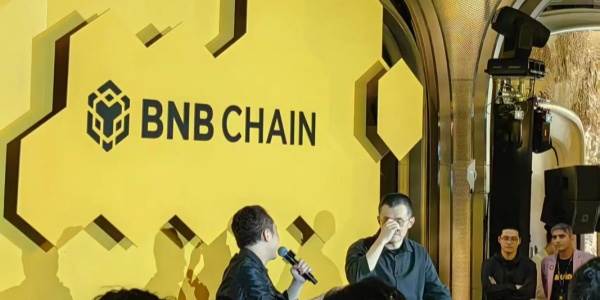
On the 24th, validators of the BNB Chain proposed a plan to reduce network gas fees and shorten the time required to generate blocks.
The goal of this proposal is to enhance the competitiveness of the network by lowering the minimum gas price to 0.05 Gwei, and reducing the interval between block generation from 750 milliseconds to 450 milliseconds.
By reducing fees, the BNB Chain aims to compete with platforms like Solana and Base. With higher transaction activity and increased BNB value, the annual yield for stakers remains stable at over 0.5%.
The BNB Chain has already reduced fees several times in the past: in April 2024, the fee was lowered from 3 Gwei to 1 Gwei; in May 2025, it was further reduced to 0.1 Gwei, a total reduction of 75%.
This is the third major fee reduction in the past 18 months. The long-term goal is to reduce the cost of individual transactions to around 0.001 USD (approximately 0.15 USD).
Background: Surging demand for transactions
This proposal is driven by a shift in the use cases of the BNB Chain. Currently, transaction activities account for two-thirds of all transactions on the network, making them the dominant application. The official proposal states that “since transaction activities have become the primary use case, lower fees are essential in attracting traders and ensuring liquidity.” Competition among decentralized exchanges is also a significant factor. Recently, Aster surpassed Hyperliquid in terms of revenue from on-chain exchanges. Data shows that Aster’s daily revenue reached $7.2 million, far exceeding Hyperliquid’s $2.79 million. This highlights the importance of low-fee structures for trading platforms, and also intensifies the “on-chain exchange battle.” In May 2025, measures to reduce fees had a significant impact: the median transaction fee decreased by 75% (from $0.04 to $0.01), while the number of transactions per day increased by 140%, reaching over 12 million transactions. It seems that there is a strong correlation between fee reductions and increased network usage. This successful initiative led to a sharp increase in the value of Aster Exchange’s ASTER tokens within 24 hours after the announcement, indicating the market’s rapid response to efficient trading infrastructure. This proposal is also part of the BNB Chain’s strategic transformation: from a general-purpose blockchain to a blockchain dedicated to decentralized transactions. The proposal also introduces new governance principles, linking the level of fees directly to the minimum annual return for validators, which should be 0.5%.这意味着未来可能形成一种全新的区块链经济模型,基于网络参与指标动态调整手续费政策。