Exchange Ranking
 Top Exchanges
 24h Volume Ranking
 Popularity Ranking
 Exchange BTC Balance
 Proof of Reserves
 Decentralized Exchanges
 Funding Rate
 Funding Heatmap
 Liquidation Data
 Max Pain
 Long/Short Ratio
 Whale L/S Ratio
 Binance/Okex/Huobi L/S
 Bitfinex Margin L/S
 ETF Tracker
 Solana ETF
 XRP ETF
 Hong Kong ETF
 Bitcoin Treasuries
 Crypto Reversal
 Ethereum Reserves
 HyperLiquid Wallet Analysis
 Hyperliquid Whale Watch
 Large Transactions
 On-chain Movement
 Bitcoin ROI
 Stablecoin Market Cap
 Options Analysis
 News
 Articles
 Economic Calendar
 Features
 Wallet
 Contract Calculator


 Security
 Collections
 Watchlist
 Following
Pi Network has always been like a “mysterious dark horse” in the crypto world. Despite continuous criticism from the outside, its popularity remains unchanged. As Pi Network continues to develop its mainnet and mobile mining experiences, its user base continues to grow. Its social sharing mechanisms, community incentives, and the early “free mining” model have helped it attract a large number of new users and investors. Combined with the recent trends in NFTs, AI, and meme coins, Pi Network, despite its controversies, has managed to capture the attention of crypto enthusiasts due to its simplicity and relevance. It has become a highly discussed phenomenon-level project.

What is Pi Network?
Even after years of delays, opaque operations, and widespread skepticism, Pi Network still has nearly fanatical followers.
However, critics argue that the project is “profit-driven,” as it relies on in-app advertising, recommendation-based growth, and centralized control over tokens. Some even claim that its KYC requirements could lead to the monetization of users’ data.
The problem is simple: a cryptocurrency that can be mined using mobile devices is criticized for its limitations and lack of practicality. How can it get millions of people to click the buttons every day?
Pi Network was founded in 2019 by founders who graduated from Stanford University. Its goal is to revolutionize the way cryptocurrencies are mined. Users don’t need high-energy-consuming hardware; instead, they can “mine” Pi using smartphone apps to purchase coins.
This project relies on the Star Consensus Protocol (SCP) and social “security circles,” rather than the Proof of Work (PoW) mechanism. This should enable more inclusive practices in the hash power competition.
In February 2025, after years of delays in fulfilling initial promises, Pi finally launched its main network, enabling external transactions and token transfers.
However, progress has been slow. Issues such as migration delays, backlog of KYC processes, and uneven access levels have frustrated many users. Nevertheless, market hype remains strong: Pi’s price briefly rose to around $3, but by September 2025, it dropped back to around $0.34.
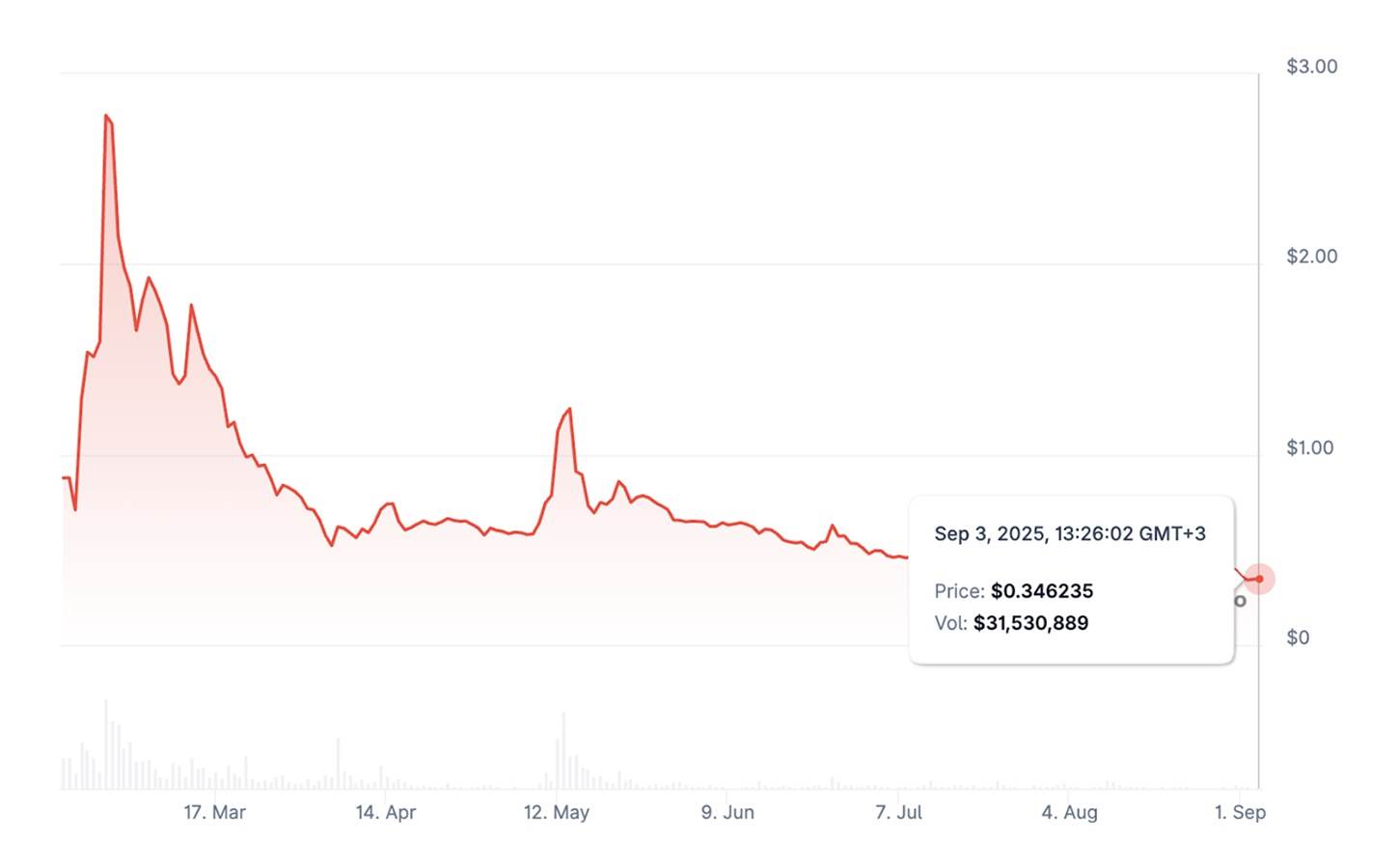
So far, despite facing increasing operational and structural problems, Pi Network has managed to maintain a high level of enthusiasm from its users.
There are also criticisms and warning signs related to the project.
Although Pi Network continues to attract a large number of daily users, critics argue that its underlying mechanisms contain unresolved flaws.
1. Centralization and control by the core team
Despite claiming to be an “open network,” Pi still has its control centralized in the hands of its core team. All verifier nodes are operated by project developers, not independent community members. This undermines the decentralized foundation upon which most cryptocurrencies are based.
2. opaque token economics and distribution
Pi 设定了 1000 亿个代币的最大供应量, 分为四个部分:65% 用于社区挖矿奖励,20% 用于核心团队,10% 用于基金会储备,5% 用于流动性。理论上,这看起来很简单,但实际流通量取决于有多少代币迁移到主网。每个类别的解锁速度都与已验证的迁移挖矿奖励 (MMR) 同步。
3、与 MLM 类似的基于推荐的奖励
Mining Pi 严重依赖推荐和“安全圈”。批评人士认为 ,这种分层招聘系统反映了多层次营销计划,在新用户增长放缓的当下,其可持续性引发了质疑。

4、上市限制和流动性问题
即使在 2025 年 2 月主网启动后,Pi 的交易场所仍然仅限于 OKX、Gate.io、Bitget 和 MEXC 等中型交易所。币安和 Coinbase 等主要平台已暂停上线 Pi,理由是存在尚未解决的代币经济学和中心化问题。
5、波动性和可疑的代币活动
Pi 的市场表现一直不佳:从 2025 年初接近 3 美元的高点跌至 2025 年 9 月 3 日的 0.34-0.35 美元左右(暴跌 90%)。与此同时,一个名为“GAS…ODM”的加密钱包悄悄积累了 3.31 亿个 Pi 币 ,进一步加剧了人们对其内部人士操控行为的怀疑。
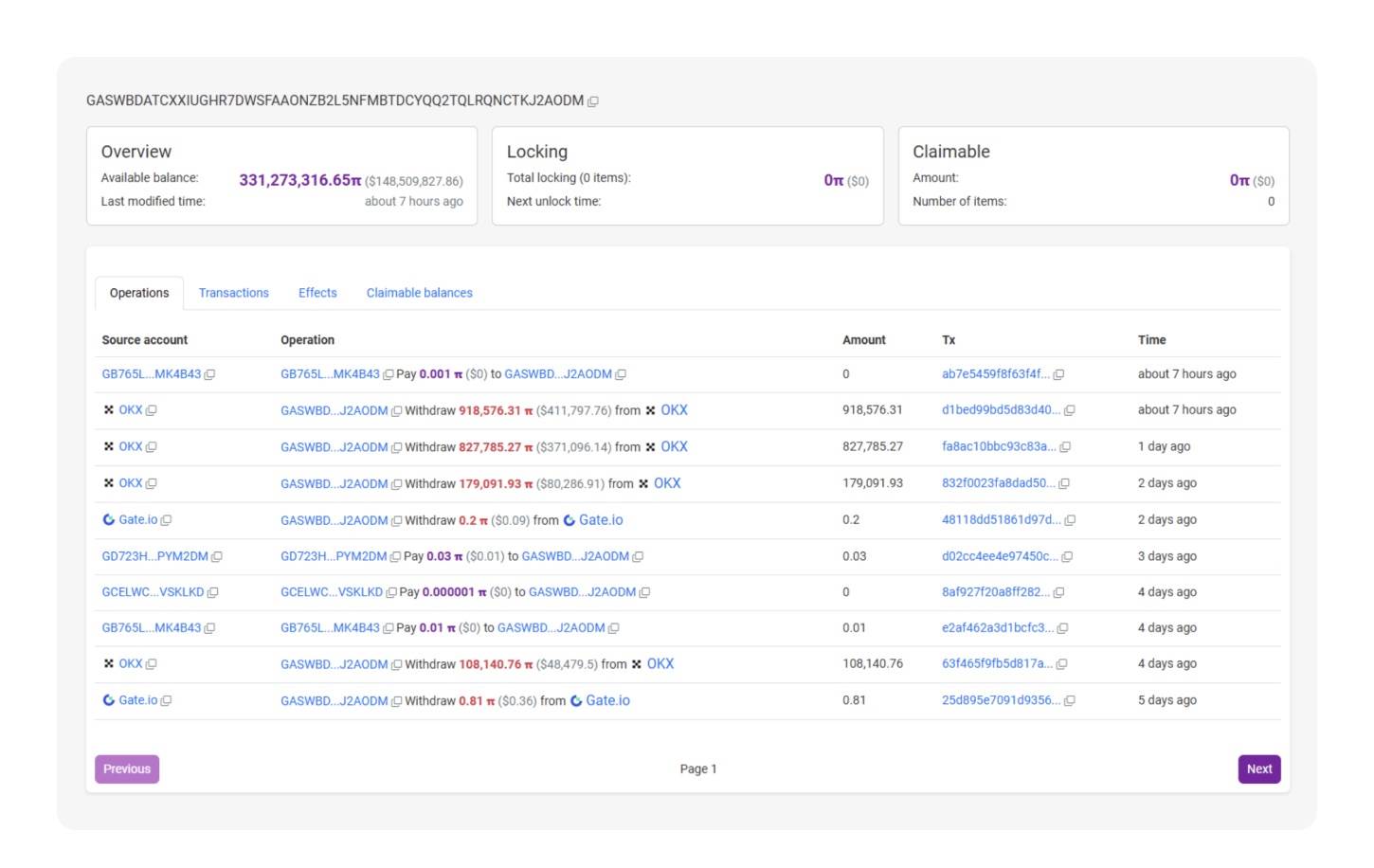
6、中心化 KYC 带来的隐私风险
要将挖矿的 Pi 迁移到主网,用户必须首先通过 “了解你的客户”(KYC) 认证。这意味着需要上传政府签发的身份证件并完成面部识别“实时自拍”验证。报告显示 ,这些数据存储在中心化服务器上,而非用户控制的系统,这引发了隐私和安全风险方面的批评。
这种担忧并不新鲜:之前有关第三方 KYC 提供商问题的指控引发了人们对 Pi 如何处理敏感用户信息以及是否采取了足够保护措施的持续质疑。
为什么炒作持续不断
免费试挖矿、社会强化和稳定的生态系统信号相结合,让数百万人投入情感(即使批评者关注流动性缺口、有限上市和集中化)。
1、进入门槛低,财务风险极小
挖矿 Pi 需要的是注意力,而不是资金。用户每次只需打开一次应用程序即可确认活动(无需 GPU,无需电费)。
这种框架降低了感知风险,让任何拥有智能手机的人都能访问网络。分层激励机制,例如推荐奖励(每次有效邀请可获得 25%)和安全圈(最高可获得 100% 的奖励),将体验游戏化,将随意点击转化为渐进式的进步。
2、可访问性和移动优先设计
Pi positions itself as "the cryptocurrency of the smartphone era." It eliminates the need for wallets or mining equipment, simplifying participation through a one-click process. Analysts emphasize that this is precisely Pi’s true innovation: it transforms non-technical users, those without bank accounts, or those interested in cryptocurrencies into participants through a lightweight, energy-efficient system based on SCP rather than PoW.
3. Community identity as motivation
Tags are crucial. Pi users refer to themselves as "pioneers," and activities like daily clicks, recommendations, and team building help create social cohesion.
Events like PiFest and "Pi Map" help keep people engaged and give them a sense of belonging. Although the number of Pi users—6 million—is controversial, considering cryptocurrency standards, the approximately 12 million verified accounts still represent a significant scale.
4. Experimentation and hope outweigh immediate utility
The project’s narrative focuses on the long term: first establishing a user base, then expanding functionality. This approach allows setbacks such as delayed migration or limited housing options to be seen as temporary obstacles. For those who support the project, vision is more important than immediate results.
5. Signs of continuous evolution
The various initiatives within the ecosystem continue to thrive: hack marathons, developer funding, and builder funds. These are not ultimate achievements, but they provide milestones that can be tracked and discussed by the community, helping to maintain interaction during periods of market volatility.
What comes next?
Pi’s durability is never measured by short-term prices. The real test lies in whether it can turn people’s curiosity into practical features for the open network.
For observers, there are several key points to keep an eye on:
● Decentralization practices: It’s important to prove that “open networks” aren’t just empty talk. Independent verifiers and true integrations (rather than just messaging within apps) are crucial.
● Listing and liquidity: Before large exchanges like Binance get involved, price discovery and user trust remain limited.
● Ecosystem delivery: Funding hack marathons, real-time applications, and active usage are more important than blog updates.
● KYC and migration progress: Transparency and a growing number of on-chain users will form the foundation of any functional economy.
If these milestones are successfully achieved, Pi’s hype might shift towards proven practicality. If progress stalls, then the project’s main asset will still be confidence, not fundamentals.