Exchange Ranking
 Top Exchanges
 24h Volume Ranking
 Popularity Ranking
 Exchange BTC Balance
 Proof of Reserves
 Decentralized Exchanges
 Funding Rate
 Funding Heatmap
 Liquidation Data
 Max Pain
 Long/Short Ratio
 Whale L/S Ratio
 Binance/Okex/Huobi L/S
 Bitfinex Margin L/S
 ETF Tracker
 Solana ETF
 XRP ETF
 Hong Kong ETF
 Bitcoin Treasuries
 Crypto Reversal
 Ethereum Reserves
 HyperLiquid Wallet Analysis
 Hyperliquid Whale Watch
 Large Transactions
 On-chain Movement
 Bitcoin ROI
 Stablecoin Market Cap
 Options Analysis
 News
 Articles
 Economic Calendar
 Features
 Wallet
 Contract Calculator


 Security
 Collections
 Watchlist
 Following
Whenever I think of stablecoins, I usually see them as merely a bridge between the US dollar and the blockchain—nothing more than that. But they can also become powerful infrastructure components, quietly supporting various blockchain-based products without being noticed.
For companies, the source of income for stablecoin issuers is quite straightforward: they earn revenue by aligning their stablecoins’ value with interest rates published by the Federal Reserve. The higher the interest rates, the more profit the issuers can make from US Treasury bonds that serve as collateral for the stablecoins’ circulation.
However, in recent years, the world’s largest stablecoin issuers have adjusted their reserve strategies to better adapt to macroeconomic conditions.
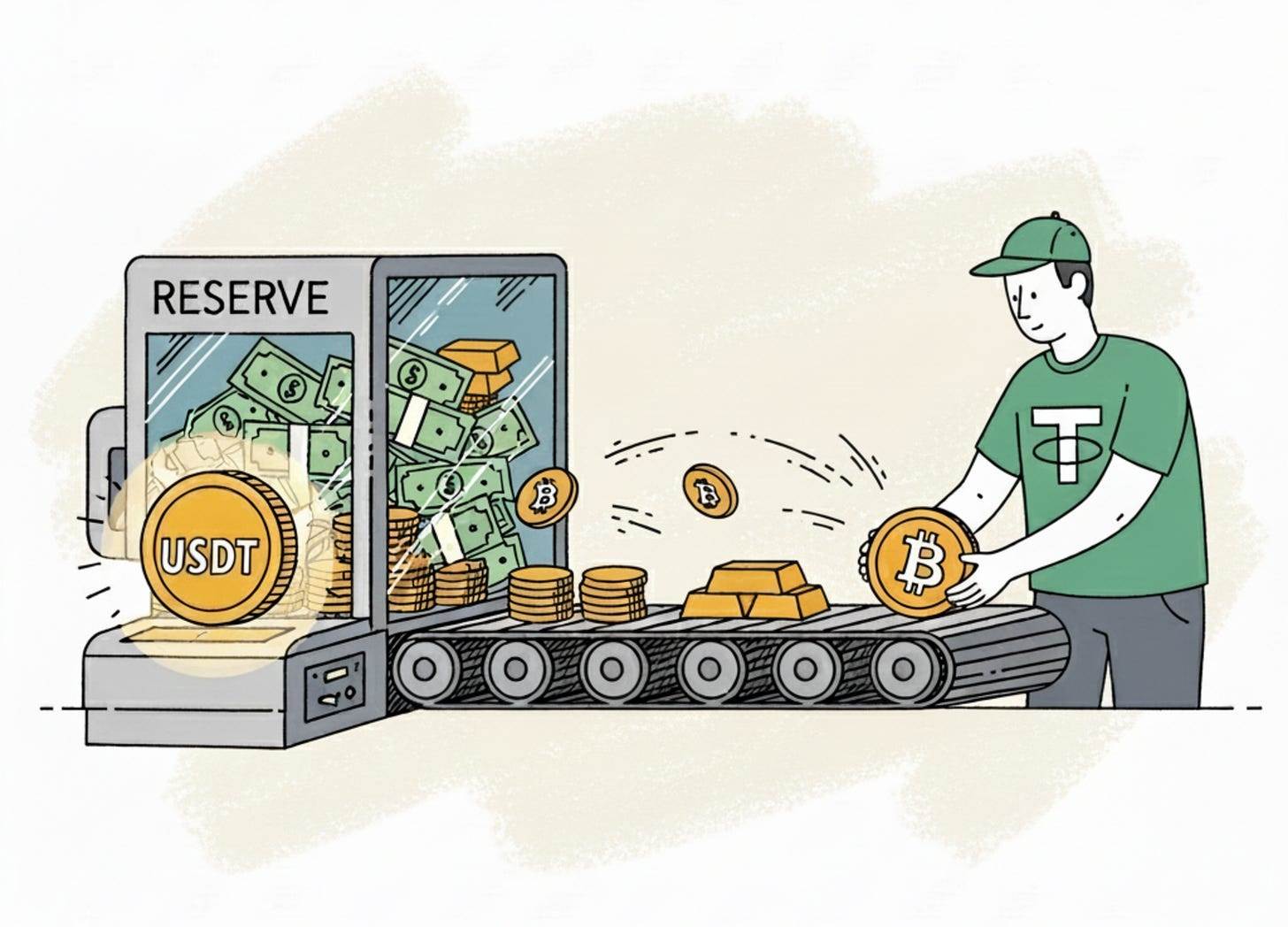
In this week’s quantitative analysis, I will explore why Tether changed its strategy—and how it replaced part of its arbitrage engine with gold and Bitcoin. This change is particularly important as we approach a shift in the interest rate cycle.
Just look at Tether’s Treasury bond holdings, and you can understand why it remains a profitable entity even during periods of high interest rates. USDT holders earn zero returns, while Tether has earned a 5% return on its investments in US Treasury bonds over the past few years, amounting to up to $100 billion.
Even if the average interest rate remained low throughout 2025, at around 4.25%, Tether still managed to achieve an annual net profit of over $10 billion as of September 30, 2025. In contrast, the second-largest stablecoin issuer, Circle, suffered a net loss of $202 million during the same period.
在过去三年的大部分时间里,Tether的商业模式与宏观经济环境完美契合。美联储将利率维持在4.5%至5.5%之间,Tether持有超过1000亿美元的国库券,收益率每提高一个百分点,就能带来约10亿美元的年收入。
在大多数加密货币公司都在努力应对运营亏损的时候,Tether通过做多短期政府债券,积累了数十亿美元的盈余。
但是,当利率周期发生转变,预计未来几年将出现降息时,会发生什么呢?
速率周期问题
芝加哥商品交易所(CME)的FedWatch数据显示,到2026年12月,联邦基金利率有超过75%的可能性会从目前的3.75%-4%区间降至2.75%-3%或3.25%-3.50%区间。这已经远低于Tether在2024年之前受益的5%利率水平。
利率下降可能会减少Tether从其持有的国库券利息中获得的收入。
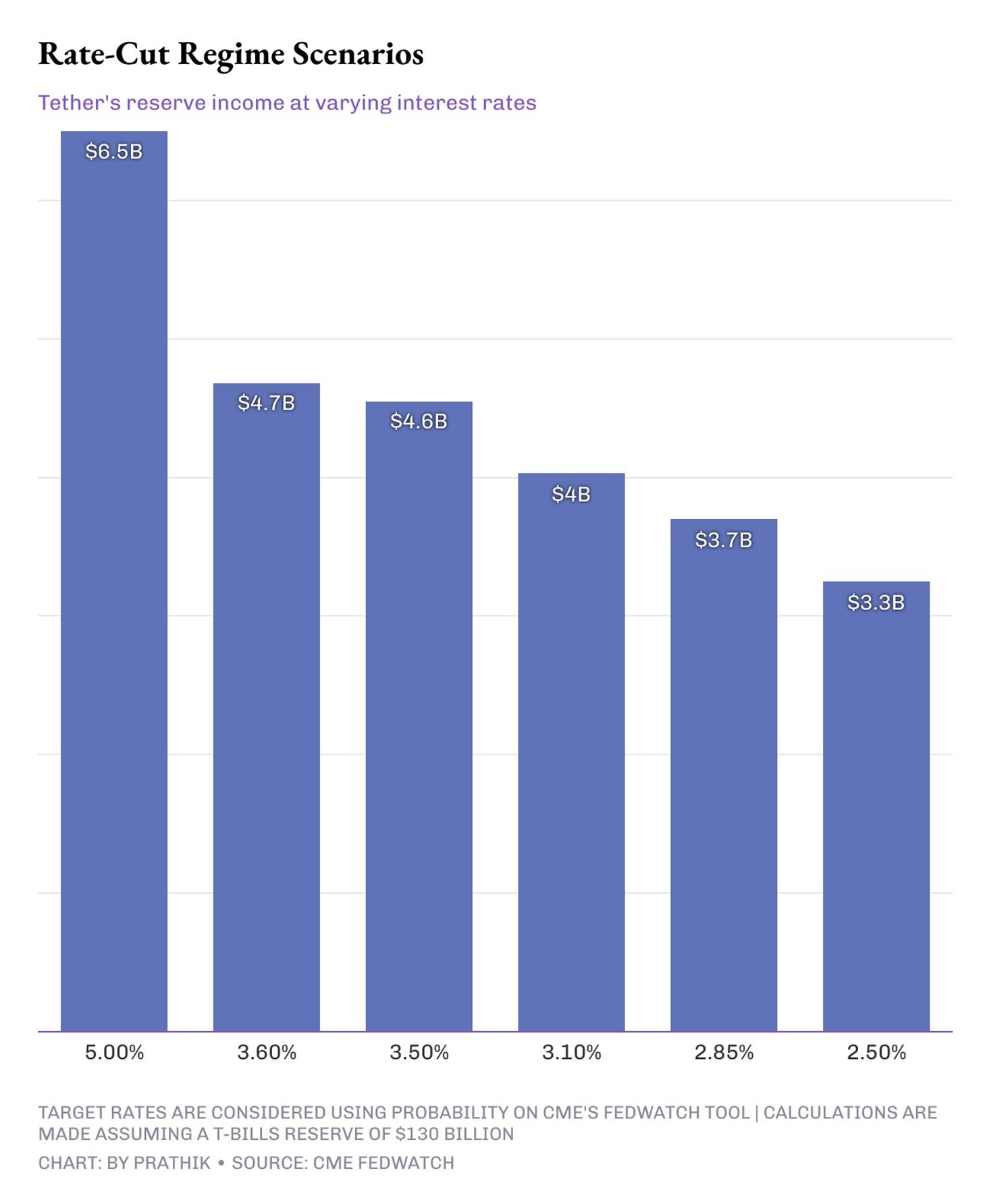
美国经济流动性每下降一个百分点,就可能使Tether的年收入减少至少15亿美元。这相当于其2025年年度净利润的10%以上。
那么,在当今世界,Tether如何保障其盈利能力呢?在这个世界里,杰罗姆·鲍威尔的任期将于2026年结束,而即将上任的美联储主席更有可能按照美国总统唐纳德·特朗普的预期,以更大幅度、更快的速度降息。
In this regard, Tether’s reserve strategy differs significantly from that of any other stablecoin issuer.
The company implemented a diversification strategy between September 2021 and October 2022. As a result, Tether reduced its reliance on commercial paper—short-term debt instruments issued by large corporations—by more than 99%. Its investment in such bonds dropped from over $30 billion in September 2021 to almost zero.
Instead, Tether used US-backed treasury bonds to replace these bonds, thereby increasing transparency among investors.
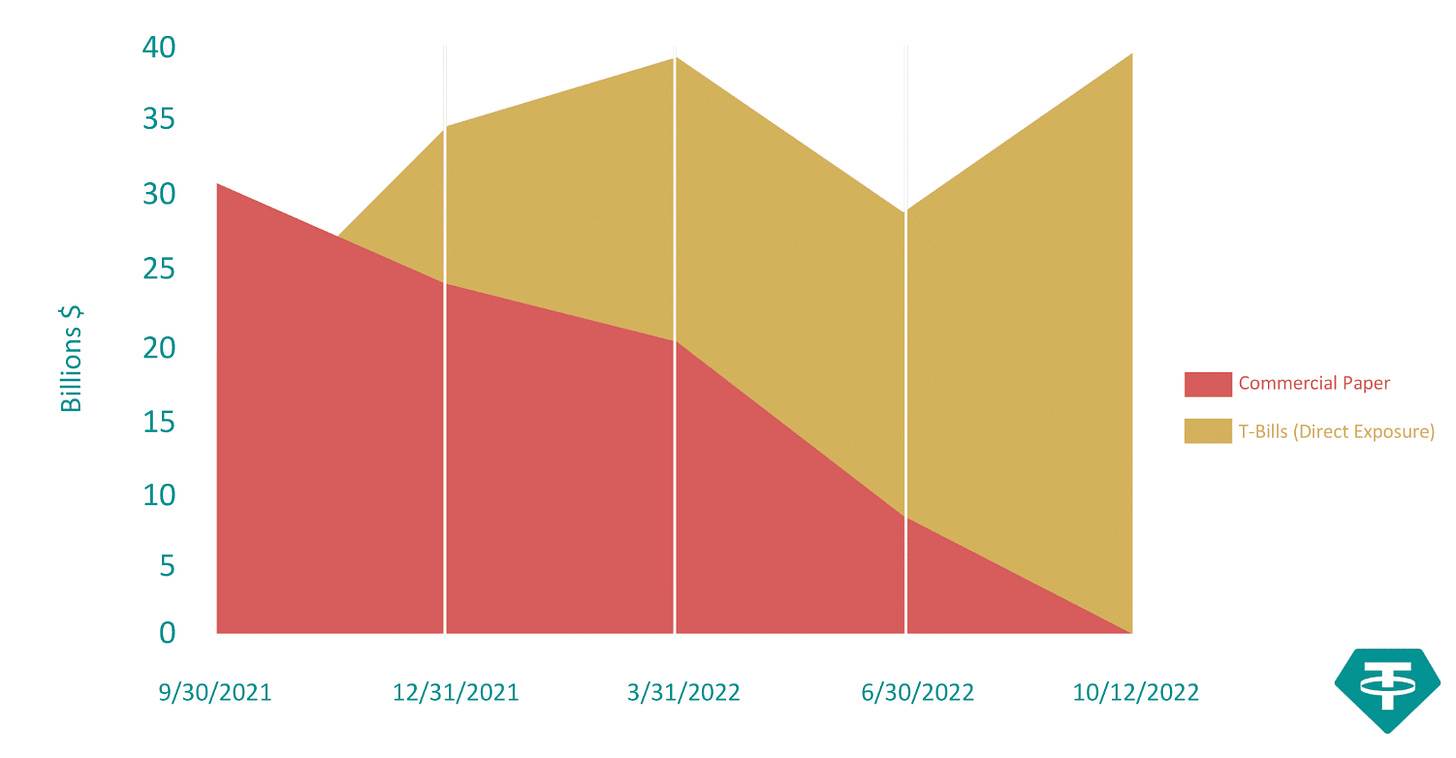
During the same period, Tether’s treasury bond reserves increased from less than $25 billion to $40 billion.
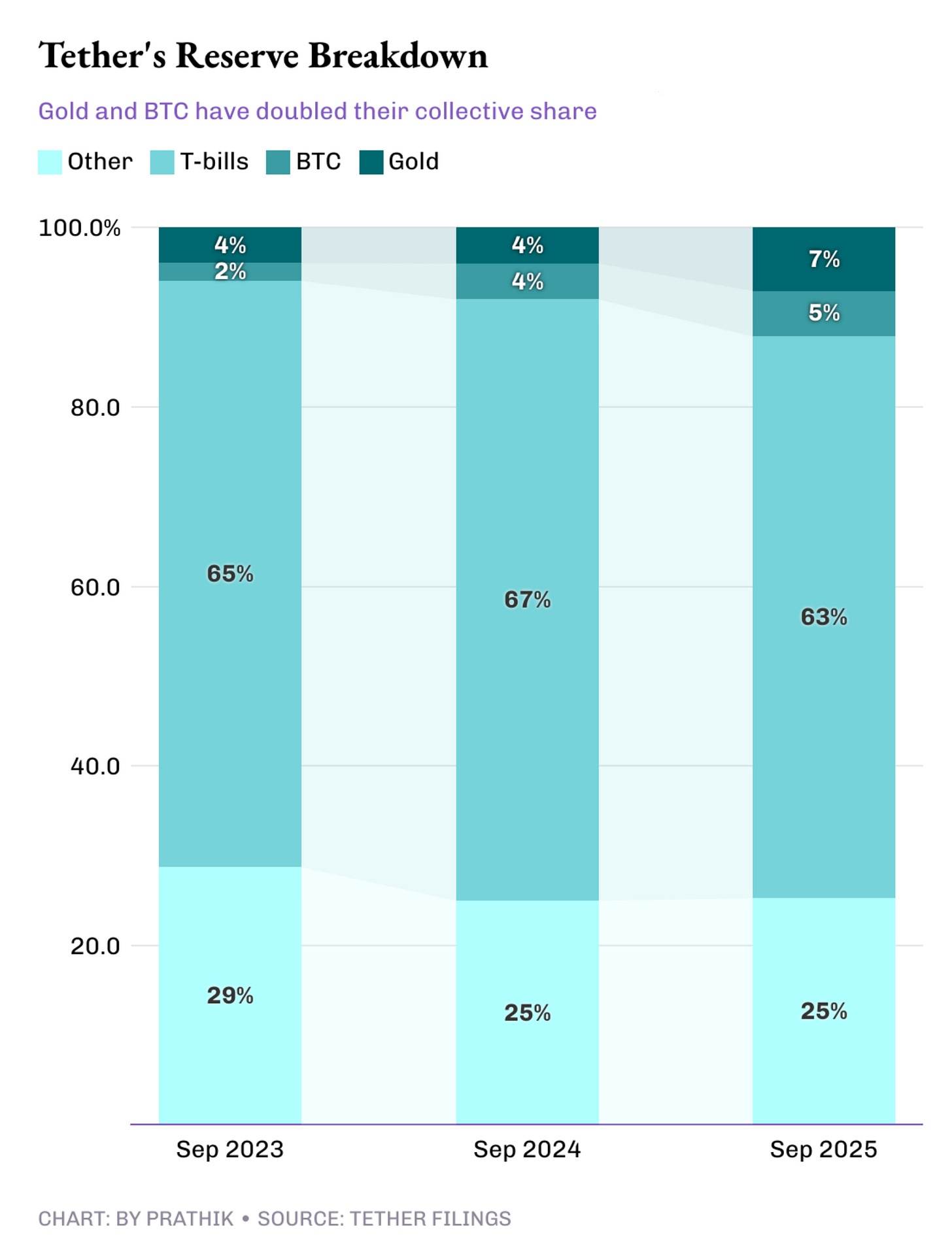
From the third quarter of 2023 to the third quarter of 2025, Tether’s reserve composition changed, incorporating assets that are rarely found on the balance sheets of other stablecoin issuers.
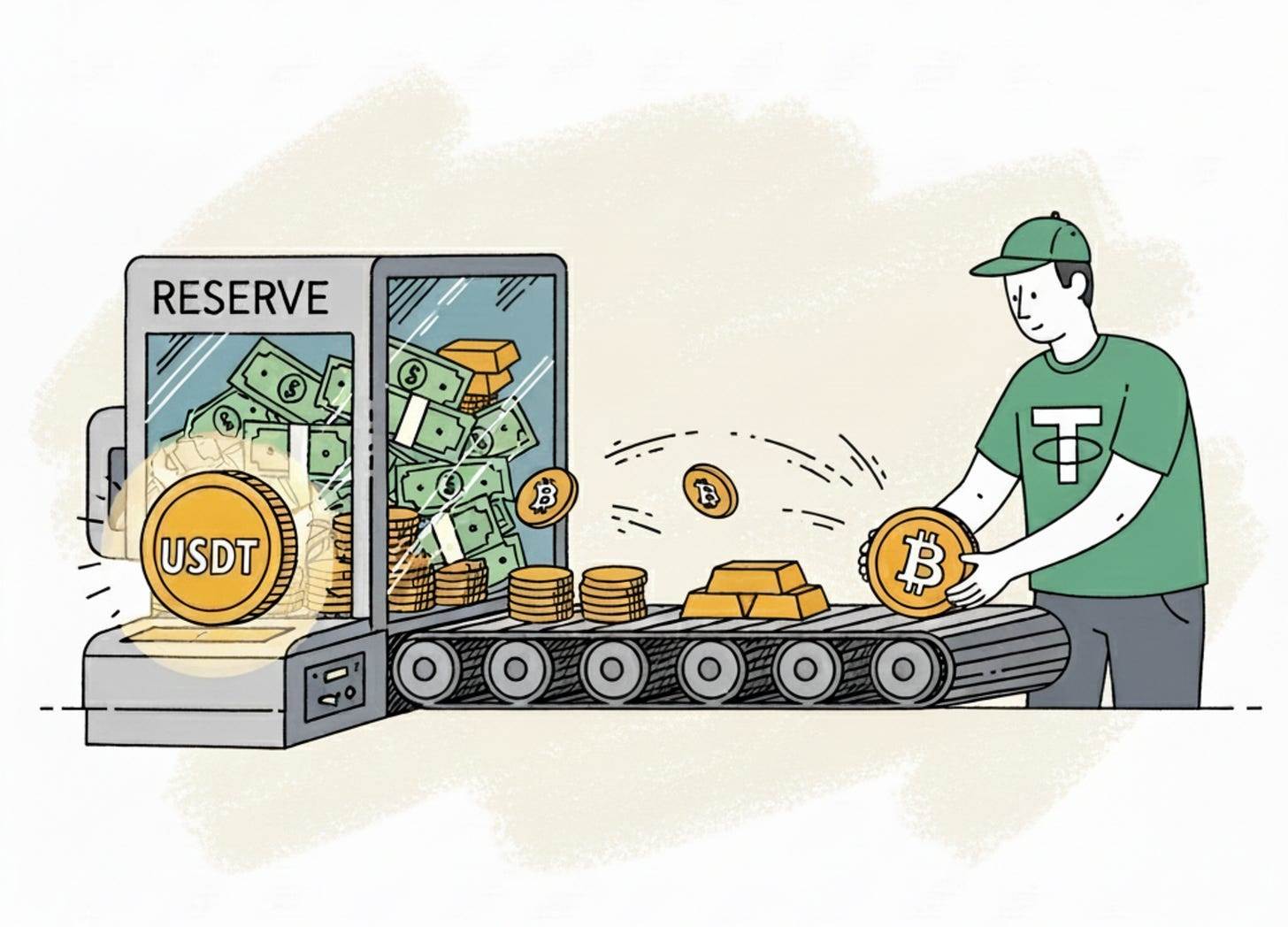
As of September 2025, Tether has accumulated approximately 100 tons of gold, worth about $13 billion. It also holds more than 90,000 bitcoins, valued at nearly $10 billion. Together, these assets account for 12% to 13% of Tether’s reserves.
In comparison, its competitor Circle only holds 74 bitcoins, valued at approximately $8 million.
Why make this transition now?
The increase in gold and bitcoin holdings coincides with the period during which forward curves no longer reflect rising interest rates.
为了应对不断上涨的通胀,利率在2022年5月至2023年8月期间从不足1%飙升至超过5%。在此期间,通过投资国库券来最大化收益在经济上是合理的。但随着利率在2023年达到峰值,且预计不会再有进一步加息,Tether认为此时应该开始为利率周期的转变做好准备。
收益率下降时,为何要投资黄金和比特币?
当国债收益率下降时,黄金往往表现良好。这主要是由于市场预期通胀上升,以及持有黄金而非收益率较低的国债的机会成本降低所致。
今年我们就看到了这种情况,美联储降息50个基点后,8月到11月期间金价上涨了30%以上。
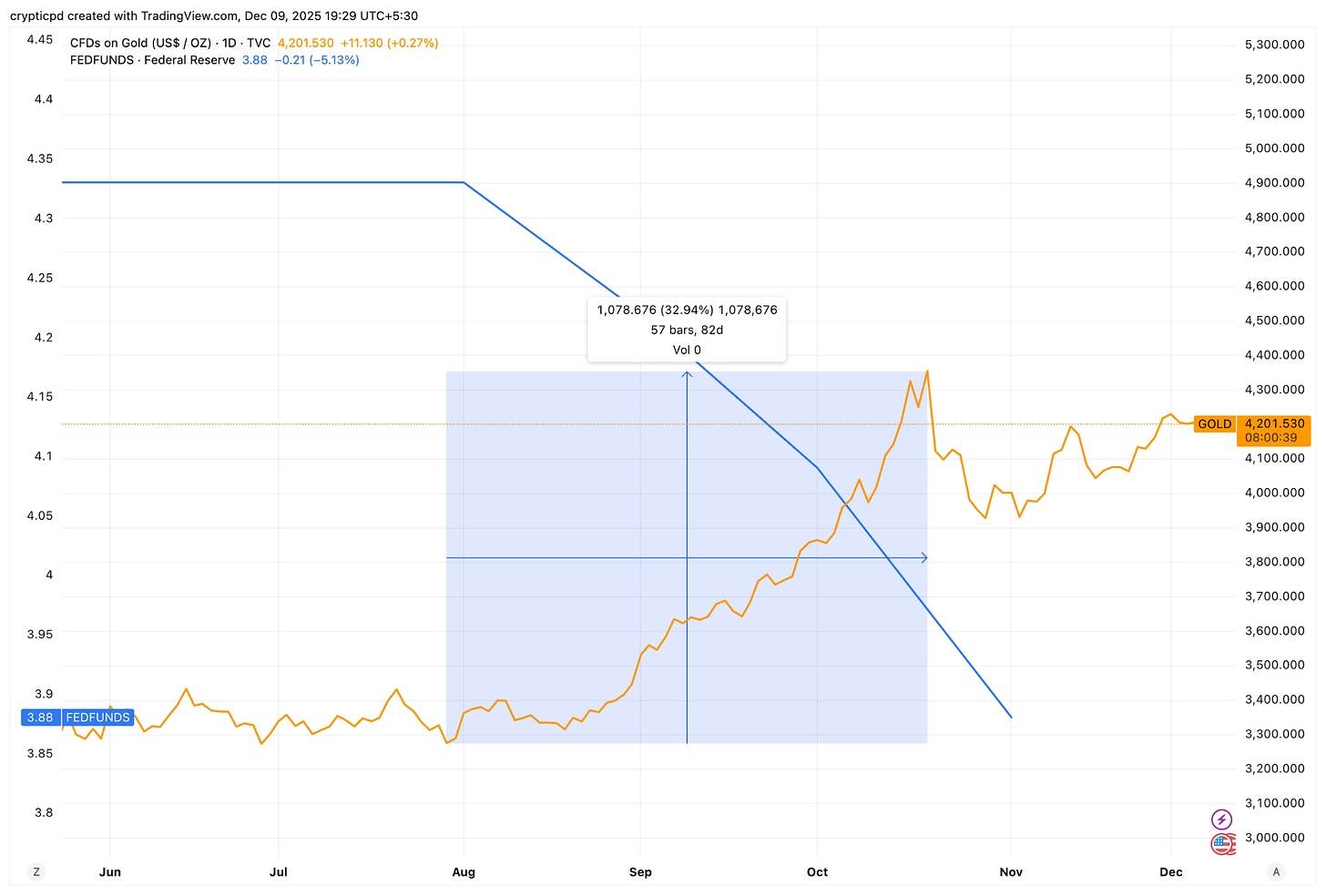
即使在新冠疫情期间,美联储降息1.5个百分点以向经济注入流动性,黄金价格在接下来的五个月里仍上涨了40%。
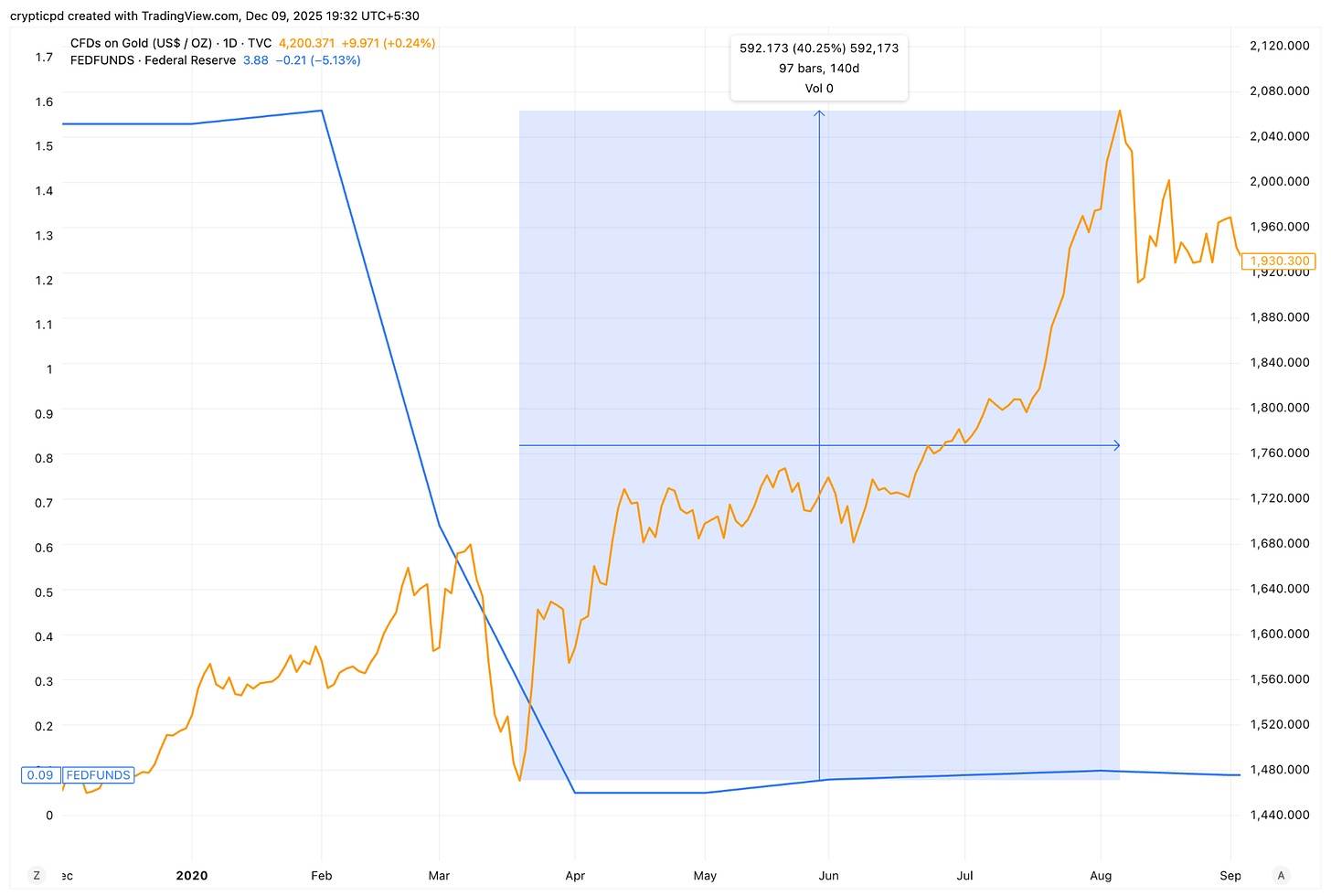
比特币近来也呈现出类似的宏观走势。随着货币政策放松和流动性增加,比特币的反应往往类似于高贝塔系数资产。
因此,虽然高利率环境可以通过国库券实现收益最大化,但在低利率环境下,投资比特币和黄金可能会带来潜在的收益。
This allows Tether to account for unrealized gains, and even generate some income by selling the gold or Bitcoin stored in its vaults. This is especially true during periods of low interest rates, when income can be significantly reduced.
However, not everyone agrees with the idea of increasing the proportion of gold and Bitcoin in Tether’s balance sheet.
The “nail problem”
remains a concern. Although government bonds still make up 63% of Tether’s reserves, the exposure to high-risk assets like Bitcoin and unsecured loans continues to increase, causing concerns among rating agencies.
Two weeks ago, S&P Global Ratings downgraded Tether’s ability to maintain a USDT-USD peg from 4 (limited) to 5 (weak). S&P noted that Tether’s reserves now include more corporate bonds, precious metals, Bitcoin, and secured loans.
The agency pointed out that these assets account for nearly 24% of total reserves. What bothers the agency even more is that, although government bonds remain the main source of support for Tether’s reserves, the USDT issuer lacks transparency and disclosure regarding the composition of its high-risk assets.
Additionally, there are concerns that this could undermine the link between USDT tokens and actual assets.
In its report, S&P stated: “Bitcoin currently accounts for approximately 5.6% of the total supply of USDT, which exceeds the required 3.9% margin of safety. This means that reserves cannot fully absorb the impact of any potential value declines in Bitcoin. As a result, a decline in Bitcoin values, combined with declines in other high-risk assets, could reduce the coverage rate of reserves, leading to USDT becoming under-collateralized.”
On the one hand, Tether’s adjustment of its reserve strategy seems reasonable, aimed at coping with the upcoming low-interest-rate environment. Once interest rate cuts become necessary, the company’s profit-generating mechanism, which amounts to $13 billion, will struggle to continue functioning. Holding gold and Bitcoin might help compensate for some of the income losses. On the other hand, this change causes concern among rating agencies, and their concerns are not unfounded. The primary task of stablecoin issuers is to maintain a connection to underlying assets, such as the US dollar in this case. Everything else—including the profits generated by these coins, diversification strategies, and potential unrealized gains—is secondary. If this connection fails, the business will collapse. When tokens are backed by assets with high volatility, the risk associated with their anchoring mechanism changes. The recent sharp decline in Bitcoin over the past two months may not completely destroy the anchoring of USDT, but it certainly reduces the buffer between them. As monetary policy moves closer to being relaxed, the future prospects of Tether remain uncertain. This week’s decision to cut interest rates will be the first indicator of whether this stablecoin giant can maintain its price-anchoring mechanism and its future direction.