Exchange Ranking
 Top Exchanges
 24h Volume Ranking
 Popularity Ranking
 Exchange BTC Balance
 Proof of Reserves
 Decentralized Exchanges
 Funding Rate
 Funding Heatmap
 Liquidation Data
 Max Pain
 Long/Short Ratio
 Whale L/S Ratio
 Binance/Okex/Huobi L/S
 Bitfinex Margin L/S
 ETF Tracker
 Solana ETF
 XRP ETF
 Hong Kong ETF
 Bitcoin Treasuries
 Crypto Reversal
 Ethereum Reserves
 HyperLiquid Wallet Analysis
 Hyperliquid Whale Watch
 Large Transactions
 On-chain Movement
 Bitcoin ROI
 Stablecoin Market Cap
 Options Analysis
 News
News Articles
 Economic Calendar
 Features
 Wallet
 Contract Calculator


 Security
 Collections
 Watchlist
 Following
 POL
POL Nepal uses blockchain technology for disaster fund raising
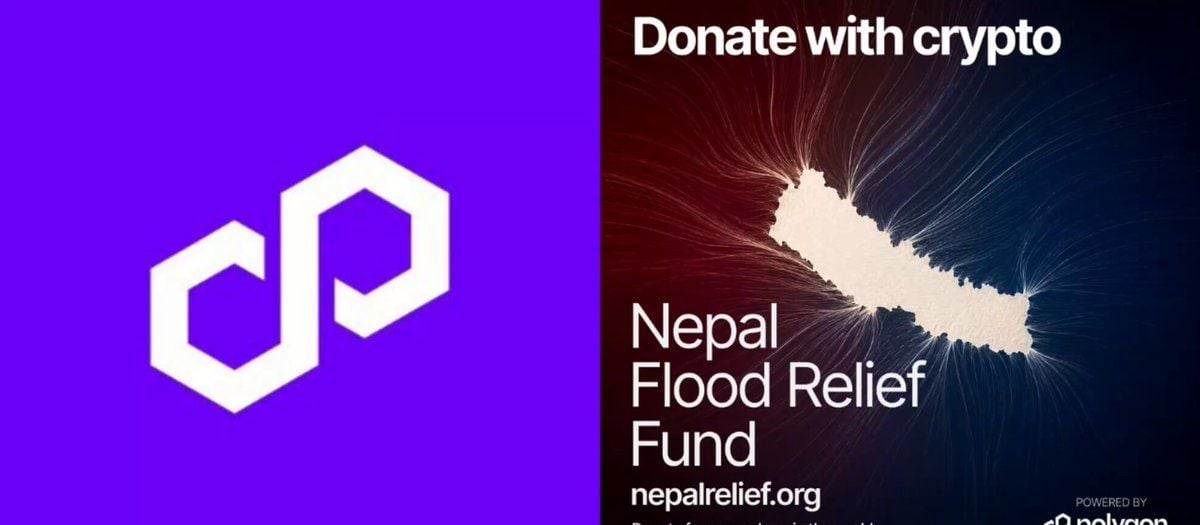
At the end of August 2026, Nepal suffered severe floods. Subsequently, the Nepal government launched the first blockchain-based donation campaign in its history, using cryptocurrency infrastructure to channel international aid funds to the Prime Minister's Disaster Relief Fund.
On August 26, 2026, a flash flood occurred in the Bhote Koshi River. Floods originated on the Xizang side of the border and then entered Nepal, hitting Raswa County, Nuwakot County and surrounding areas. As of September 2, more than 1,100 people had been killed. Nepal faces flood reconstruction costs of up to US$5 billion due to widespread damage to tourism and hydropower infrastructure.
This move marks a major shift in the way Nepal government obtains foreign aid. The government has historically relied on traditional banking channels to receive aid. Currently, cash and material relief is distributed through the Prime Minister's Disaster Relief Fund, and the Ministry of Finance confirms that the rule covers individuals, companies, donor agencies and foreign organizations.
Role of Polygon's Open Money Stack
This rescue operation utilized@0xPolygon's Open Money Stack (OMS) to accept donations from global donors using stablecoins and other digital assets to support cross-network operations.
The Polygon Open Money Stack is an open, integrated and programmable suite of services delivered through a single API. Its design goal is to achieve instant transfer of funds, support deposit receipt, stable currency circulation, and Off-ramping into bank accounts or cash. For government funds denominated in Nepal rupee, the infrastructure is capable of automatically handling the complete currency conversion process.
After the Open Money Stack receives payment in stable currency, it will automatically convert it into legal currency and transfer the money to the payee's bank account. This means that the sender pays in stablecoins, while the recipient settles in fiat currencies it is familiar with. This mechanism eliminates the multi-day settlement delays and high handling fees typically required for traditional international wire transfers and transfers based on the SWIFT system.
The Polygon chain, which is the underlying support of the open capital stack, has recorded stable coin transfers of US$54 billion, has 159 million unique wallet addresses, and an average transaction cost of only US$0.002. In addition, the open money stack also manages interoperability across hundreds of blockchains, with routing, bridging, and execution done in the background, so donors are not limited to a single network or asset.
This move makes Nepal one of the early adopters of governments using the public blockchain track for sovereign disaster financing, and also provides a vivid test case for whether cryptocurrency payment infrastructure can truly accelerate the delivery of humanitarian aid on a national scale.