Exchange Ranking
 Top Exchanges
 24h Volume Ranking
 Popularity Ranking
 Exchange BTC Balance
 Proof of Reserves
 Decentralized Exchanges
 Funding Rate
 Funding Heatmap
 Liquidation Data
 Max Pain
 Long/Short Ratio
 Whale L/S Ratio
 Binance/Okex/Huobi L/S
 Bitfinex Margin L/S
 ETF Tracker
 Solana ETF
 XRP ETF
 Hong Kong ETF
 Bitcoin Treasuries
 Crypto Reversal
 Ethereum Reserves
 HyperLiquid Wallet Analysis
 Hyperliquid Whale Watch
 Large Transactions
 On-chain Movement
 Bitcoin ROI
 Stablecoin Market Cap
 Options Analysis
 News
 Articles
 Economic Calendar
 Features
 Wallet
 Contract Calculator


 Security
 Collections
 Watchlist
 Following
Thanks to the natural platform monopoly that prediction markets possess, providing surrounding services around them has become a consensus within the industry. These services serve as natural “flasks” for capturing information related to ecosystems outside the market itself, thereby creating a hierarchical structure consisting of the core market, surrounding services, and peripheral areas. After discussing the basic structure and trends of prediction markets, let’s examine the existing surrounding services offered by these markets. Apart from betting platforms, tools, and referral fees, what other directions could support high-value surrounding businesses?
Early-stage prediction markets
Prediction markets are markets characterized by strong certainty amidst uncertainty. For events like the date and participating teams of the World Cup, or mid-term elections and presidential elections in the United States, participants can control the timing and rules of the market quite effectively.
However, the winner of the World Cup cannot be predetermined; otherwise, it would be considered cheating. Therefore, it remains an uncertain information-based game, and its nature will continue to change as new information becomes available.
For example, during the 2024 U.S. presidential elections, a significant portion of bets were placed within five days before the election date. In blockchain-based transactions, users’ emotional biases directly affect the betting market, resulting in self-fulfilling prophecies.
Current prediction markets are developing in this direction. For instance, Coinbase’s CEO noticed that people were predicting his statements, and thus he “coordinated” with those predictions to influence the final outcome.
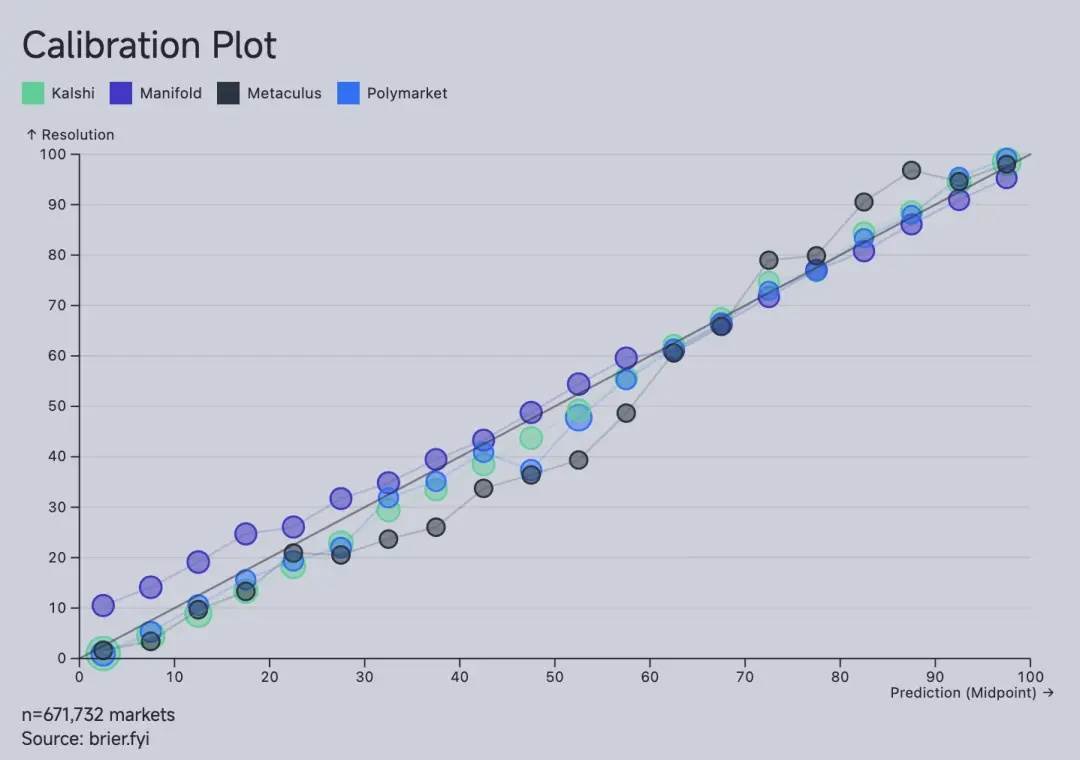
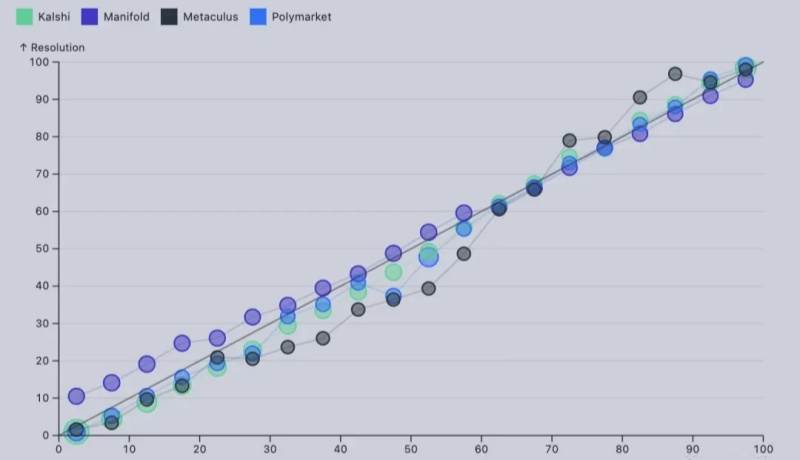
Image description: Data required for prediction markets. Image source: https://brier.fyi/
Before the emergence of prediction markets, polls and media played a similar role. However, polls didn’t simply reflect voters’ preferences; instead, they influenced people’s choices. Therefore, in Western contexts, prediction markets are seen as information-based tools, with additional functions such as insurance, hedging, and taxation integrated into them.
Thus, prediction markets are much more sensitive than traditional trading tools. It’s like TikTok wasn’t created because of the challenges faced by baby boomers during the election season. Prediction markets cannot be fragmented into smaller units.
1. Information discovery requires using real-time data to improve accuracy. Information also helps to focus traffic more effectively.
2. The U.S. electoral market is highly developed. It requires a Western context to function properly, and it can become a new information channel without compromising the political system.
Based on this, Polymarket and Kalshi would be “fully mature” information hubs from the start. This is why American investors continue to invest in these companies, driving up their valuations—unlike Binance, which uses a horse racing mechanism for investment.
Of course, all of this has nothing to do with us. What matters is how we can take advantage of the opportunities presented by these prediction markets during times of FOMO.
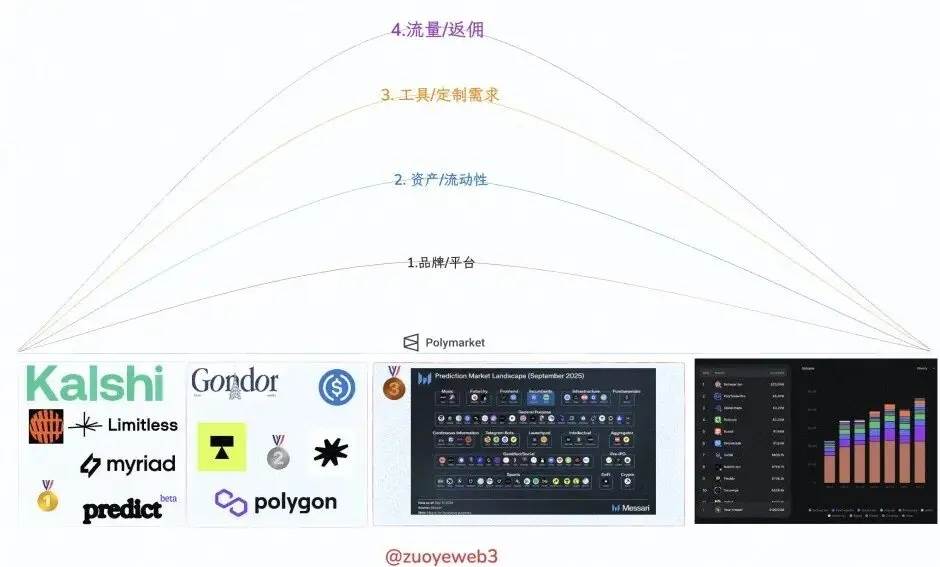
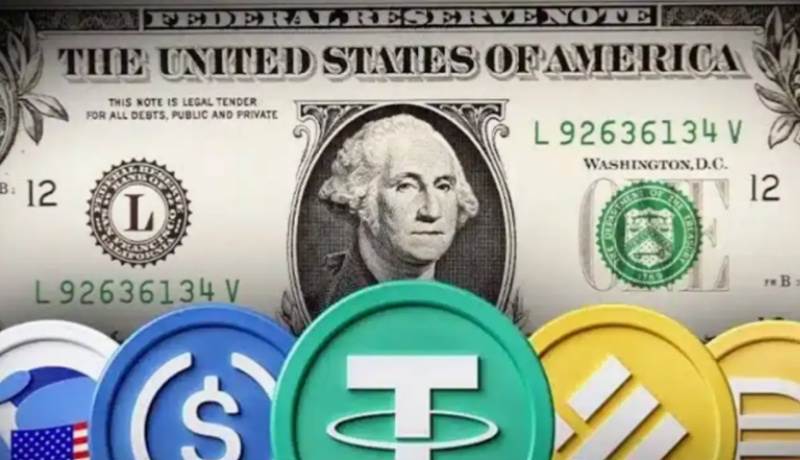
Image description: Images surrounding the prediction market. Source: zuoyeweb3
Overall, there are four possible patterns of market development:
1. For platforms that aim to mimic Polymarket and Kalshi, significant investment in infrastructure at the Perp DEX level is required. Additionally, high costs related to compliance regulations in the US market must be borne. Overall, such platforms are likely to fail to gain widespread adoption;
2. Innovations related to the asset layer of existing prediction platforms:
This involves turning betting assets into DeFi-based assets. For example, Gondor allows betting assets to be used as collateral for loans, while Space provides a 10x leverage mechanism. Essentially, these efforts involve actively integrating DeFi elements into prediction markets;
There are also innovative assets like 42 Space, which generate prediction topics based on social media data. These assets attempt to compete with existing platforms by offering unique features;
Major Web3/2 financial trading platforms like Coinbase/Robinhood need to expand their offerings to include more types of transactions;
3. Tools tailored to specific groups and needs within prediction markets, such as high-frequency trading tools, multi-platform arbitrage trading tools, aggregated trading terminals, LP mining or fee-based tools, as well as platforms for analyzing prediction market data and information;
4. KOLs and referral platforms, such as Based and Phantom wallets for mobile trading platforms, as well as various social referral programs and communities;
In these frameworks, investing too much effort into prediction markets may lead to low valuations due to political factors. Additionally, tools and referral schemes will likely experience cyclical changes over time, depending on investments in prediction markets and current trends;
The only asset that deserves investment in terms of business development is those assets that can be transformed into DeFi formats. Until the results are available, these assets remain idle. Perhaps these are the most valuable assets that deserve attention in the context of DeFi.
A cross-market arbitrage mechanism that benefits all parties involved
Using methods similar to those used by Taobao’s traffic platforms to develop DeFi projects, rather than adopting DeFi methods for DeFi projects themselves.
When dealing with giants who provide traffic services, it’s always risky. On one hand, giants need third-party platforms to increase their platform’s traffic. On the other hand, giants don’t want third parties to develop a strong brand influence.
This is the dilemma faced by early e-commerce traffic platforms: they must maintain good relationships with both platforms, sellers, and buyers. Sellers need third-party traffic platforms to enhance their competitiveness, while buyers hope to get discounted prices.
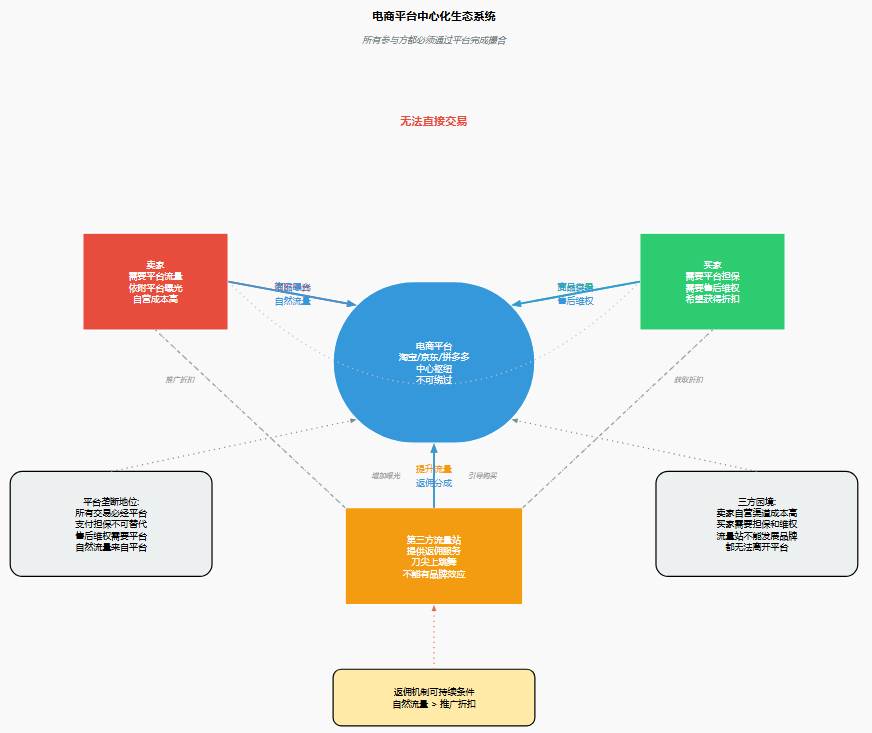
Image description: Source of the image: zuoyeweb3
Traffic platforms start by offering rebates. Platforms develop tools for sharing, purchasing, and receiving rebates. As long as the seller receives more natural traffic after promotion, the business can continue to operate sustainably.
Sellers need to rely on platforms to receive natural traffic. Maintaining their own brands and channels requires high costs.
Buyers need platforms to handle after-sales issues and rights protection. The payment process also requires platform guarantees.
Refer to the market dynamics of e-commerce platforms like Taobao, JD.com, and Pinduoduo. The market for new e-commerce platforms is extremely competitive, and the e-commerce industry inherently needs to cater to both established brands and niche markets. New entrants who focus on either brands or niche markets cannot achieve scale effects. In the end, Taobao relies on Tmall to retain its high-end customer base, while Pinduoduo uses WeChat, a popular mobile application, to attract users from rural areas across the world. JD.com, on the other hand, faces difficulties due to its focus on brands.
Let’s compare this with the referral fee mechanisms used by exchanges. Exchanges prioritize the number of followers for their products, and the profits or losses of individual followers have little impact on the overall referral mechanism. This is different from e-commerce referral fees, where users have an initial desire to purchase goods, and offering discounts can help promote both merchants and traffic stations.
From this perspective, the Builder mechanism of Hyperliquid and Polymarket does not solve the above problems. What remains is an increase in trading volume.
It’s not that increasing trading volume isn’t important, but it still leads to wasted capital. Moreover, the more trading volume there is, the more capital will be wasted. This isn’t good for the financial industry, which strives for efficiency.
If we can’t break free from the limitations of CEX/DEX growth models, then it’s likely that the market will soon reach its peak. After all, the number of tradable assets is limited, and events that are smaller and more immediate tend to favor market makers, leading us back to the issue of exchanges.
Information-based games are the essence of predicting market trends. During the process of placing bets and waiting for them to mature, funds are deposited into the market. The key lies in how these deposited funds can be utilized effectively. This is the underlying reason behind the interaction between prediction markets and DeFi systems.
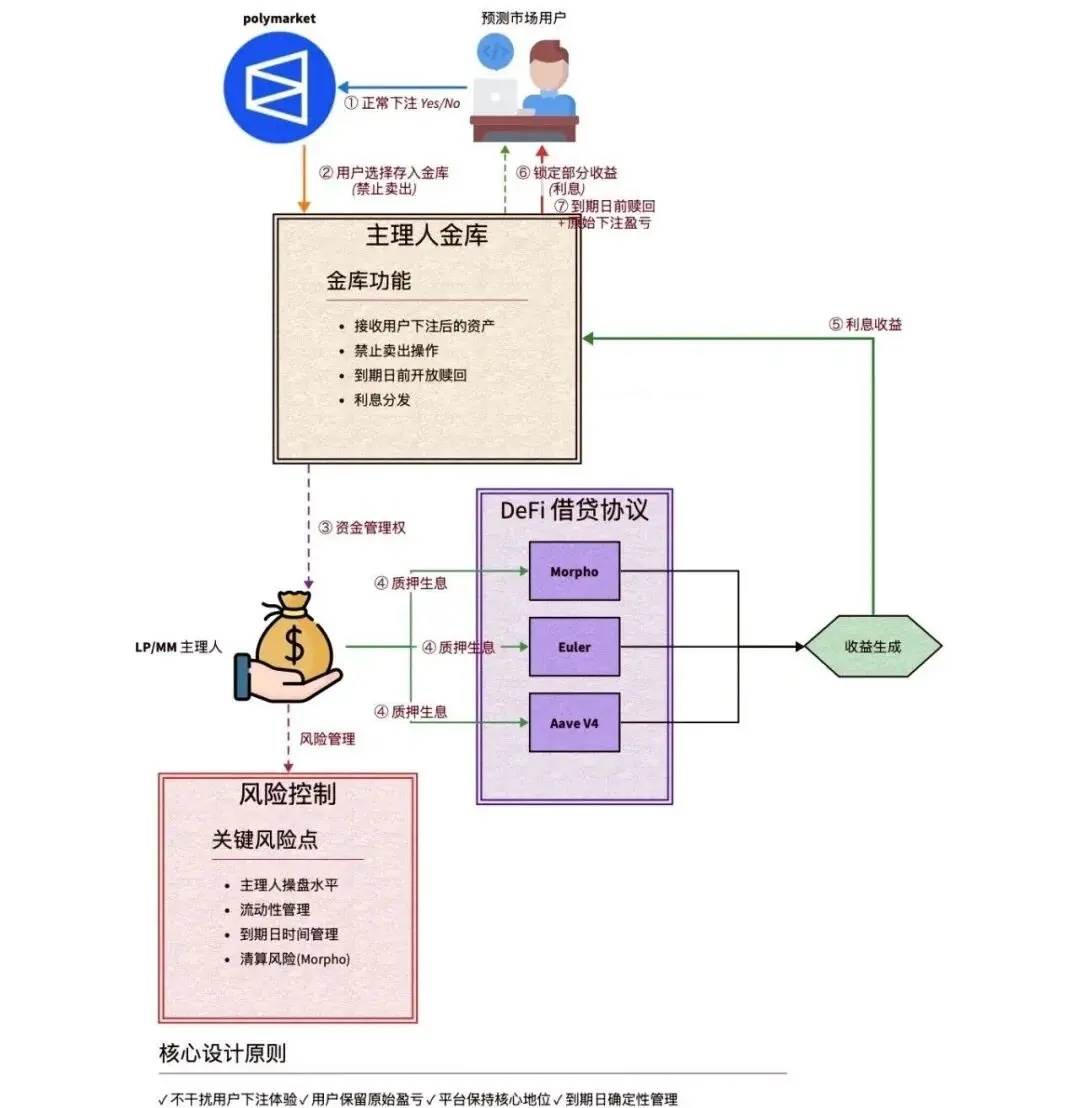
Image description: Leveraging prediction assets. Image source: zuoyeweb3
We should avoid interfering with users’ normal betting experiences. Currently, there are two main trends in discussions regarding leveraging in prediction markets:
1. Gondor’s approach involves using leverage to allow users to convert their bets into DeFi staking positions. This makes it much more difficult to manage liquidity and calculate APY rates. It also increases the risk of attracting high-interest investments.
2. Kaleb Rasmussen from Messari attempts to quantify the “Jump Risk” associated with prediction market prices. As mentioned earlier, prediction market prices can instantly become either 1 or 0. The mathematical analysis behind this is quite interesting, but implementing such mechanisms in reality is extremely challenging.
Based on current practices, I propose a simpler method to implement transparent DeFi leveraging without compromising user experience. This involves using cross-market arbitrage mechanisms similar to those used by Taoket, thereby creating opportunities between users in prediction markets and those in DeFi systems.
1. Platforms can provide services that allow users to place bets on either 0 or 1 positions at discounted prices. This way, both platforms and users can benefit from better pricing opportunities. Polymarket and other prediction market platforms can also gain more traffic.
2. The platform or the LP/MM from the prediction market acts as the treasurer, allowing users to deposit funds into the cooperative treasury through betting activities. For example, users can deposit funds into platforms like Morpho to earn profits from the DeFi stack.
During this process, the platform does not interfere with users’ betting experiences at all. As long as the cost of operations is lower than the profits from the DeFi stack, the principle of scale effectiveness will apply. Users will still receive either losses or profits based on their bets. However, unlike trading rebate mechanisms, users make decisions independently.
Unlike the unlimited issuance of xUSD, which triggers leverage effects, Polymarket’s USDC is genuinely existent. The only risk lies in the trader’s skill level.
● Prediction market platforms should integrate themselves into the broader DeFi stack without compromising user experience, while also increasing platform transaction volume.
● Treasurers and LP/MM should utilize accumulated funds, as well as funds with fixed expiration dates, to create new models that go beyond short-term arbitrage opportunities.
Just like third-party referral programs in e-commerce, buyers continue to have transactions with both platforms and sellers. Similarly, users of prediction markets will also have transactions with Polymarket, regardless of the role of the treasurer.
Moreover, Polymarket remains at the core of the entire transaction process. Thanks to Morpho’s open architecture, even if there are any defaults, the platform follows standard settlement procedures, minimizing the platform’s liability.
(The above model is just a preliminary idea. Friends who have thoughts on this topic are welcome to send private messages for discussion.)
Conclusion
It’s beneficial to use DeFi concepts to generate “traffic”. However, don’t try to acquire DeFi assets using traditional trading methods!
The true value of prediction markets lies in their ability to accumulate funds over time. They have a clear expiration date, and they involve corresponding asset reserves. If Polymarket wants to outperform Kalshi in terms of capital efficiency, then its growth has reached a stage where further expansion is limited.
In other words, compared to trading assets, Wall Street and the cryptocurrency industry are currently obsessed with information pricing. Whether it’s token offering campaigns or IPOs, whether it’s issuing stablecoins or building their own L1/L2 layers, these are all standard practices.
Before TGE/IPOs with uncertain dates, Polymarket needs to strengthen its ecosystem around itself in order to increase trading volume and compete with Kalshi. The programmable and combinable nature of funds on the chain is precisely the solution to solving problems related to peripheral traffic for Polymarket.
The biggest financial opportunity in 2026 will be the mid-term elections and the World Cup, which will bring about significant changes. FIFA will surely try to gain favor from Chuanbao, and regulators will likely allow DeFi and gambling activities to flourish. It’s undoubtedly a year of great financial opportunities.