Exchange Ranking
 Top Exchanges
 24h Volume Ranking
 Popularity Ranking
 Exchange BTC Balance
 Proof of Reserves
 Decentralized Exchanges
 Funding Rate
 Funding Heatmap
 Liquidation Data
 Max Pain
 Long/Short Ratio
 Whale L/S Ratio
 Binance/Okex/Huobi L/S
 Bitfinex Margin L/S
 ETF Tracker
 Solana ETF
 XRP ETF
 Hong Kong ETF
 Bitcoin Treasuries
 Crypto Reversal
 Ethereum Reserves
 HyperLiquid Wallet Analysis
 Hyperliquid Whale Watch
 Large Transactions
 On-chain Movement
 Bitcoin ROI
 Stablecoin Market Cap
 Options Analysis
 News
 Articles
 Economic Calendar
 Features
 Wallet
 Contract Calculator


 Security
 Collections
 Watchlist
 Following
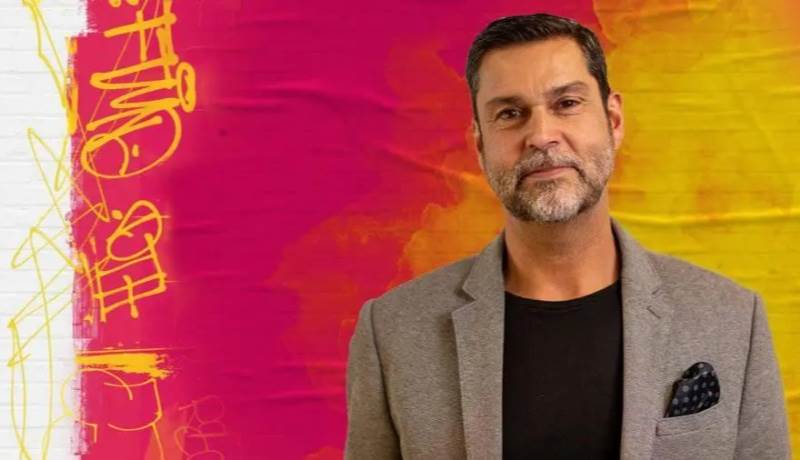
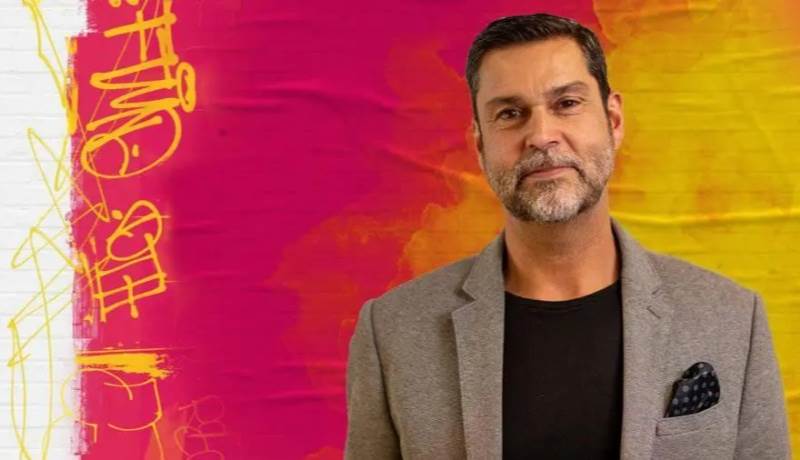
Raoul Pal, CEO of Real Vision, shared with us how he plans to achieve success in the cryptocurrency industry in 2026—by owning the right assets and doing nothing else. Here’s an excerpt from our interview on the podcast “When Shift Happens”.
● Kevin: I recently visited Silicon Valley and talked with many people. This has further strengthened my belief in taking a long-term perspective. We’re going to discuss this today, because I think it’s very important. People need to understand this, but they either don’t understand or don’t want to understand. Many people are angry because the time frame doesn’t match up.
Raoul Pal: It’s like telling them what the future holds. The spread of technology won’t stop. Today, the market size already exceeds $3 trillion, and it will eventually reach $100 trillion. That’s why we’ve only made 3% progress so far. I estimate it might take 10 years to achieve that goal. This is a long-term transformation, but everyone asks, “What about today?”
● Kevin: How would you respond to those who criticize you? I heard some people say that you always use “looking at the long term” as an excuse when things aren’t going well in the short term. How would you respond to such people?
Raoul Pal: 短期更多是噪音,长期则是被网络采用和货币超发这两个关键因素驱动,所以长期更可预测。短期总是会偏离长期,人们不想接受。大家把希望都押在M2图上,我说不会完美匹配,大家却理解成总是会完美吻合。一偏离就说我错了。我作为宏观分析师的工作就是搞清楚为什么偏离、什么变了。比如这次流动性被财政部一般账户抽走,加上政府关门。人们不理解,觉得一切该完美吻合,但不可能。短期总是噪声远大于信号,而着眼长期才能看清信号。
● Kevin:我看到很多聪明人,尤其是以前做传统金融的交易员,现在说加密市场成熟了,机构越来越多,使用AI等技术的专业交易员也越多,除了长期投资之外,市场几乎没alpha了,所以,你所能做的,基本上就是像普通投资者或普通交易员那样买入并持有,押注你所说的长期趋势。
Raoul Pal:I’ve seen this situation before. In 2004, that’s why I left the hedge fund industry. Back then, I worked in the field of macro strategy. Macro strategies involve higher volatility and are long-term investments, as they involve trading based on macroeconomic trends and economic forces. Nowadays, there’s only one ISM report per quarter, or one GDP report per month. So, to truly identify trends, you need a series of data over a period of time. In other words, at least a six-month trading cycle is required; sometimes this can be shortened to three months at critical points, but usually it’s between 18 months and three years. This is the nature of macroeconomics.
Later, I realized that as new investors entered the hedge fund market, they forced everyone to calculate their positions monthly, with the standard being how much the price changed within that month, rather than considering the overall performance over the year or the returns on individual transactions. As long as the stock price dropped within that month and you still made a profit, you should sell your position. I thought this approach couldn’t possibly make any money. It stifled market fluctuations and reduced everyone’s potential profits. Now, the crypto industry faces similar problems. The situation in the macroeconomic realm is even worse, as systems funds and high-frequency trading have emerged, leaving macroeconomics without its advantage in short-term trading. I left macroeconomics and founded Global Macro Investor (GMI) to prove that long-term investing is the way to go.
● Kevin: This is particularly difficult for those born during the ADHD generation.
Raoul Pal: Yes, they feel like everything is like a video game.
● Kevin: 2025 will be a tough year for crypto investors. Unless you invest in a few truly valuable tokens, the returns will be mediocre. Why?
Raoul Pal: Because of liquidity. Liquidity is the most important macro-factor right now. It’s a game of strategy. The first game is about liquidity. The second game we’re playing in the crypto world is how quickly certain tokens are adopted by users. Whether it’s L1, L2, application layers, DeFi, or anything else, what matters is the speed of adoption and the extent of its depreciation. That’s the entire game we’re involved in. People need to understand this whole game thoroughly. Then things become more complicated—how do you get access to liquidity?
In traditional cryptocurrency terminology, liquidity refers to quantitative easing. There was always money being printed, but that has stopped now. So you need to understand the net liquidity of the Federal Reserve, which includes the Treasury’s general account and reverse repurchase operations. These used to be the only sources of liquidity in the system, but they have run out of reverse repurchase funds. The Treasury’s general account is like a checking account—it keeps getting topped up and then emptied again and again. So the balance in this account keeps fluctuating. In reality, it doesn’t really contribute to liquidity at all. What we see as liquidity is actually the depletion of reverse repurchase funds. Therefore, the rate of change in liquidity has been very low. That’s one of the factors contributing to this situation.
另外周期延长了。有人说会有四年周期,确实如此。但这是有原因的。2008年后利率归零,各国把债务规划为3-5年的期限,每四年进行一次债务展期。2021-2022年利率又归零,他们把债务久期拉长到5年。所以原来第四年该印钱的地方推到第五年,也就是2026年。10万亿债务要流动,所以2026年才需要大流动性。但是现在代币太多,流动性救不了所有项目。以前随便买什么都涨,现在不行。
● Kevin:对,很多代币流动性再多也会让人亏钱,因为是糟糕的投资。
Raoul Pal:对,没人使用。少数能成meme,但持久很难。人们不明白的是,主流代币之间也存在风险曲线,比特币回撤30%,以太坊回撤40%,Solana回撤50%,SUI回撤60-65%,具体取决于它们的成熟度、用户数量和市场深度。我使用的“DTFU”(Don’t Fuck This Up)框架的核心不是赚最多钱,而是别亏太多,然后长期复利。听起来很无聊,但这就是真相。“
● Kevin:“最小遗憾投资组合”是什么意思?
Raoul Pal:It’s not that one would feel foolish when looking back. L1 is the simplest to use; it has a sufficient scale and is widely adopted, so it won’t go back to zero within a single cycle. Although there will be gradual “bleeding,” it won’t collapse instantly. You need to check whether you’re just following trends blindly. Right now, ChatGPT is free to use; you can use it to analyze metrics related to chains, user growth, etc.
● Kevin: Is ChatGPT’s analysis of chain-related metrics reliable?
Raoul Pal: I wrote an article last week about Metastas, using stablecoin transfer value/active users as a measure of valuation. ChatGPT proposes using five indicators such as DeFi and gaming activities to define active users, and then ranks chains based on these indicators to determine which chains are overvalued and which are undervalued. It can provide quite accurate insights—it performs well in almost all aspects. It’s also very good at interpreting technical charts. You can give it a chart and ask it what it thinks, and it will give you a reasonable answer.
● Kevin: Do you follow your own “DTFU” investment framework?
Raoul Pal: I basically follow it, but my allocation is more concentrated. People think they should also be more concentrated after hearing me mention concentration. I concentrate because I’ve developed a valuation model. It’s possible that I might change it at some point. Its volatility is higher; it was designed for higher volatility, as it’s an early-adopter model. Therefore, its downside volatility is greater than its upside volatility.
过去两周狂卖代币,突然今天早上醒来SUI涨20-30%,其他也涨8%。我能接受,别人可能无法理解。除此之外,我还有其他能带来现金流的业务,这让我可以正确地进行资产配置,而且我承担的风险更大,因为我做了更多的功课。但这并不意味着我的判断一定正确。其他人不要听我的资产配置建议,要听整体交易准则。永远不要借用别人的信念。这才是最重要的。
● Kevin:你有可能跑输听你“DTFU”建议的人吗?
Raoul Pal:当然。我只对自己资本负责。如果我错了,我自己承担。我的方向大致正确就行。
● Kevin:我看到一个推文:女朋友从2019年开始定投ETH和BTC,不看推特不关注,大幅跑赢她男朋友。经纪账户里表现最好的往往是“去世”的客户。
Raoul Pal:是的。所以我们总是回到原点。现在大多数人都很痛苦,因为他们在本轮周期中处于停滞或亏损状态,因为他们没有在低点大量买入,而这很难做到。最简单的致富方式就是永远定投BTC,比定投标普500回报更好。但这并不是在加密领域真正赚钱的方法,但我认为更好的方法是等到市场下跌X%的时候再进行美元成本平均法操作,比如说下跌30%或更多,然后投资的频率是市场创新高时的三倍,这样复利收益肯定会更好。这并不难做到。
● Kevin:心理上难。我每月买比特币,总觉得自己更可能涨,结果老买在局部顶部。
Raoul Pal:我三周前买SUI,后来下跌很多。但时间久了就会忘记入场价位,除非是大底。
● Kevin:你有收集辱骂你的的推文吗?
Raoul Pal:没有,但我在Drinks with Raoul节目里读骂我的推文。挺好的心理治疗。也提醒我哪里没讲清楚。
● Kevin: Many of those who joined the community between 2017 and 2021 are now turning to AI-related investments. They feel disappointed that cryptocurrencies haven’t lived up to their promises of decentralization. All they see are ETFs and stablecoins. But I think they simply haven’t been able to make quick profits in recent years, and they no longer have any advantages. In Silicon Valley, things are completely different. They say big returns are still ahead. Aishal from Electric Capital compared cryptocurrencies to venture capital with higher liquidity. Most venture capital investments end up yielding nothing, while a few do generate significant profits. But these investments need to be held forever, because exponential growth can lead to results far exceeding expectations.
Raoul Pal said: “Venture capital investors enter the market before tokens are issued, so their valuation is lower. They buy assets in the open market, where power-law distributions aren’t as significant. Price is crucial.” I tried using a diversified portfolio in the past, but most of the returns came from ETH, BTC, and a little Solana. The rest didn’t bring much benefit. Currently, the market size is around $3.5 trillion. Conservatively estimated, it could reach $10 to $100 trillion in 10 years—yet it’s only reached 3% of that total. Bitcoin’s dominance will decline, while smart contract technologies will become more dominant, as they have more applications. In the future, the entire market could potentially increase by 30 times.
● Kevin: Silicon Valley understands exponential growth, while Wall Street understands linear trends and mean reversion. So every time there’s a market boom or bust, they think the market is over. But actually, looking at the long term, it’s just a smooth trend. Amazon, Google, Tesla—all follow the same pattern. There are big fluctuations in the early stages, but they become less significant as the market matures. What’s your current investment portfolio like?
Raoul Pal said: I only bought a little bit of SUI three weeks ago; nothing else was touched. I also purchased some NFTs. People often take screenshots of my posts about SUI, and then some people call me a scammer. My configuration is my own business. Please don’t follow my risk tolerance. I just want to make decisions based on my own risk tolerance.
● Kevin: What’s your real opinion about SUI by the end of 2025?
Raoul Pal: Its performance on the risk curve is normal. It underperforms Solana in the short term, but it’s still on an upward trend. The project’s technology is solid, but the key is whether it can be adopted by users. The growth rate of users is faster than that of Solana last year, and the value per active user is high. The model shows that its value is about 80% lower than Solana’s. It still needs to see an overall increase in the market before we can be sure.
● Kevin: How do you allocate your income each month now?
Raoul Pal: My cash flow is used for investments, living expenses, and various other necessities. Just like with everything else, besides cryptocurrencies, I also invest in other things, such as digital art. As your funds grow, you’ll need to update your possessions. You might replace your stereo system or car, for example. You do this to maintain the quality of your assets. Otherwise, their quality will decline over time—for instance, your car will get damaged, age, and become a source of trouble that requires constant maintenance.
I like to spend money on vacations and travel. That’s what defines a good quality of life. Quality of life itself is an investment, as it provides experiences. So, I’ve invested a lot in this area.
● Kevin: You mentioned digital art, specifically NFTs. How are NFTs currently doing?
Raoul Pal: The Basel Art Fair is currently in progress, and half of the digital art market is there. Although many of the artworks created there aren’t actually digital in nature. Right now, once the price of ETH or Salana reaches the upper limit of the range, sales will increase dramatically again, as people start to sell their assets to buy art. When prices drop to the lower end of the range, no one has the money to buy anything, because the opportunity cost of investing liquid funds in non-monetary assets decreases. But this argument suggests that whenever prices reach their peaks, artworks become highly sought after, and prices continue to rise.
We’ve already seen some major investors entering this field. Nikki Mala from Ribbit Capital acquired Punks IP and Crypto Punks IP. There are other investors as well, such as Alan Howard, who is a significant investor in this field. The overall value of artworks is increasing, but it still fluctuates with the prices of cryptocurrencies. So prices may drop slightly, but in the long term, they tend to outperform the broader market. Moreover, more things will emerge in this field.
● Kevin: Yuge Yatsu, co-founder of Animoka, recently said that NFTs represent a category of assets for this generation. I think most people would wonder, “What? Is he trying to deceive himself? Is he ignoring reality?” I want to ask whether he understands something that most people still don’t understand.
Raoul Pal: Yes. Everyone believes that things like Monkey JPEG have become worthless. It’s really stupid speculation. People don’t realize that cryptocurrencies are highly speculative assets, and their value is determined through such speculative actions. Speculation has shown that the value of digital assets doesn’t lie solely in their status as tokens on exchanges. So, we have Crypto Punks—their total value has reached $10 billion. Game assets, ticketing, financial contracts, digital identities… the potential is enormous. The most valuable asset is art. In the digital world, everything can be reset to zero, except for digital scarcity, which retains its value. Eventually, wealth will flow into art.
● Kevin: You wrote about “bottoming out” in early November. Is this still the advice we should follow now, in December 2025?
Raoul Pal: Yes. I believe the market has reached a bottom. We experienced liquidation in October. The U.S. government withdrew liquidity from the General Account of the Treasury Department, but then they shut down the government. Now, with no access to that account, liquidity has disappeared. Cryptocurrencies, being the most liquid assets, saw a sharp drop in liquidity, exposing all the weaknesses of leverage mechanisms. This led to a series of problems related to system-level leverage issues.
If all my studies regarding liquidity are correct, then a wave of liquidity inflows is expected to occur. Currently, the system indicates that the banking system is facing financial strains, which in turn leads to frequent fluctuations in the money market. There is a shortage of funds in the market. The Federal Reserve is also aware of this. They have stopped their quantitative tightening measures. But they still have another task to complete: securing financing by the end of the year. Banks do not have enough liquidity to extend their debts or make adjustments to their balance sheets. Therefore, the Federal Reserve must inject some liquidity into the system.
● Kevin: How can one make money from cryptocurrencies in 2026?
Raoul Pal: Hold onto the right assets, and do nothing else. Don’t rely on others’ beliefs; instead, develop your own beliefs based on your risk tolerance and goals. My time frame is five years; everything else is noise.
● Kevin: You insist on holding onto something, but you know what needs to be let go.
Raoul Pal: You think you can help more people. But you need to let go, because some people don’t want any help at all. It’s frustrating. You try hard to help everyone, but many people desperately avoid being helped.
● Kevin: What do those voices say in your head every morning when you wake up, and every night before you go to sleep?
Raoul Pal: Keep going forward. My job is to live in the future and see clearly where the path lies. Don’t worry too much about trivial matters. As long as the overall direction is correct, that’s enough. Don’t pay attention to whether SUI drops by 30% this week; focus on the fact that the entire market could reach $100 trillion.