Exchange Ranking
 Top Exchanges
 24h Volume Ranking
 Popularity Ranking
 Exchange BTC Balance
 Proof of Reserves
 Decentralized Exchanges
 Funding Rate
 Funding Heatmap
 Liquidation Data
 Max Pain
 Long/Short Ratio
 Whale L/S Ratio
 Binance/Okex/Huobi L/S
 Bitfinex Margin L/S
 ETF Tracker
 Solana ETF
 XRP ETF
 Hong Kong ETF
 Bitcoin Treasuries
 Crypto Reversal
 Ethereum Reserves
 HyperLiquid Wallet Analysis
 Hyperliquid Whale Watch
 Large Transactions
 On-chain Movement
 Bitcoin ROI
 Stablecoin Market Cap
 Options Analysis
 News
 Articles
 Economic Calendar
 Features
 Wallet
 Contract Calculator


 Security
 Collections
 Watchlist
 Following
 BTC
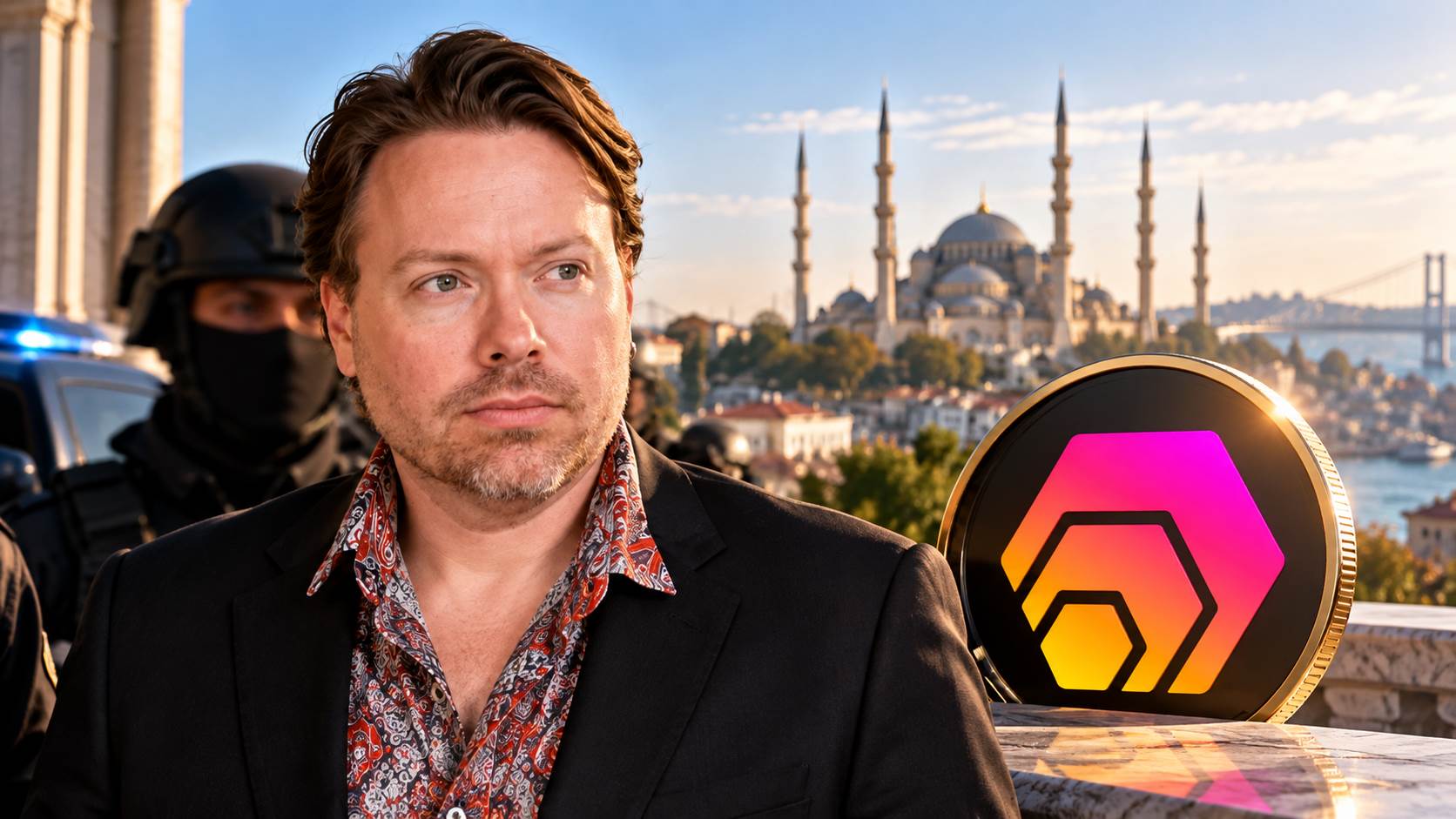
, the cryptocurrency community was completely devastated—Bitcoin’s value plummeted in the global market, wiping out billions of dollars in market capitalization. Panic spread everywhere. But just as people were in a state of panic, a mysterious wallet executed a highly sophisticated short position on the Hyperliquid platform, earning $80 million in one go. This was an incredibly impressive feat, making people wonder: Was it sheer genius, or did he have some kind of inside information? Thus, a hunt for these “big whales” on the blockchain began. The protagonist of this story is a name that has remained hidden from public view for many years—Garrett Jin. How did he do it? In this transparent blockchain world, the game of power and wealth has just begun.
From Huobi to BitForex: The Secret Growth of a Capital Player
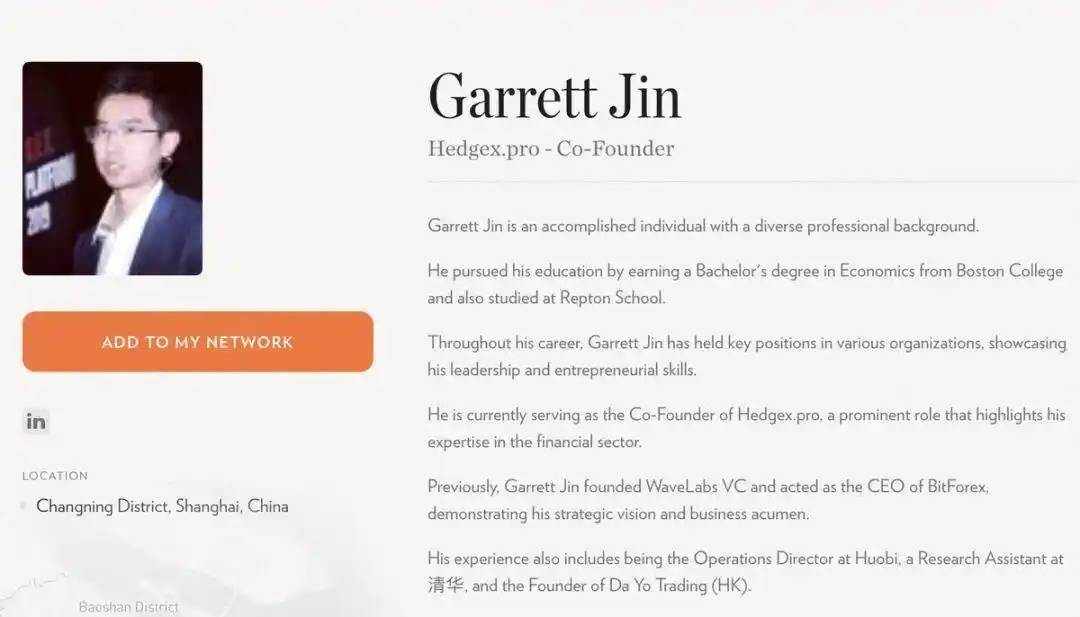
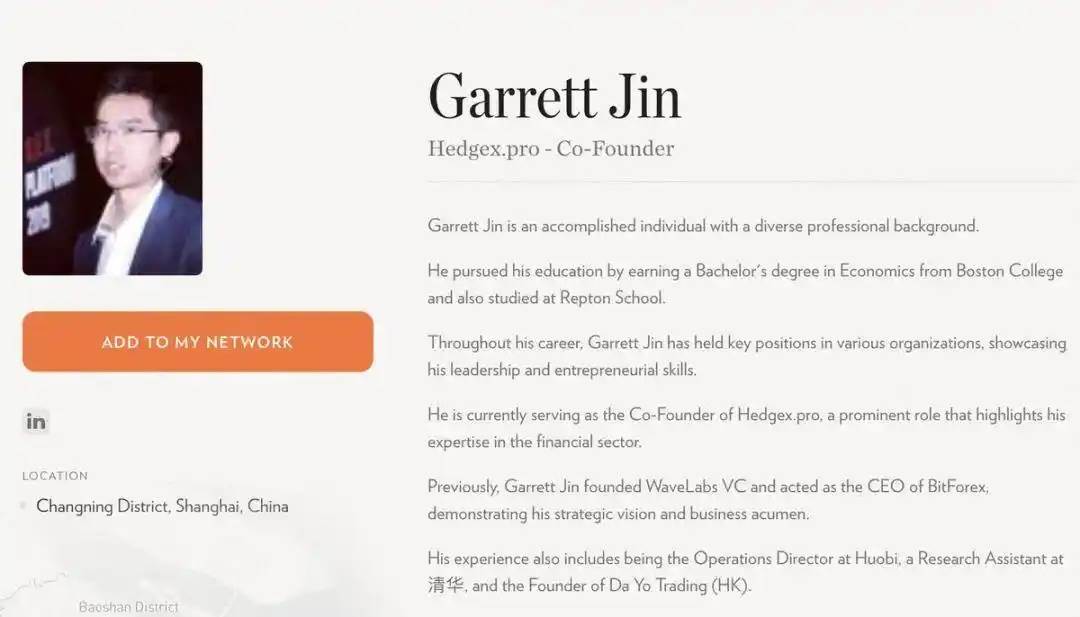
Garrett Jin isn’t an unknown figure. After graduating from the Department of Economics at Boston University in 2008, he worked at China Construction Bank. In 2012, he founded Hong Kong-based trading company Da Yo Trading. In 2015, he joined Huobi as its operations director, becoming one of the key figures who helped shape the cryptocurrency industry. In 2017, he moved to Europe to become the CEO of BitForex—a exchange that once ranked among the top ten globally during a bull market. However, BitForex eventually collapsed due to inflated trading volumes, financial problems, and regulatory risks. At the beginning of 2024, BitForex had to close down, and during that time, a large amount of Bitcoin disappeared from the exchange. Years later, traces of that Bitcoin were found again, behind the massive short positions on the Hyperliquid platform. At that moment, the shadows of wealth and power overlapped once more.
The tracking by the blockchain analyst Eye revealed even more astonishing details: this “giant whale” held over 100,000 bitcoins. Between August and September, they sold approximately 35,000 BTC through multiple addresses, exchanging them for $4.23 billion in Ethereum. Additionally, they pledged 570,000 ETH into the same contract. What’s even more shocking is that some of the transaction fees went to an ENS domain named “garrettjin.eth”, which is associated with the Twitter account @GarrettBullish. Almost at the same time, Garrett changed the description of his social media profile, removing @XHash_com and hiding his Telegram contact information. The synchronization between blockchain activities and social media seems to confirm that this mysterious short seller was indeed the key figure involved in these transactions.
Technological ideals versus capital reality: the humor of transparency in an era of secrecy.
The story of Garrett Jin isn’t just about wealth; it’s also a story of conflicts between technological ideals and the realities of capital. In this world called “decentralization”, information asymmetry still exists, but it becomes even more hidden. The supposed “transparent ledger” of the crypto industry becomes a cover for true motives when faced with the actions of such a giant whale. Those who can act quickly aren’t usually the smartest people, but rather those who are closest to power.
The collapse of BitForex, the past events related to Huobi, and the transfer of funds all serve as reminders that decentralization does not eliminate human greed. It simply adopts a more complex form of expression. Garrett founded the decentralized staking platform XHash, advocating for a “de-trust” approach. However, he was accused of using the same mechanisms to conceal the sources of his funds. The original purpose of technology was to reduce the cost of trust, but in the context of capital, it can also become another way of saying “trust me”. When trust is no longer defined by institutions, but rather by code, algorithms, and personal credibility, transparency becomes a new illusion.
This incident has symbolic significance that goes beyond the simple transfer of funds. It reveals a new reality: in markets dominated by algorithms, true advantages lie not in the disclosure of information, but in the ability to understand data and the speed at which funds can be allocated. When people think that blockchain “distributes power”, in reality, new oligarchs have already been formed, just hidden behind addresses and contracts.
After the incident came to light, Hyperliquid’s trading volume increased by 300% within just a few days. Many investors followed suit and tried to replicate the “powerhouse logic”, but they were liquidated faster due to the rapid changes in liquidity. At the same time, renowned analyst ZachXBT pointed out that “these bitcoins may not come from a single entity.” His cautious stance turned the incident from a confirmed fact into an unresolved mystery. As a result, regulatory authorities tightened their controls. Financial authorities in Hong Kong and Singapore increased their monitoring of large-scale online transactions. Many centralized platforms updated their risk management models and began to scrutinize large accounts with abnormal short-term transfers.
But the deeper roots of these problems stem from public opinion. Some people view Garrett as a “Wall Street wolf” who dares to take risks and win, praising his accurate judgment and bold capital management skills. Others believe that he represents the deepest flaw in the crypto world: an imbalance between power, information, and trust. On social media platforms, there are opposing opinions about Garrett—some call him a genius, while others see him as a fraud. This division reflects the true nature of the crypto world: a market without boundaries, without regulation, without any sense of time difference. It’s redefining what it means to be a “winner”.
The ashes of trust—when decentralization becomes an illusion.
Looking back at this incident, it’s clear that it’s not an isolated case. From Arthur Hayes of BitMEX, to Sam Bankman-Fried of FTX, to Garrett Jin today, every time someone like these “big players” emerges, it’s a challenge to the existing order in the crypto world. Can decentralization truly resist human nature? When algorithms replace trust, does humanity still have control over morality and order? As Zhao Changpeng, former CEO of Binance, commented after the incident: “I hope someone can verify the truth through multiple sources.” But in a world built on smart contracts and anonymous wallets, the definition of truth becomes blurred.
Currently, Garrett Jin still controls approximately 46,000 bitcoins, with a market value of over $5 billion. He has neither given any public responses nor made any further appearances. This silence seems both like an attempt to avoid responsibility and a form of statement. It forces people to rethink: in a world where “trust in machines” is the norm, how much trust really remains? When capital can manipulate emotions precisely, when algorithms can make decisions on our behalf, are we truly more free, or are we being bound even more tightly?
Perhaps, the true significance of this incident isn’t about determining who won, but rather about reminding the entire industry that when trust collapses into the norm, transparency no longer means truth. The future of the crypto world might not be defined by the next bull market, but by the shadows that linger in these gray areas.