Exchange Ranking
 Top Exchanges
 24h Volume Ranking
 Popularity Ranking
 Exchange BTC Balance
 Proof of Reserves
 Decentralized Exchanges
 Funding Rate
 Funding Heatmap
 Liquidation Data
 Max Pain
 Long/Short Ratio
 Whale L/S Ratio
 Binance/Okex/Huobi L/S
 Bitfinex Margin L/S
 ETF Tracker
 Solana ETF
 XRP ETF
 Hong Kong ETF
 Bitcoin Treasuries
 Crypto Reversal
 Ethereum Reserves
 HyperLiquid Wallet Analysis
 Hyperliquid Whale Watch
 Large Transactions
 On-chain Movement
 Bitcoin ROI
 Stablecoin Market Cap
 Options Analysis
 News
 Articles
 Economic Calendar
 Features
 Wallet
 Contract Calculator


 Security
 Collections
 Watchlist
 Following
 BTC
 ZEC
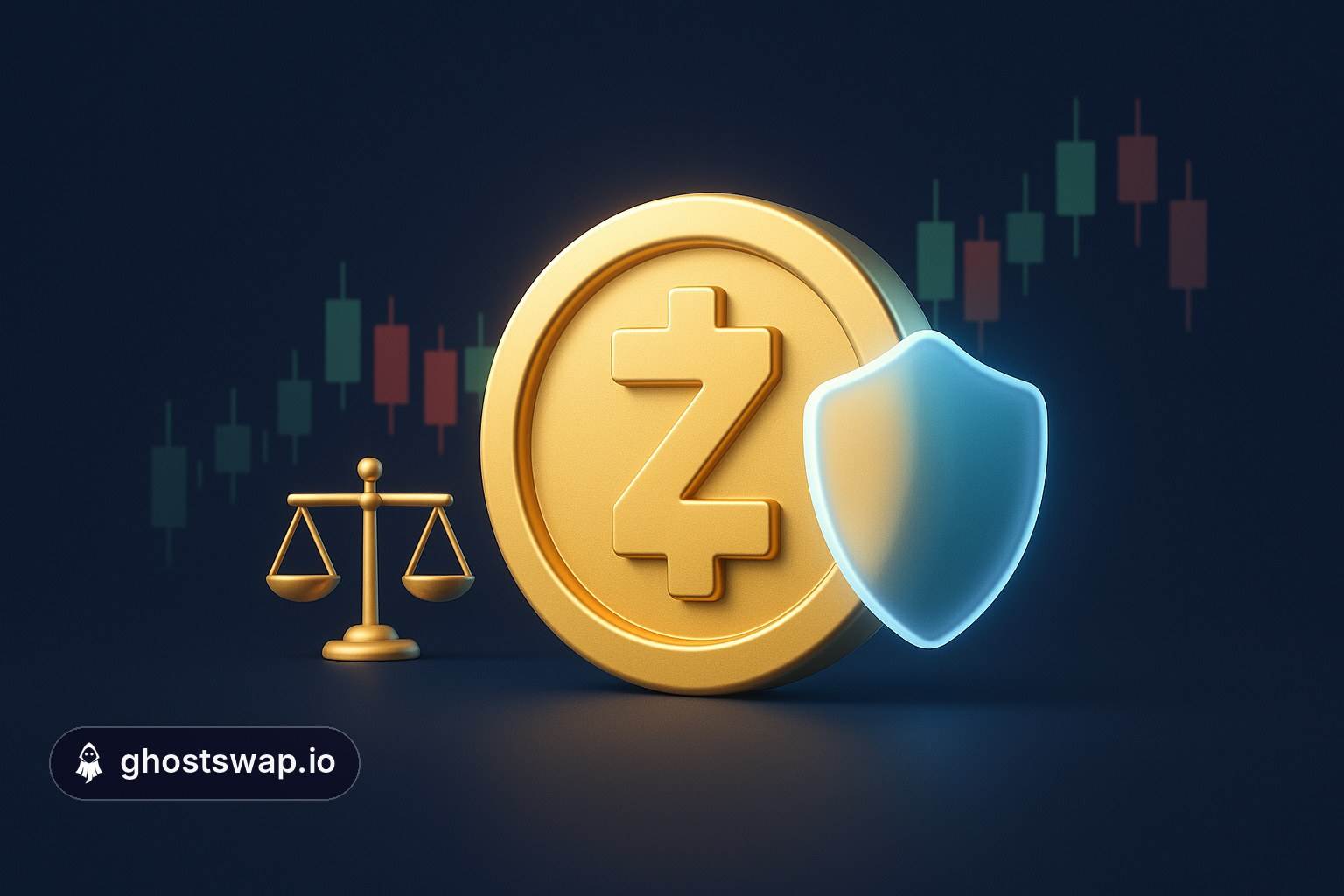
当比特币在8万至9万美元区间反复震荡、市场情绪趋于谨慎时,资金却悄然流向被长期忽视的隐私赛道。近期ZEC再度走出独立行情,价格突破500美元关口,较阶段低点反弹近40%,与BTC的横盘形成鲜明对比。更耐人寻味的是,这一轮上涨发生在监管讨论升温、交易所筛选机制趋严的背景下——曾被列入币安投票下架候选的ZEC,却在2025年下半年迎来接近13倍的阶段性涨幅,隐私资产的价值重估正在悄然发生。
这种从“边缘资产”到“被市场重新定价”的变化,也引发了一个更值得追问的问题:ZEC的上涨,究竟只是短期情绪和资金的集中宣泄与操纵,还是隐私作为货币属性正在被系统性重估?Messari正是从货币属性、监管环境以及比特币结构性变化等多个维度出发,尝试解释ZEC为何会在这一时间节点被市场重新看见。

在BTC和ETH之外的所有加密资产中,ZEC在2025年的“货币属性认知”发生了最显著的转变。长期以来,ZEC一直游离在“加密货币的货币等级体系”之外,被视为一种小众的隐私币,而非真正意义上的货币资产。但随着对金融监控的担忧不断加剧,以及比特币加速走向制度化、机构化,隐私重新被市场视为一种核心的货币属性,而不再只是少数极客或意识形态群体的偏好。
比特币已经证明,非主权数字货币可以在全球尺度上运行;但它并未保留人们在使用实体现金时早已习以为常的隐私属性。每一笔交易都会被广播到一个完全透明的公共账本之上,任何人只要使用区块浏览器,就可以进行追踪与分析。这种反讽意味极强:一个本意在于削弱国家控制的工具,最终却无意中构建起了一套金融“全景监狱”。
Zcash通过零知识密码学,将比特币的货币政策与实体现金的隐私属性结合在一起。在当前的数字资产体系中,没有任何一种资产能够像最新版Zcash隐私池那样,提供经过长期实战检验、且具有确定性的隐私保障。这使得ZEC成为一种极难被复制的“私人货币”形态。
我们认为,市场正是基于这一点,重新对ZEC相对于BTC进行了定价重估——将其视为一种“理想形态的私密加密货币”,并将其定位为对抗监控型国家崛起、以及比特币机构化进程的对冲工具。
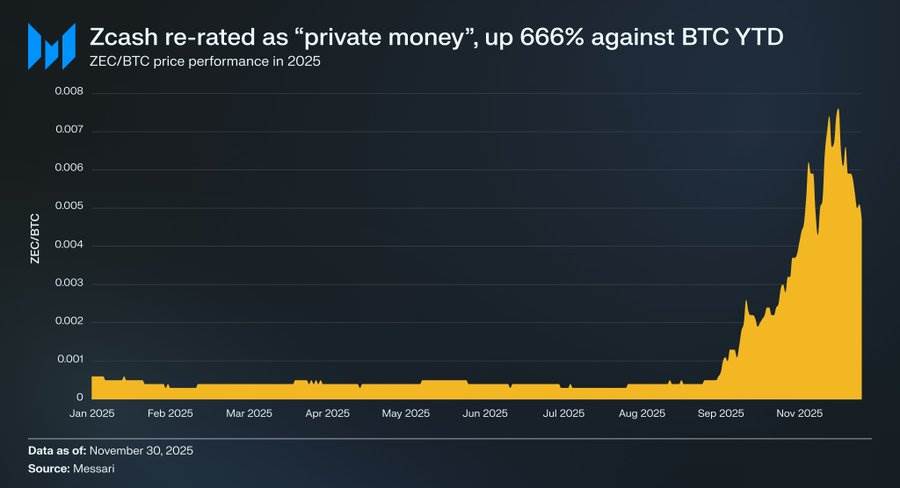
今年以来,ZEC对BTC的涨幅高达666%,市值升至约70亿美元,并一度在市值层面超越XMR,成为市值最高的隐私币。这种相对强势,表明市场正在将ZEC与XMR一并视为可行的私密加密货币形态。
比特币上的隐私:一条几乎走不通的路
比特币几乎不可能在协议层引入类似Zcash的隐私池架构,因此,“比特币最终会吸收Zcash价值主张”的说法并不成立。
比特币社区以其高度保守的技术文化著称,优先追求机制的固化,以尽可能减少攻击面、维护货币系统的完整性。如果要在协议层嵌入隐私功能,就必须对比特币的核心架构进行修改,而这将引入潜在的通胀漏洞风险,从而威胁其最核心的货币可信度。对Zcash而言,这种风险是可以接受的,因为隐私本身就是它的核心价值主张。
此外,在基础层引入零知识密码学,还会显著降低区块链的可扩展性。为了防止双花,需要使用nullifier(无效符)与哈希化的票据结构,这会带来“状态膨胀”的长期隐忧。Nullifier本质上是一个只增不减的列表,随着时间推移不断增长,最终可能导致运行节点所需的资源成本大幅上升。如果节点被迫存储一个规模持续扩大的nullifier集合,比特币的去中心化程度将受到实质性削弱,因为运行节点的门槛会随着时间推移不断提高。
As mentioned earlier, in the absence of soft forks that support ZK verifikation (e.g., OP_CAT), no Bitcoin-based layer-2 solution can achieve the level of privacy required by Zcash while still maintaining Bitcoin’s security features. One option is to introduce trusted intermediaries, such as alliance structures; another is to accept long and complex withdrawal delays, as in the case of the BitVM model; or simply to outsource both execution and security to an independent system, like the sovereign Rollup architecture. Until this situation changes, there is no practical way to combine Bitcoin’s security with Zcash’s privacy features. This is precisely why ZEC holds unique value as a privacy-oriented cryptocurrency. The urgency of privacy needs has been further emphasized by the introduction of central bank digital currencies (CBDCs) in various countries. Currently, approximately half of the world’s nations are either researching or have already implemented CBDCs. The core feature of CBDCs is their “programmability”: issuers can not only track every transaction but also directly control how, when, and where funds are used. Funds can even be set to be available only at designated merchants or within specific geographical areas. This is not a dystopian fantasy—it is a reality that has already occurred. In Nigeria, during the #EndSARS protests against police violence, the Nigerian Central Bank froze the bank accounts of several protesters and feminist groups, forcing the movement to rely on cryptocurrencies to continue operating.● United States (2020–2025): Regulators and large banks have dismantled a series of legal industries that are politically unpopular, citing concerns about “reputation risk.” The issue became so serious that the White House ordered an investigation. A report released by the OCC in 2025 also highlighted systematic restrictions on industries such as oil and gas, firearms, adult content, and cryptocurrencies.
● Canada (2022): During protests organized by the Free Ride Team, the Canadian government used the Emergency Measures Act to freeze the bank accounts and cryptocurrency wallets of protesters and small donors without judicial authorization. The Royal Canadian Mounted Police even blacklisted 34 self-hosted cryptocurrency wallets, requiring all regulated exchanges to stop trading with them. This incident clearly shows that Western democratic countries are also willing to weaponize financial systems to suppress political dissent.
In an era where “money can be programmed to control you,” ZEC provides a clear “exit mechanism.” But the significance of Zcash goes beyond simply allowing people to escape CBDCs; it becomes increasingly important for protecting Bitcoin itself.
A safety net against the potential subversion of Bitcoin
As Naval Ravikant and Balaji Srinivasan have emphasized, Zcash is essentially a safeguard designed to uphold the vision of financial freedom for Bitcoin.
Bitcoin is rapidly being concentrated in the hands of centralized entities: centralized exchanges hold approximately 3 million BTC, while ETFs hold around 1.3 million BTC. Listed companies hold another 829,000 BTC. In total, this amounts to about 5.1 million BTC, which represents 24% of the total supply. Currently, these assets are managed by third-party custodians.
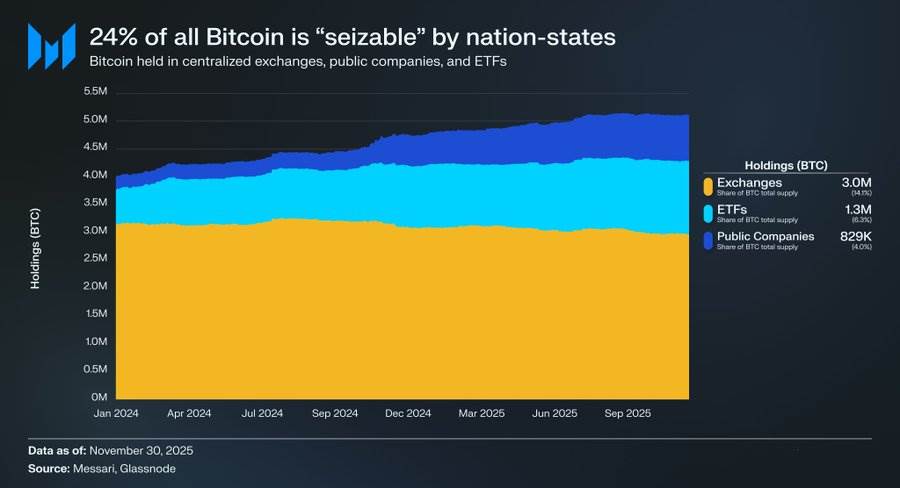
This means that roughly one-fourth of the BTC supply could theoretically be subject to confiscation by regulators. This structure is highly similar to the centralized system used by the U.S. government when confiscating gold in 1933. At that time, the U.S. government issued Executive Order 6102, requiring citizens to surrender gold reserves exceeding $100 and exchanging them for currency at a fixed price. This process did not involve violence; it was carried out through the banking system.
The same scenario applies to Bitcoin. Regulators do not need to have access to your private keys; they simply need legal authority over the custodial institutions. Once governments issue enforcement orders to companies like BlackRock and Coinbase, these companies are legally obligated to freeze and transfer any BTC they hold. Without modifying a single line of code, nearly one-fourth of the BTC supply could be “nationalized” overnight.
Moreover, given the high level of transparency in blockchain technology, self-custody becomes ineffective as a defense mechanism. Any BTC withdrawn from KYC exchanges or brokerage accounts will eventually leave behind traceable “paper records.”
BTC holders can convert their funds into Zcash, thereby cutting off this link between custody and regulation, achieving an “airtight isolation” of their assets. Once the funds enter the Zcash privacy pool, their whereabouts become completely invisible to observers. Regulators can see that the funds leave the Bitcoin network, but they cannot determine their final destination. Of course, the level of anonymity depends entirely on operational security measures: techniques like address reuse and asset acquisition through KYC processes will ensure that any connection to the private pool remains permanent before the funds are transferred.
The path toward PMF is being paved forward.
There has always been a demand for private currencies, but in the past, it was difficult for Zcash to reach users directly. Long-term issues such as high memory usage, long verification times, and complex desktop configurations made private transactions slow and difficult for ordinary users to use. Recent breakthroughs in infrastructure have systematically removed these obstacles.
Sapling’s upgrade reduced memory requirements by 97% (to approximately 40MB), and verification time was shortened by 81% (to about 7 seconds), making private transactions possible on mobile devices.
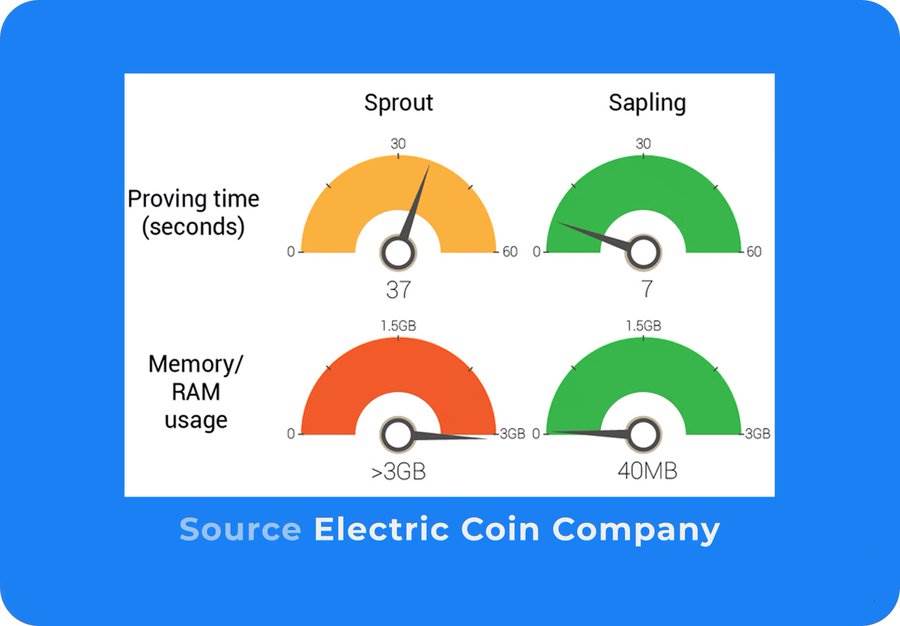
While Sapling addresses the speed issue, the reliability of the system remains a focus for the privacy community. Later, Orchard introduced Halo 2, eliminating the need for reliance on reliability settings altogether. They also introduced Unified Addresses, combining transparent addresses with privacy addresses into a single entry point, significantly reducing the burden on users.
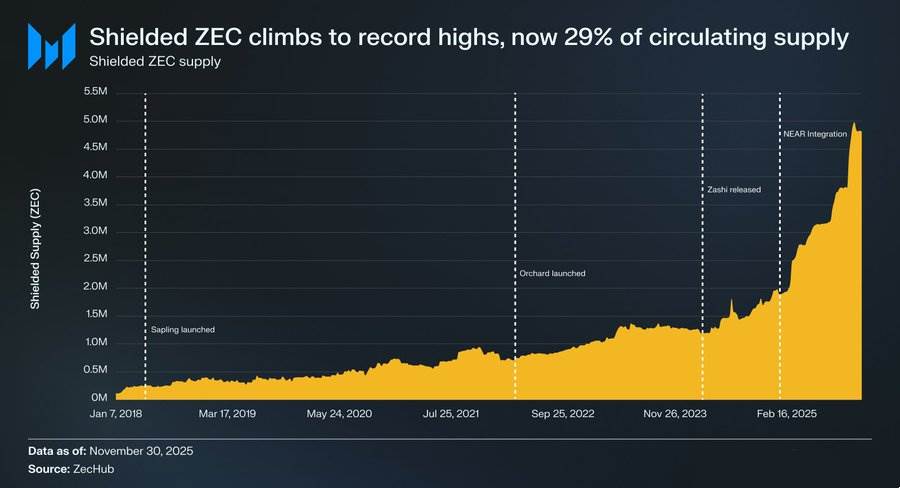
These improvements ultimately led to the launch of the Zashi mobile wallet in March 2024. Thanks to the unified address design, Zashi simplifies the process of conducting private transactions, requiring just a few clicks on the screen. This makes privacy the default experience for users. After solving the UX issues, the last obstacle was distribution. Users still need to rely on centralized exchanges to deposit and withdraw ZEC into their wallets. The integration with NEAR Intents eliminates this dependence, allowing users to directly convert assets like BTC and ETH into private ZEC, or even use private ZEC to pay any address on any blockchain. These measures help Zcash avoid historical obstacles, gain global liquidity, and align with market demands. Looking ahead, since 2019, the rolling correlation between ZEC and BTC has declined, from 0.90 to a recent 0.24. At the same time, the rolling Beta value of ZEC relative to BTC has reached historical highs. This indicates that the market is giving Zcash an independent premium due to its privacy features. We don’t expect ZEC to surpass BTC. Bitcoin, with its transparent supply and auditability, has established itself as the most reliable cryptocurrency. As a privacy-oriented coin, Zcash still faces the challenge of balancing privacy requirements with auditability.但ZEC完全可以在不取代BTC的前提下,开辟属于自己的位置。两者并非在解决同一个问题,而是在加密货币体系中承担不同角色:BTC是为透明性与安全性而优化的“稳健型加密货币”,而ZEC则是为隐私与机密性而生的“私密型加密货币”。
在这个意义上,ZEC的成功并不依赖于击败比特币,而在于补足比特币刻意放弃的那部分属性。