Exchange Ranking
 Top Exchanges
 24h Volume Ranking
 Popularity Ranking
 Exchange BTC Balance
 Proof of Reserves
 Decentralized Exchanges
 Funding Rate
 Funding Heatmap
 Liquidation Data
 Max Pain
 Long/Short Ratio
 Whale L/S Ratio
 Binance/Okex/Huobi L/S
 Bitfinex Margin L/S
 ETF Tracker
 Solana ETF
 XRP ETF
 Hong Kong ETF
 Bitcoin Treasuries
 Crypto Reversal
 Ethereum Reserves
 HyperLiquid Wallet Analysis
 Hyperliquid Whale Watch
 Large Transactions
 On-chain Movement
 Bitcoin ROI
 Stablecoin Market Cap
 Options Analysis
 News
 Articles
 Economic Calendar
 Features
 Wallet
 Contract Calculator


 Security
 Collections
 Watchlist
 Following
 ETH
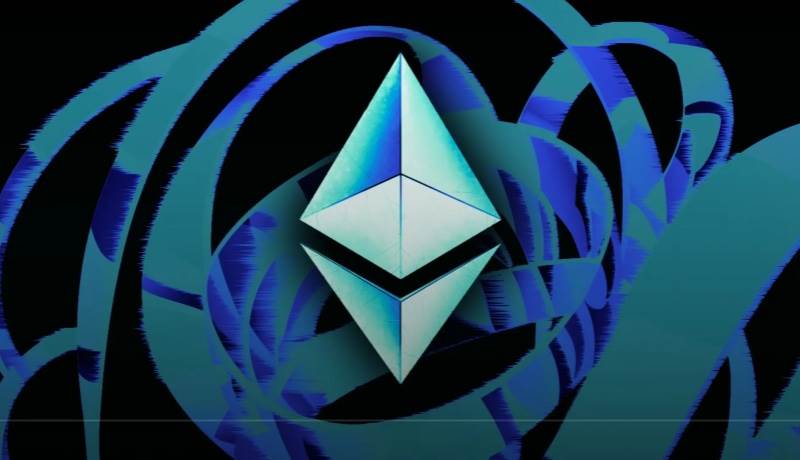
In 2025, Ethereum finds itself at an awkward crossroads: on one side, there are continuous upgrades and new developments in narrative aspects; on the other side, prices and valuation continue to lag behind the overall market. Chain-level data shows that although Layer2 activity reached new highs after Dencun’s upgrade, fees and value capture on the main network have significantly decreased. ETH lacks the “digital gold” consensus that Bitcoin has, and it is also facing competition from chains with higher throughput, such as Solana and Hyperliquid. The market is beginning to reconsider a more realistic issue: can Ethereum escape its predicament of being neither highly sought-after nor easily available, and provide investors with a clear and sustainable solution before further upgrades like Fusaka are implemented?
Introduction: Two “wallless” utopian experiments separated by 60 years
I believe many people wouldn’t expect Singapore, known for its strict laws and regulations, to have had its own utopian dreams in the past. In fact, Lee Kuan Yew once dreamed of using “love” to inspire prisoners, but reality dealt him a harsh blow.
In the 1950s, Singapore was a time when private gangs were rampant. According to statistics, there were over 300 active gangs at that time, with more than 50,000 people involved in them (accounting for 6% of the total population). These gangs penetrated every aspect of Singapore’s society, causing numerous social problems and affecting economic development. Lee Kuan Yew, who was then the leader of the People’s Action Party and served as Singapore’s Prime Minister, decided to take drastic measures. He introduced the Criminal Law Temporary Provisions (also known as Act No. 55), a law that shocked the judiciary at that time. This law allowed police to detain suspects indefinitely without a court hearing. The effectiveness of this measure was immediate in improving social order, but it turned into a nightmare for prison management. With so many criminals being detained in a short period, Changi Prison became overcrowded and on the verge of collapse. Meanwhile, while human rights activists and law enforcement agencies were arguing about how to manage prisons, Devan Nair, the leader of the Workers’ Party, proposed a “Utopian prison model”. This model involved combining a prison with community and agricultural elements. There were no handcuffs or chains, no high walls, and no heavy security guards. The goal was to help prisoners reform through collective labor and community trust. Nair believed that high walls and intimidation only fueled human evil, while giving prisoners trust and freedom could help them rebuild their personalities.This seemingly crazy experimental proposal was actually approved in 1960, after intense debates. The location chosen was Pulau Senang, a small island located south of the main island of Singapore. The island covers less than one square kilometer, and its surrounding waters are so turbulent that it is impossible for prisoners to escape. At that time, Daniel Dutton, the governor of Pulau Senang, believed that human nature was inherently good. He thought that as long as prisoners were given trust and dignity in their work, they could achieve self-redemption within this “walled-less prison”. Therefore, there were no walls or barbed wires on the island, and even the guards did not carry guns. Pulau Senang was initially a desolate place, but with the hard work of the first and second batches of prisoners, the island began to take shape. There were restaurants, dormitories, warehouses, and even water and electricity supply. From the outside, it resembled a large community rather than a prison. Everyone on Pulau Senang had to work and participate in construction efforts. Even the guards lived with the prisoners. The working hours were from 8 am to 5 pm, with free time after 5 pm, and there was also a two-day weekend. As Nair hypothesized, the recidivism rate among prisoners serving in this community was only 5%. This “miracle” of rehabilitation was even reported by Western media, and the United Nations’ inspection team visited the island, describing it as a “miracle in human rehabilitation history”.
It seems that Dutton thought everything was going well, but little did he know that the “greed” and “unwillingness to give up” were quietly taking hold in the Anson Island community. Some prisoners complained about the hard work involved in their tasks; others argued that they should not be released from prison before their peers. Still others complained about unfair distribution of work assignments—they always had to do the most exhausting tasks, yet they received fewer credits for their efforts. These emotions gradually spread among the prisoners. The trigger for this situation was an incident in July 1963, when several carpenters refused to work on weekends. In anger, Dutton ordered the prisoners involved in the strike to be sent back to Changi Prison. This event pushed the level of dissatisfaction to its peak. On July 12, 1963, black smoke rose from Anson Island, a place that was once peaceful. After receiving their tools in the morning, the prisoners launched indiscriminate attacks on the prison guards. They used hoes and machetes to riot, killing Dutton, who believed they would reform. They also burned down the houses and cafeterias they built themselves. What was destroyed along with them was their hope of returning to society, as well as the Singapore government’s belief in human nature being inherently good. Anson Island, once a world-class sociological experiment, became a place where hundreds of violent members of the PAP Party were given unprecedented freedom. But one day, those ideals were destroyed by fire. In March 2024, Ethereum also launched its own “Anson Island Experiment”—the Dencun Upgrade (EIP-4844).核心开发者们像当年的Dutton一样,拆除了L1与L2之间昂贵的“经济围墙”(Gas费)。他们怀揣着“以Rollup为中心”的宏大愿景,相信只要给L2(Layer 2)提供几乎免费的Blob数据空间,L2就会通过繁荣的生态反哺主网,构建一个互利共赢的乌托邦。
但历史总是押着相同的韵脚。就像安乐岛的囚犯没有选择感恩而是选择了暴乱,2025年的L2也没有选择反哺,而是对L1发动了一场无声的“经济掠夺”。
第一章“尴尬”起源:2025年的身份迷失
1、既非黄金,亦非科技股的困境
在2025年的大部分时间里,Ethereum在资本市场的定位显得尤为模糊。投资者习惯于将加密资产归类为两个极端:一端是作为价值存储的“数字商品”(如BTC),另一端是具有高增长潜力、依靠用户流量变现的“科技股”(如Solana)。Ethereum曾经试图同时占据这两端——既是“Ultra Sound Money”,又是“世界计算机”。
然而,2025年的市场环境无情地剥离了这种双重叙事的红利。
● 作为商品的尴尬:Although ETH plays a crucial role as a collateral asset in DeFi, its fluctuating supply dynamics—along with the existence of staking mechanisms—make it difficult to simply define it as “digital gold,” like BTC. BTC’s fixed total supply and energy-based valuation make its commodity properties very stable, while Ethereum’s complexity makes it seem less clear-cut to conservative institutional investors.
● As an “tech stock,” Ethereum faces challenges: If considered as a technology platform, its key metric—revenue—experienced a catastrophic decline in the first three quarters of 2025. Data from August showed that, despite ETH prices reaching record highs, revenue from the network protocol plummeted by 75% year-over-year, reaching only $39.2 million. For traditional investors accustomed to valuing companies based on P/E ratios or cash flow models, this is clearly a sign of a broken business model.
2. The “sandwich layer” effect in the competitive landscape
In terms of competition, Ethereum also faces pressure from both directions.
● Pressure from above: The continuous inflow of BTC ETFs and the strategic reserves held by sovereign countries further solidify BTC’s status as a macro asset. In contrast, although Ethereum ETFs were approved, the amount of capital flowing into them never matched that of BTC, reflecting mainstream investors’ lack of understanding of Ethereum’s role as a “digital oil.”
● Pressure from below: Solana boasts exceptional performance and low costs, thanks to its single-node architecture. By 2025, Solana is likely to dominate growth areas such as payments, DePIN, AI agents, memes, and high-frequency consumer applications. Data shows that the speed of stablecoin transactions and ecosystem revenue on the Solana chain even surpassed those of the Ethereum mainnet in some months. Additionally, Hyperliquid, with its leading position in the Perp dex market, has attracted many wealthy users and traders. Hyperliquid’s ability to generate fees makes it competitive even with Ethereum. This situation of being “neither heaven-bound nor earth-bound” is precisely the breeding ground for the term “an awkward situation”. Investors can only roll their eyes: if value storage isn’t as good as BTC, high-performance applications aren’t as impressive as Solana, and fee generation isn’t as strong as Hyperliquid, then where exactly is Ethereum’s advantage?
Chapter 2: Regulatory Directions: The Legal Reconfiguration of Digital Commodities
1. “Project Crypto” and the Shift in Regulatory Philosophy
On November 12, 2025, Paul Atkins, chairman of the US SEC, unveiled the “Project Crypto” regulatory reform plan during a speech at the Federal Reserve Bank of Philadelphia. The core goal of this plan is to end the years-long practice of “regulation by enforcement” and instead establish a clear framework based on economic realities.
在此次讲话中,Atkins主席明确驳斥了“一旦是证券,永远是证券”的观点(就是打脸前任)。他引入了“代币分类法(Token Taxonomy)”,指出数字资产的属性是流动的、是会改变的。一个代币在初始发行阶段可能作为Investment Contract的一部分被出售,但这并不意味着该资产本身永远背负证券的枷锁。(注意:对于Ethereum而言,这个逻辑非常重要。)
SEC认为,当一个网络的去中心化程度达到一定阈值,以至于持有者不再依赖于某个中心化实体的“Essential Managerial Effort”来获取收益时,该资产便脱离了Howey Test的管辖范围。
Ethereum拥有超过110万验证者、全球分布最广的节点网络,因此得证:ETH不属于证券范畴。
2、《数字资产市场清晰度法案》(CLARITY Act)
2025年7月,美国众议院通过了《数字资产市场清晰度法案》(CLARITY Act)。该法案在法律层面上完成了对Ethereum身份的“拨乱反正”。
● 管辖权划界:法案明确将“源自去中心化区块链协议”的资产——并在文中特指BTC和ETH——划归商品期货交易委员会(CFTC)管辖。
● 数字大宗商品的定义:The bill defines “digital commodities” as “any alternative digital assets that can be exclusively owned and transferred between individuals, without the need for intermediaries, and are recorded on encrypted, secure distributed ledgers.”
● The role of banks: The bill allows banks to register as “digital commodity brokers,” providing customers with services such as hosting and trading of ETH. This means that ETH will no longer be considered a high-risk, uncertain asset on bank balance sheets, but rather a commodity asset similar to gold or foreign exchange.
3. Compatibility between staking rewards and commodity properties
According to traditional securities laws, can an asset that generates interest still be called a “commodity”? Traditional commodities like crude oil or wheat not only generate no income, but often require additional costs for storage. Ethereum’s staking mechanism makes it more similar to equity or bonds.
The regulatory framework for 2025 addresses this contradiction in perception:
● Asset layer: ETH tokens themselves are commodities. They serve as a source of gas and security funds for the network, possessing both practical value and exchange value.
● Protocol layer: Native protocol-level staking is considered a form of “labor” or “service provision”. Verifiers contribute computational resources and capital to maintain network security, and their rewards are compensation for this service, rather than passive investment returns.
● Service layer: 只有当中心化机构(如交易所)提供托管式的质押服务,并承诺特定回报时,这种“服务”才构成投资合同。
这种二分法使得ETH得以保留其“生息”特性,同时享有“商品”的监管豁免权。机构投资者开始将ETH视为一种“Productive Commodity”——既具备商品的抗通胀属性,又具备类似债券的收益率。Fidelity在其报告中指出,这种独特的属性组合使ETH成为了投资组合中不可或缺的“互联网债券”。
第三章商业模式的崩塌与重建:从Dencun到Fusaka
解决了身份问题,接下来是更尖锐的经济问题:ETH赚钱吗?它的现金流从哪里来?到哪里去?
With all due respect,2025年前三季度的收入断崖就是一次失败的技术扩容方案,是一次技术宅妄图用技术重塑商业环境和人性的幻想,而无奈的社区则是寄希望12月的Fusaka升级能改变眼下的窘境,但是还能够吗?
1、Dencun升级后的“收入悖论”
2024年3月的Dencun升级引入了EIP-4844(Blob交易),旨在通过提供廉价的数据存储空间来降低L2的交易成本。从技术上讲,这是一次巨大的成功——L2的Gas费从数美元降至几美分,极大地促进了L2生态的繁荣。然而,从经济模型上看,这是一次“灾难”。
The pricing mechanism in the Blob market was initially based entirely on supply and demand. Since the available Blob space far exceeded the early demand for L2 services, the Base Fee for Blobs remained extremely low, at just 1 wei (or 0.000000001 Gwei). This meant that while the L2 networks like Base and Arbitrum charged high gas fees to users, the “rent” they paid to Ethereum L1 was virtually zero. Data shows that Base could generate hundreds of thousands of dollars in revenue per day, yet it only had to pay a few dollars to Ethereum. As a result, due to the large number of transactions moving from L1 to L2, and L2 not destroying enough ETH through Blob destruction mechanisms, the EIP-1559 mechanism became ineffective. In the third quarter of 2025, Ethereum’s annual supply growth rate returned to +0.22%, eliminating the narrative of “deflationary assets”. This situation, where L2 benefited greatly while L1 suffered, was referred to by the community as a “parasite effect”, leading to widespread doubts about the sustainability of Ethereum’s business model. Fortunately, despite the doubts about Ethereum’s business model, its “aloof” developer community did not sit back and do nothing. On December 3, 2025, the much-anticipated Fusaka upgrade finally arrived. The core of this upgrade was to “fix” the value capture chain between L1 and L2—in other words, L2 would have to pay homage to L1. Key fixes included EIP-7918, which tied the Blob base fee to execution costs.The most commercially significant proposal in the Fusaka upgrade is EIP-7918. This proposal completely changes the pricing mechanism for Blobs. EIP-7918 introduces a “minimum price” mechanism—price increases. It stipulates that the base cost of Blobs cannot drop indefinitely to 1 wei. Instead, the minimum price of Blobs will be tied to the L1 execution layer’s Gas price (specifically, 1/15.258 of the L1 Base Fee). This means that as long as the Ethereum mainnet remains busy (e.g., with new block creation, DeFi transactions, or NFT creation), the L1 Gas Price will increase, thereby automatically raising the “floor price” for L2 users to purchase Blobs. L2 can no longer use Ethereum’s security features at nearly free prices. After the upgrade is activated, the base cost of Blobs surges by 15 million times (from 1 wei to the range of 0.01–0.5 Gwei). While the transaction cost remains low for L2 users (about 0.01 USD), for the Ethereum protocol, this means a thousands-of-fold increase in revenue. The prosperity of L2 is a direct driver of L1’s revenue. 2.2 Supply-side expansion: PeerDAS (EIP-7594) To prevent price increases from stalling the development of L2, Fusaka also introduces PeerDAS (peer-to-peer data availability sampling). PeerDAS allows nodes to verify data availability without downloading entire data blocks. This significantly reduces the bandwidth and storage requirements of nodes (by approximately 85%).
This technological breakthrough has allowed Ethereum to significantly increase the supply of Blobs. After the upgrade, the target number of Blobs per block will be increased gradually, from 6 to 14 or even more. Through EIP-7918, the lower limit of unit price was raised, while PeerDAS was used to increase the total sales volume. As a result, Ethereum has successfully established a sales model where both quantity and price are increasing. The new business model forms a closed loop. This is the new business model that Fusaka has created for Ethereum. It can be summarized as a “B2B tax model based on security services”. L2越繁荣->L2对Blob需求越大->即使单价低,总量大且有保底->ETH销毁量增加->ETH通缩/稀缺->网络安全性提升->吸引更多高价值资产。
市场是否有人埋单?有,根据著名分析师Yi老师的估算,Fusaka升级后,2026年Ethereum的ETH销毁率有望提升8倍?!
第四章估值体系:如何为“信任件”定价?
在明确了商业模式后,下一个问题:如何对这种新型资产进行估值?由于Ethereum兼具商品、资本资产和货币属性,单一的估值模型似乎无法表达”ETH的伟大“。对此,华尔街的精英们给出了他们的看法:
1、现金流折现(DCF)模型:科技股视角
尽管被定义为大宗商品,但ETH拥有清晰的现金流,这使得它能够套用传统的DCF模型。
● 在2025年Q1的研报中,21Shares基于Ethereum的交易费收入和销毁机制,采用了三阶段增长模型进行推演。即使在保守的折现率(15.96%)假设下,其计算出的ETH公允价值也达到了$3,998;而在较为乐观的假设下(折现率11.02%),公允价值高达$7,249。
● Fusaka升级后的EIP-7918机制,为DCF模型中的“未来收入增长率”提供了坚实的支撑。市场分析认为这不再需要担心L2吸血导致收入归零,而是可以根据L2的预期增长规模,线性推导L1的保底收入。
2. Currency Premium Model: A Perspective on Commodities
In addition to cash flows, Ethereum also possesses a value that cannot be captured through DCF analysis—the currency premium. This value arises from its role as a settlement currency and collateral.
● ETH is the core collateral in the DeFi ecosystem, with a total value of over $100 billion. Whether it’s used for creating stablecoins like DAI, lending, or derivatives trading, ETH serves as the fundamental trust anchor.
● The NFT market and L2 gas fees are all denominated in ETH.
● As ETFs become more common (with lock-ups reaching $27.6 billion by Q3 2025), and companies start accumulating ETH as reserves (for example, Bitmine holds 366,000 ETH), the liquidity of ETH becomes increasingly scarce. This tight supply-demand situation gives ETH a premium similar to that of gold.
3. Pricing of “Trustware”
Consensys introduced the concept of “Trustware” in its 2025 report.
● What Ethereum sells isn’t just computational power (something AWS does), but rather “decentralized, immutable Finality.”
● As RWA gets decentralized, Ethereum L1 will shift from processing transactions to protecting assets. Its value will no longer depend solely on TPS, but rather on the size of the assets it protects.
● If Ethereum can protect $10 trillion in global assets, even if it only charges a 0.01% security tax per year, its market value must be sufficient to withstand 51% attacks. This logic of “security budget” means that Ethereum’s market value is positively correlated with the economic weight it carries.
In the promotion of “trusted assets,” there’s nothing more persuasive than showing how hackers can steal funds and then convert those funds into ETH. There’s no other way around it.
Chapter 5: The Competitive Landscape: Modular Defenses and RWA Battlegrounds
1. Ethereum vs. Solana: The Divide Between Wholesale and Retail Markets
Data from 2025 clearly shows the structural differentiation in the public chain market:
Solana is similar to systems like Visa or NASDAQ, focusing on ultra-high TPS rates and low latency. It’s ideal for high-frequency trading, payment, and consumer applications like DePIN. Ethereum, on the other hand, has evolved into a system like SWIFT or the Federal Reserve’s settlement system (FedWire). It doesn’t focus on processing every single transaction, but rather on handling “settlement packages” containing thousands of transactions submitted by L2 networks.
This division of labor is an inevitable outcome of a mature market. High-value,低频交易(such as tokenized government bonds or large-scale cross-border settlements) still prefer Ethereum, due to its higher security and decentralization. Meanwhile, low-value, high-frequency transactions flow to Solana.
2. The Dominance of RWA
In the field of RWA, which is seen as a trillion-dollar market in the future, Ethereum demonstrates strong dominance. Although Solana is growing rapidly, in benchmark projects like BlackRock’s BUIDL funds and Franklin Templeton’s blockchain-based funds, Ethereum remains the preferred foundation.
Institutions have clear choices when dealing with billions or even tens of billions of dollars in assets. Security comes before speed. Ethereum’s decade-long track record of being reliable without any downtime makes it a formidable competitor.
Ethereum迷失了吗?在2025年完成了向数字经济“底层铸币税”模型的惊险一跃,只是不知道这次的信仰之跃,会不会落在干草垛?