Exchange Ranking
 Top Exchanges
 24h Volume Ranking
 Popularity Ranking
 Exchange BTC Balance
 Proof of Reserves
 Decentralized Exchanges
 Funding Rate
 Funding Heatmap
 Liquidation Data
 Max Pain
 Long/Short Ratio
 Whale L/S Ratio
 Binance/Okex/Huobi L/S
 Bitfinex Margin L/S
 ETF Tracker
 Solana ETF
 XRP ETF
 Hong Kong ETF
 Bitcoin Treasuries
 Crypto Reversal
 Ethereum Reserves
 HyperLiquid Wallet Analysis
 Hyperliquid Whale Watch
 Large Transactions
 On-chain Movement
 Bitcoin ROI
 Stablecoin Market Cap
 Options Analysis
 News
 Articles
 Economic Calendar
 Features
 Wallet
 Contract Calculator


 Security
 Collections
 Watchlist
 Following
 DOGE
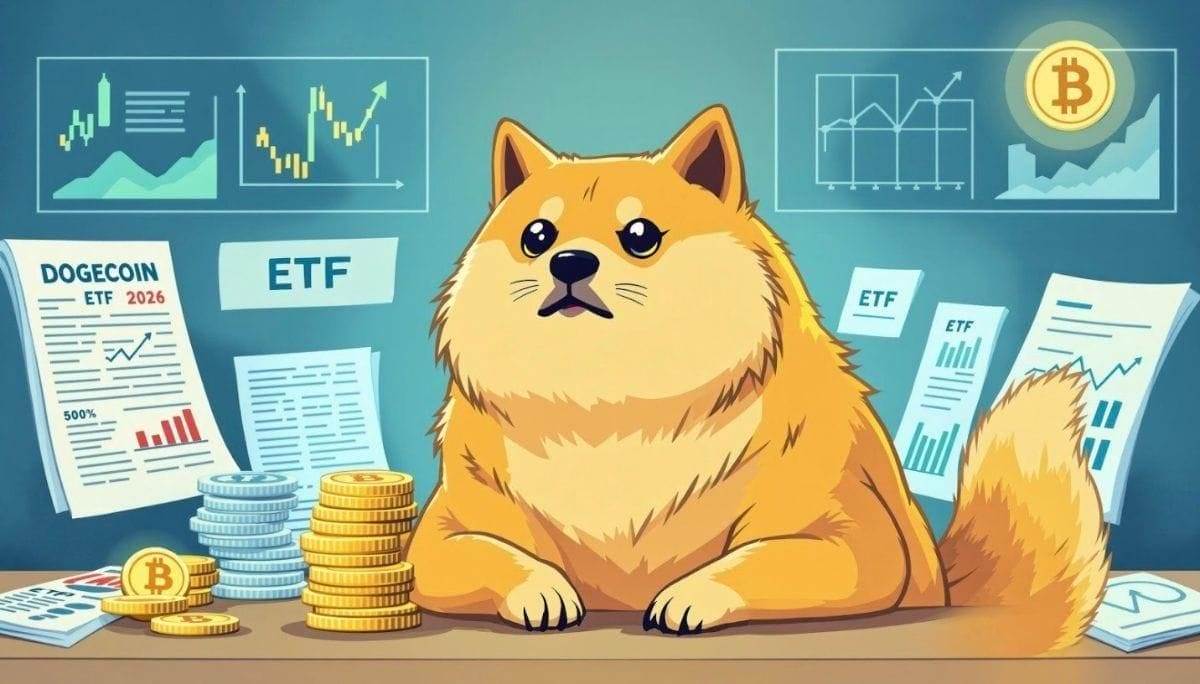
The launch of the Dogecoin ETF represents a new opportunity for crypto investors. As capital from Wall Street continues to flow into the crypto market, innovative ETF products like TDOG allow investors to participate in the potential profits generated by Dogecoin’s price fluctuations, without the need to physically hold the currency. This not only indicates that the boundaries between traditional finance and crypto assets are becoming less distinct, but also signals that the Meme economy is moving towards mainstream status. How does TDOG work? And why has it become a favorite among investors?
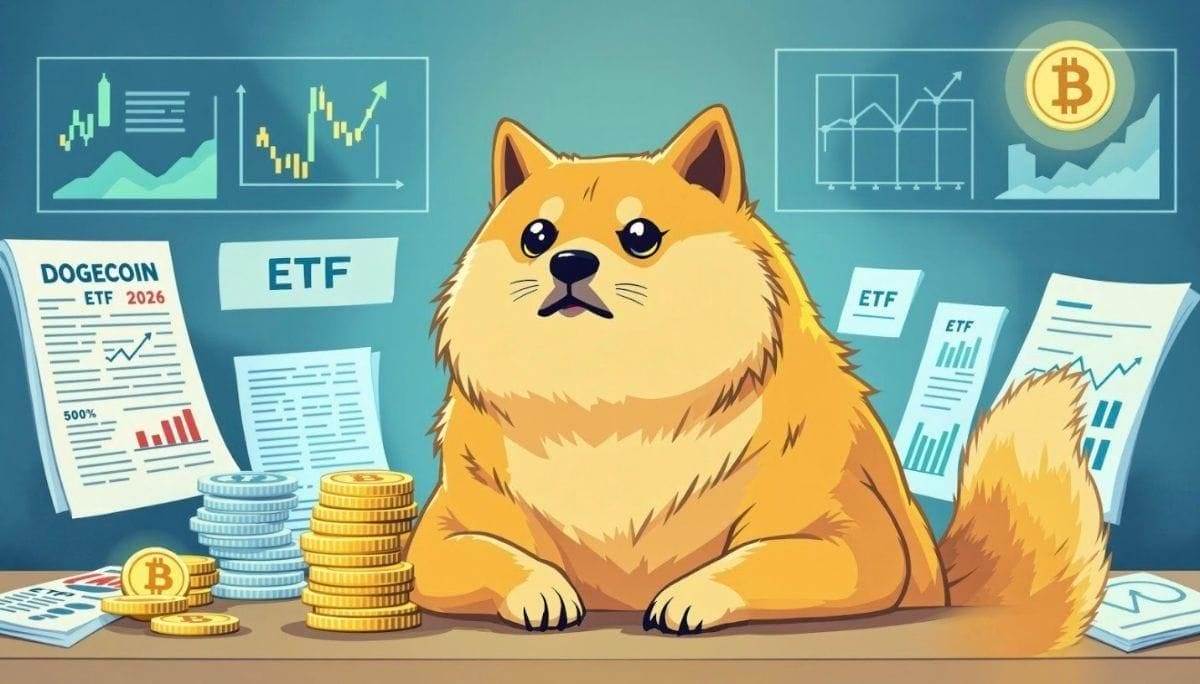
What is TDOG? How does it function?
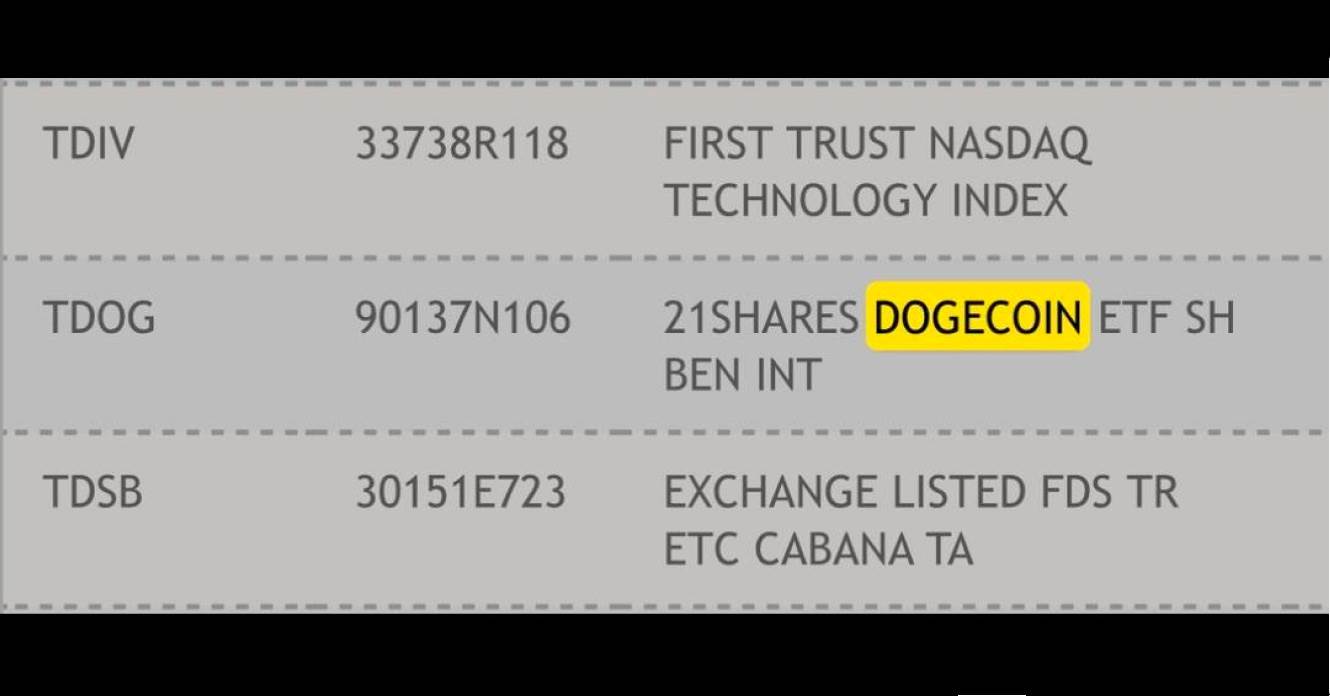
21Shares’ Dogecoin ETF, TDOG, recently appeared on the list of active and pre-issued funds by the DTCC, a US securities custody and settlement company. Its stock symbol is TDOG. This listing aims to connect brokers and clearing houses, preparing for potential transactions. However, this does not mean that it has received regulatory approval.
The proposed TDOG/21Shares Dogecoin trust intends to support Dogecoin in physical form (i.e., directly holding it), and issue stocks that track Dogecoin prices (after deducting fees).
The fund uses a multi-exchange Dogecoin price index to calculate its daily net asset value (NAV). During trading hours, the fund also updates the indicative value every 15 seconds, allowing traders to gauge the trends of the stocks and underlying assets.
Creation and redemption of shares usually occur in cash.
Authorized participants (APs) typically provide cash, after which the sponsor instructs the leading brokerage firm (Coinbase) to purchase DOGE or use existing holdings to transfer them to the Coinbase Custody Trust Company, which is responsible for holding these tokens on a trust account.
Redemption also involves reverse flows. The arbitrage opportunities between APs and market makers generally help maintain the stock price in line with the net value of the assets held. However, there may still be slight premiums or discounts during volatile periods or times when liquidity is limited.
Two points need attention:
● Fees are paid in physical form, so as the sponsorship fees are deducted, the number of DOGE units per share will gradually decrease over time.
● TDOG will not be traded until it has received approval from the U.S. Securities and Exchange Commission. The listing on the DTCC only indicates that it is ready for operation, not that it has received regulatory approval.
Do you know? For TDOG, “physical payment” means that sponsorship fees are deducted in the form of DOGE rather than cash. Therefore, even if the stock price continues to reflect the market value of DOGE, the number of DOGE units supporting each share will gradually decrease over time.
The listing on the DTCC does not mean that it has received approval from the SEC.
Seeing TDOG listed on the DTCC’s website only indicates that the operational setup is in progress.
Brokers and clearing companies can assign stock codes and prepare their systems for this process. However, listings before they are officially registered with the DTCC do not meet the requirements for processing by the DTCC. Additionally, listings after registration do not grant the authority to trade on exchanges or to send signals that require regulatory approval.
TDOG still needs to obtain two formal approvals from the U.S. Securities and Exchange Commission:
● The S-1 filing must be announced to take effect
. ● Nasdaq’s 19b-4 rule (or general listing rules) must be approved before these stocks can be listed as commodity-based trust stocks.
Similar crypto funds have already appeared on the DTCC before they were launched. This indicates that this step should be interpreted as preparatory actions for operation, rather than actual approvals.
How does TDOG track DOGE?
If approved, the trust will use CF Benchmarks’ exchange rate between Dogecoin and US dollars as its valuation basis for its assets. This exchange rate is based on daily benchmarks established through transactions conducted at various qualified DOGE-USD exchanges.
This system aims to be replicable and anti-manipulation, and it follows British benchmark standards for management. The trust calculates its daily net asset value based on these benchmarks: during trading hours, stock prices fluctuate around the net asset value depending on supply and demand.
One note: the pricing benchmark does not include forks or token distributions. According to the prospectus, the trust does not assume any responsibility for token distributions, nor does it account for forks, unless there is special support or distribution involved.
In short, don’t expect any additional value from forks or token distributions to be reflected in the fund.
你知道吗? 许多 ETF(以及商品信托)的申购和赎回都由授权参与者以大型“申购单位”进行,通常一次申购数万股。这种“管道”机制有助于即使你交易的是单股,也能将价格保持在接近资产净值(NAV)的水平。
TDOG 与直接购买 DOGE
直接购买狗狗币不是更方便吗?这得看情况。
如果获得批准,TDOG 将通过常规经纪账户提供狗狗币价格敞口。该信托持有狗狗币,并根据 CF Benchmarks 每日发布的狗狗币指数对其进行估值,并通过 Coinbase 进行现金增发/赎回( Coinbase Custody 将代币存放在冷钱包中)。
正如前文所述,任何计划持有股票的人都需要注意一个结构性问题:保荐费是以狗狗币 (DOGE) 收取的,因此每股狗狗币的价值会随着时间的推移逐渐下降。在交易时段,股票交易价格也可能略高于或低于每日资产净值 (NAV)。
TDOG 的吸引力在于其便捷性和完善的基础设施。它与其他 ETF 交易方式相同—— 无需钱包或种子短语 。托管机构为机构,估值遵循已发布的规则,其创建和赎回流程以及做市商套利通常使价格接近资产净值 (NAV)。费用透明披露,并从基金资产中扣除,使投资者无需与多家提供商打交道即可了解总成本。
There are also some disadvantages associated with this convenience. Since fees are paid in physical assets, the longer you hold your tokens, the fewer Dogecoins you will be able to support per share. There may also be situations where the price is higher or lower than expected during the day.
You also rely on counterparties, including major brokers, custodians, and index managers. Additionally, since you cannot directly pay tips, make purchases, or interact with Dogecoin through ETFs, you lose the benefits of being able to interact directly with the blockchain.
By purchasing Dogecoin, you gain full control over the blockchain and access to various useful features around the clock. You don’t need to pay any fees to use your funds.
In return, if you give your tokens to third parties, you will take on the responsibility for managing these entities, as well as dealing with exchange and platform-related risks. You’ll also have to handle expenses related to managing wallets, transfers, security settings, and access to fiat currencies. Ultimately, the best choice depends on what you value most: the ease of using a brokerage account, or direct control and access to the blockchain.
The connection between TDOG and DOJE
Currently, there is already a US-based Dogecoin product listed on Cboe BZX: REX-Osprey DOGE ETF (DOJE).
This ETF was established in 1940, aiming to achieve a return of approximately twice that of Dogecoin (after deducting fees). It may also hold physical Dogecoin holdings and other instruments linked to Dogecoin. To comply with US regulations and maintain its status as a regulated investment company (RIC), this ETF is managed through a Cayman Islands subsidiary called “REX-Osprey DOGE Cayman Islands Portfolio”. This subsidiary holds cryptocurrency investments.
费用率为 1.50%。DOJE 于 2025 年 9 月 18 日上市 ,同时推出现货 DOGE 和 21Shares DOGE 交易所交易产品 (ETP),但具体组合可能会随着时间的推移而发生变化。
如果 TDOG 获得批准,它将与 DOJE 并列,采用不同的包装和不同的机制:
● 结构和发行地点: TDOG 将是一个基于商品的信托,直接持有 DOGE,并在纳斯达克上市,采用现金增发和赎回的方式。DOJE 是芝加哥期权交易所 (Cboe) 发行的 1940 年版 ETF,其授权范围内将现货 DOGE 与 DOGE 挂钩的 ETP 相结合。
● 估值和投资组合: TDOG 的资产净值将基于 CF Benchmarks 每日一次的狗狗币兑美元结算价。DOJE 寻求通过多元化投资组合投资狗狗币,该投资组合可能包含非美国 ETP 以及现货狗狗币。
● 费用: TDOG 的保荐人费用在初步文件中尚未最终确定;DOJE 披露的费用率为 1.5%。
最终,DOJE 现已在 Cboe 上线,并公布了 1.5% 的费用和一套与 DOGE 类似的灵活工具包。
TDOG 仍在等待美国证券交易委员会 (SEC) 批准,以实物支持信托的形式在纳斯达克上市。一旦上市,美国投资者将有两种不同的投资狗狗币 (DOGE) 的途径:授予人信托模式 (TDOG) 和 1940 年法案 ETF (DOJE)。每种模式都有各自的费用构成、持仓限制和运营权衡。
你知道吗? 委托人信托(例如 TDOG)和 1940 年法案 ETF(例如 DOJE)遵循不同的税收和投资组合规则:信托通过直接资产敞口进行管理,而 ETF 可以使用投资组合(甚至是开曼群岛子公司)来维持受监管投资者(RIC)的身份。
如何购买 TDOG(如果/当其上市时)
如果监管机构批准这两项文件(S-1 注册和纳斯达克的 19b-4 规则变更),TDOG 将开始在纳斯达克交易。
从那里:
● 在您的经纪商处查找股票代码: 一旦公司完成映射,“TDOG”将与其他在纳斯达克上市的 ETF 一起显示。不同经纪商和地区的可用性可能有所不同,一些经纪商会对商品类型的加密货币产品进行额外检查。
● 使用符合条件的账户: 大多数标准经纪账户支持 ETF,但部分税收优惠账户或机构账户可能存在其他限制。入金前,请确认账户资格、保证金许可以及任何公司层面的限制。
● 谨慎下单: The spread during the morning session may be relatively large, and liquidity might be lower. It is recommended to use limit orders instead of market orders, and to be cautious during the opening and closing hours.
● Understanding costs: Your total costs include brokerage fees (which are usually zero), the difference between buy and sell prices, as well as ongoing sponsorship fees for the fund (these fees are reflected in the performance report, rather than being charged at settlement time). The final prospectus will specify the exact sponsorship fees and details regarding subscriptions/redemptions.
● After purchasing: Transactions are settled according to the standard US stock trading schedule. You can monitor TDOG during market hours and compare its prices with the net asset values reported by the issuer.
TDOG cannot be traded until final approval is granted. If you wish to trade listed DOGE shares on the Cboe Options Exchange immediately, you can do so through your broker. Availability, tax considerations, and applicability depend on your jurisdiction and individual circumstances.