Exchange Ranking
 Top Exchanges
 24h Volume Ranking
 Popularity Ranking
 Exchange BTC Balance
 Proof of Reserves
 Decentralized Exchanges
 Funding Rate
 Funding Heatmap
 Liquidation Data
 Max Pain
 Long/Short Ratio
 Whale L/S Ratio
 Binance/Okex/Huobi L/S
 Bitfinex Margin L/S
 ETF Tracker
 Solana ETF
 XRP ETF
 Hong Kong ETF
 Bitcoin Treasuries
 Crypto Reversal
 Ethereum Reserves
 HyperLiquid Wallet Analysis
 Hyperliquid Whale Watch
 Large Transactions
 On-chain Movement
 Bitcoin ROI
 Stablecoin Market Cap
 Options Analysis
 News
 Articles
 Economic Calendar
 Features
 Wallet
 Contract Calculator


 Security
 Collections
 Watchlist
 Following
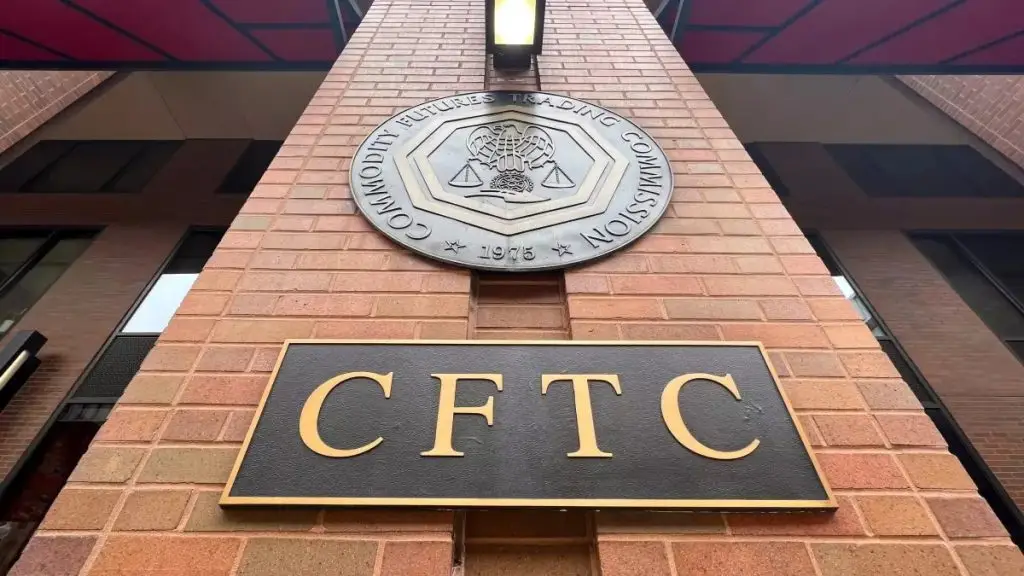
The U.S. Commodity Futures Trading Commission (CFTC) proposes new rules: Crypto exchanges can voluntarily accept federal regulation to engage in leveraged trading
The U.S. Commodity Futures Trading Commission (CFTC) recently proposed a draft new regulation that allows cryptocurrency exchanges to voluntarily choose to accept federal regulation. In exchange, these approved exchanges will be allowed to provide leveraged trading services to clients. The proposal marks a major shift in the way the U.S. government regulates digital asset trading platforms.
Core Points
- Voluntary framework rather than mandatory requirements: The CFTC proposes a voluntary framework, not a blanket rule that all cryptocurrency exchanges must comply with.
- Rights for leveraged trading: Exchanges that choose to join this framework will gain the ability to provide leveraged trading, which will amplify potential gains and losses at the same time.
- has not yet become the final rule: The proposal is not yet the final rule, and its full details still need to be determined through a formal legislative process.
What changes will the CFTC's proposed encryption rules bring?
The core of the proposal revolves around two interrelated changes. First, cryptocurrency exchanges can choose to enter the federal regulatory system managed by the CFTC. Second, exchanges that make this choice will be allowed to launch leveraged trading products to their users.
A distinctive feature of the framework is its "voluntariness". The CFTC does not require all cryptocurrency exchanges to register and comply, but instead provides an "opt-in" path. This approach differs from mandatory regulatory measures that automatically apply to all market participants in a specific industry.
The CFTC has been active in the field of crypto regulation. Earlier this year, the agency held a meeting to discuss encryption rules, while broader legislative efforts at the Congressional level are still underway. The new proposal appears to be part of that ongoing legislative effort.
How exchanges voluntarily join the federal regulatory system
When a company chooses to join a regulatory framework, it agrees to follow a specific set of rules in exchange for certain licensing or legal clarity. In this case, cryptocurrency exchanges that choose to accept CFTC federal supervision will be included in their regulatory scope that is not currently mandatory.
For exchanges, this may mean meeting regular reporting requirements, capital standards or compliance checks. In return, exchanges gain a clear legal basis to operate under federal rules, thereby avoiding the difficulty of navigating through layers of state regulations or legal uncertainties.
The difference between such voluntary mechanisms and mandatory regulations is crucial. Under the voluntary entry regime, exchanges that do not need or want to offer leveraged products have no reason to seek federal registration. Those exchanges that do want to provide leveraged services must undergo the regulatory oversight that comes with it. Specific implementation details will depend on the release of the final rules and have not yet been determined.
In addition, Congress is also developing its own crypto regulatory framework. The Senate has advanced the CLARITY Act, which aims to define which digital assets fall under the jurisdiction of the CFTC and which fall under the jurisdiction of the Securities and Exchange Commission (SEC). The CFTC's proposed rules are placed in this broader legislative and regulatory dialogue.
What leveraged trading means for the crypto market
Leveraged trading refers to borrowing funds to conduct larger transactions than can be carried out with only your own funds. For example, using 5 times leverage to operate a $100 position would expose you to $500 worth of trade. This amplifies both potential profits and potential losses.
If the transaction goes in a negative direction, the loss may exceed the amount originally invested. This makes leveraged trading far riskier than spot trading, where investors can only buy and sell assets they can afford in full. This is one of the reasons why regulators often require supervision of the platforms they provide.
From a consumer protection perspective, it makes sense to link leveraged trading authority to federal regulation. Platforms under CFTC supervision will be subject to rules designed to manage such risks. The CFTC has previously warned consumers about financial losses related to cryptocurrencies, demonstrating the agency's concern about protecting retail investors.
It needs to be emphasized that this proposal is not the final rule. Before they come into effect, the CFTC usually publishes the complete text of the rules, solicits public comment, and then releases the final version. This process can take months. The most practical conclusion for anyone who owns cryptocurrency or is considering trading on a U.S. exchange is this: No actual changes are in effect, but the direction of federal policy on leveraged crypto-trading is becoming increasingly clear.