Exchange Ranking
 Top Exchanges
 24h Volume Ranking
 Popularity Ranking
 Exchange BTC Balance
 Proof of Reserves
 Decentralized Exchanges
 Funding Rate
 Funding Heatmap
 Liquidation Data
 Max Pain
 Long/Short Ratio
 Whale L/S Ratio
 Binance/Okex/Huobi L/S
 Bitfinex Margin L/S
 ETF Tracker
 Solana ETF
 XRP ETF
 Hong Kong ETF
 Bitcoin Treasuries
 Crypto Reversal
 Ethereum Reserves
 HyperLiquid Wallet Analysis
 Hyperliquid Whale Watch
 Large Transactions
 On-chain Movement
 Bitcoin ROI
 Stablecoin Market Cap
 Options Analysis
 News
 Articles
 Economic Calendar
 Features
 Wallet
 Contract Calculator


 Security
 Collections
 Watchlist
 Following
 DOGE
 HBAR
 LINK
 LTC
 SUI
 XRP
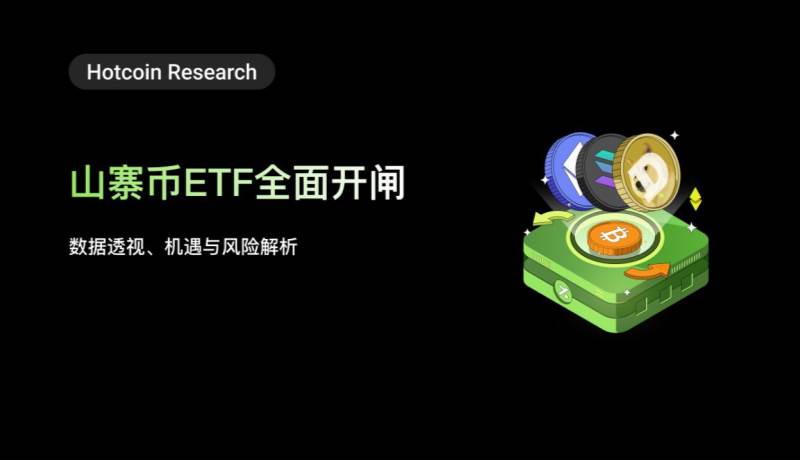
After Bitcoin and Ethereum ETFs have established themselves in the market, attention from regulators and investors is now turning to altcoins. Recently, several institutions have submitted applications for ETFs that would cover mainstream altcoins such as SOL and XRP. The volume of transactions and expected capital inflows are increasing rapidly, and markets are beginning to speculate about the possibility of a broader adoption of ETFs. ETFs not only bring additional capital but also reshape pricing patterns and volatility trends: which tokens will benefit first, and which may be affected by liquidity issues? In this period of both opportunities and risks, altcoin ETFs are becoming a key factor in the next phase of market dynamics.
I. Introduction
In the fourth quarter of 2025, the US market witnessed a period of rapid approvals for altcoin ETFs. Multiple spot ETFs for individual assets were approved and listed, creating a situation that was rare in the crypto market before. The successful launch of Bitcoin (BTC) and Ethereum (ETH) spot ETFs not only opened the door for institutional investors to invest in crypto assets in a compliant manner, but it also established clear approval procedures and product development paths. This has led to a surge in applications for altcoin ETFs.
With the continuous adjustments made by the U.S. Securities and Exchange Commission (SEC) regarding the approval process for crypto ETFs, along with the active efforts of asset management firms and market participants, the fourth quarter of 2025 has become a critical period for the launch of numerous altcoin ETFs. ETFs for assets such as XRP, SOL, DOGE, LTC, HBAR, and LINK are gradually being launched on exchanges. Meanwhile, another wave of altcoin ETFs, including those for AVAX and AAVE, is also being accelerated. The rapid expansion of altcoin ETFs not only reflects the significant acceleration of the institutionalization process in the crypto market but also indicates that the structure of crypto asset products is shifting from a “single-core asset-driven” model to a more diversified and hierarchical stage of maturity.
In this context, this article will provide a systematic analysis of the current development trends of altcoin ETFs, focusing on the demonstration effects of Bitcoin and Ethereum ETFs, the surge in the launch of altcoin ETFs, and the potential targets currently under consideration. It will also analyze data related to the funds flow, trading activity, asset management scale, and price performance of existing altcoin ETFs. Based on this analysis, this article will further explore the opportunities and risks associated with altcoin ETFs, and make predictions about future developments. The goal is to provide ordinary investors and institutional investors with a clear and logical industry perspective, helping them make informed decisions in this emerging field.
II. Overview of Altcoin ETFs
1. The Demonstration Effects of Bitcoin and Ethereum ETFs
过去几年,加密资产走入传统金融体系最关键的标志,莫过于比特币(BTC)和以太坊(ETH)现货ETF在美国获批。比特币ETF首次亮相后,短期内吸引巨额机构资金,推动市场参与度显著提升;以太坊ETF紧随其后,使更多机构和散户获得了通过合规渠道投资加密资产的路径。
这种闸门效应极大改变了市场结构:投资者的风险容忍度提高,机构配置数字资产的动机增强,资产管理公司开始积极拓展产品边界,而监管层也逐渐积累了审查实践和审批信心。在这种背景下,多种山寨币ETF的申请热潮迅速形成,多家资管机构纷纷布局XRP、DOGE、LTC、HBAR、SUI、LINK等单币种/多币种ETF产品。
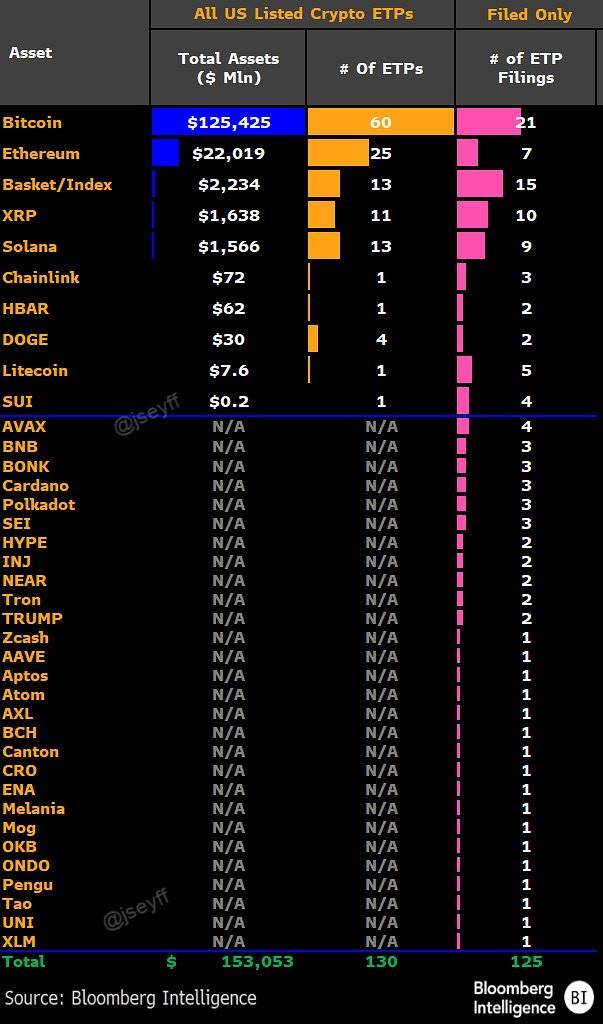
来源:https://x.com/Minh_BNB10000/status/1999307817430462471?s=20
另一个推动力量是美国证券交易委员会(SEC)在监管政策上的逐步调整。2025年9月,SEC正式批准了修订后的《商品信托股份通用上市标准》,为加密资产ETF提供了更加明确的准入标准并缩短审批时长,这意味着满足基本条件的加密资产不再需要漫长的逐案审查过程(原本约240天审批周期缩短至约60–75天)。这是山寨币ETF批量申请与集中上市潮的重要制度基础。
In addition, another key opportunity came in November 2025 when the government shutdown in the United States created a regulatory gap. Under certain legal provisions (such as Section 8(a) of the Securities Act of 1933), some fund registrations became automatically effective without any delays. This indirectly created a “silent approval pathway” for rapid listing. All these factors contributed to the recent surge in the listing of ETFs for altcoins.
2. The wave of mass listing of altcoin ETFs
Since the second half of 2025, the approval and listing process for US altcoin ETFs has accelerated significantly, featuring a pattern of “queueing for listing + sequential approvals.”
● Solana ETF: In October 2025, the Solana(SOL) ETF successfully passed the review process and began trading on exchanges such as the New York Stock Exchange. This marked the first real-world altcoin spot ETF to be listed in the United States.
● Hedera ETF: In the same month, several applications for Hedera(HBAR) ETFs were submitted and entered into review. Institutions like Canary Capital also completed revisions to their registration statements for HBAR ETFs. HBAR ETFs are expected to be approved and listed within the next few weeks.
● XRP ETF: In November 2025, the XRPETF became the second altcoin spot ETF to be approved and launched quickly. XRP ETFs launched by institutions like Canary Capital, Grayscale, and 21Shares began trading on exchanges such as NYSE Arca, attracting significant capital inflows in the market within a short period.
● DOGE ETF: In November 2025, the DOGE(狗狗币) ETF received approval from DEC to be listed, indicating that regulators have recognized Meme coins with caution.
● LTC ETF: The LTC ETF for one of the oldest altcoins has also received approval in November. Although the inflow of funds into this ETF is relatively small, it has laid the foundation for more applications related to other older altcoins’ ETFs.
● LINK ETF: Following XRP, SOL, DOGE, and LTC, the LINK ETF was officially listed at the beginning of December. The LINK ETF attracted tens of millions of dollars in capital on its first day of trading, indicating that investors are interested in ETFs that represent blockchain-based infrastructure assets with robust ecosystems and practical applications.
● SUI ETF: On December 5th, the U.S. Securities and Exchange Commission (SEC) approved the first 2x leverage SUI ETF (TXXS). This ETF is issued by 21Shares and is already listed on NASDAQ.
● Other Altcoin ETFs Under Application: In addition to the already listed altcoin ETFs, there are many other products currently under SEC review. The pace of these ETF applications will undoubtedly be a key focus for future market developments.
Assets undergoing review and attracting significant attention include:
● AVAX ETF: As a major smart contract chain, Avalanche has established itself as a compliant and market-validated asset. It is currently in the fast-track approval process and could become one of the next approved ETFs.
● BNB ETF: Applications for BNB-related ETFs are mainly driven by investment firms such as VanEck, REX Shares, and Osprey Funds. These applications have entered the SEC’s review process, suggesting that BNB may become the first cryptocurrency ETF approved in the United States within the Binance ecosystem.
● Other Potential Assets: Projects like ADA, DOT, INJ, SEI, APTOS, and AAVE have also submitted their ETF registration documents and are now in the process of being reviewed by regulatory authorities. James Seyffart, an analyst at Bloomberg Intelligence, noted that there are dozens of asset-based ETF applications waiting to be processed by the SEC, with many altcoins making up a significant portion of these applications.
● Multi-currency ETFs: Some institutions are also exploring strategies such as multi-currency composite ETFs, ETFs based on staking returns, or even ETFs focused on memecoin tokens. If these innovative products are approved, they will further expand the possibilities for compliant investment in altcoins.
Overall, it is expected that the approval rate for US altcoin ETFs will remain high over the next 6–12 months. The existing XRP, SOL, DOGE, LTC, HBAR, and LINK ETFs are just the “first batch” of such products. More applications are currently pending approval, shaping the overall market trend.
III. An Overview of the Performance of Existing Altcoin ETFs
Altcoin spot ETFs made their debut in the market, becoming a major focus of the crypto community. Although overall market sentiment remains weak for mainstream assets, some altcoin ETFs have still attracted considerable attention from investors.
1. XRP Spot ETF
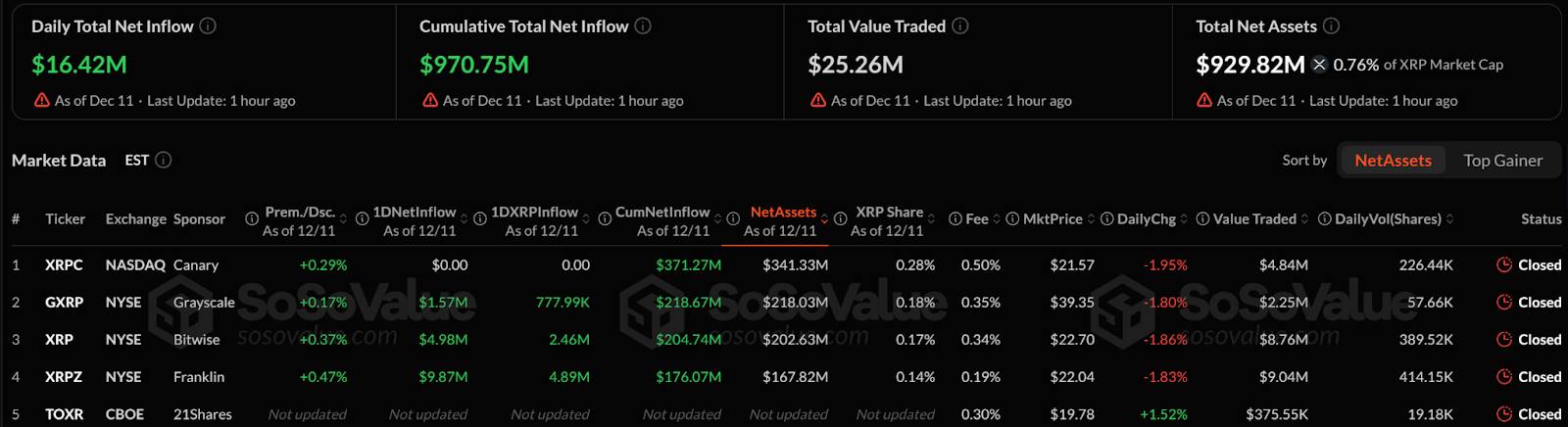
Source: https://sosovalue.com/assets/etf
Multiple asset management firms have launched XRP spot ETFs, including Canary Capital, Grayscale, Franklin Templeton, and Bitwise. XRP is one of the most widely issued and actively managed altcoin ETF targets.
XRP ETF在上市之后表现出较强的资金吸引力,自上市以来累计净流入约9.7亿美元,所有XRP基金合计管理资产超过9.29亿美元,自11月13日上线以来连续多个交易日录得资金净流入,近11个交易日累计流入约$756百万美元。
XRP ETF是目前山寨币ETF中最受欢迎的标的之一,凭借多家机构发行、强劲的资金流入和较大的AUM规模,成为机构配置山寨币的“首选入口”。
2、SOL现货ETF
来源:https://sosovalue.com/assets/etf
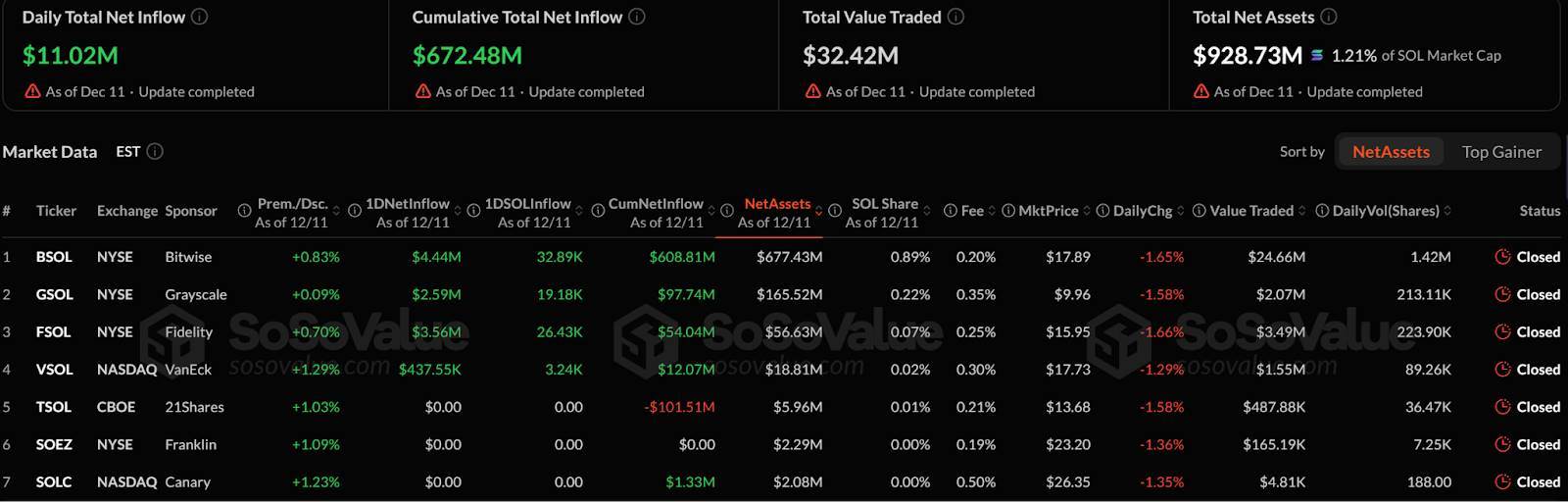
SolanaETF的推出由多家资管机构联合推动,Solana ETF自上市以来累计净流入约6.72亿美元,而总AUM大约9.28亿美元。这意味着Solana ETF的“规模体量”在山寨币产品中属最大级别,也是资金吸纳持续性较好的代表。
不过,与XRP不同的是,Solana ETF的资金流入更多呈现出分阶段投入的特点:首日资金大幅入场,之后数周资本进入节奏趋于平稳而非爆发式增长。这表明投资者可能更看重长期配置,而非短期套利交易。
Solana ETF的表现显示出山寨币ETF在吸引机构资金配置方面的潜力,也反映出市场的“耐心布局”特征。其ETF规模领先同类资产,但价格与资金流向的脱节也提示短期波动风险依然存在。
3、HBAR现货ETF

Source: https://sosovalue.com/assets/etf
Hedera(HBAR)’s ETF has also entered the market and received some attention. The early-established Hedera ETF attracted approximately $82 million in net inflows, making it a medium-sized stablecoin product. Compared to XRP and SOL, HBAR has relatively fewer funds invested in it.
The HBAR ETF shows consistent weekly net inflows; the flow of funds is continuous, and even though the weekly volume isn’t large, there are no significant outflows. This stability is closely related to its ecosystem and practical applications. However, its price has been affected by the overall decline in the crypto market. Since the ETF was launched, HBAR’s price has fallen by nearly 20%.
4. LTC Physical ETF

Source: https://sosovalue.com/assets/etf
As one of the earliest stablecoins, LTC’s physical ETF was successfully launched by institutions like Canary Capital at the end of October 2025. It’s one of the first approved stablecoin ETFs. Despite its historical significance and high trading activity, the ETF’s performance and market attention have been lower compared to leading alternative coin ETFs like XRP and SOL.
According to SoSoValue's data, as of mid-November 2025, the cumulative net inflow for LTC ETFs (commonly referred to as LTCC) amounted to approximately $7.67 million. In some periods, there was even a zero net inflow. Compared to the several million dollars in inflows for XRP ETFs, and the tens of millions to hundreds of millions of dollars for SOL ETFs, the attractiveness of LTC as an investment asset is significantly lower. Therefore, LTC has not become a core asset in investors’ strategies for building altcoin ETFs.
5. DOGE Physical ETF
Source: https://sosovalue.com/assets/etf
DOGE is one of the most iconic Meme coins, and has long been considered an asset driven by community sentiment. With the SEC’s approval in November 2025 for institutions like Rex-Osprey to launch DOGE ETFs, DOGE becomes one of the first Meme coin ETFs to be launched.
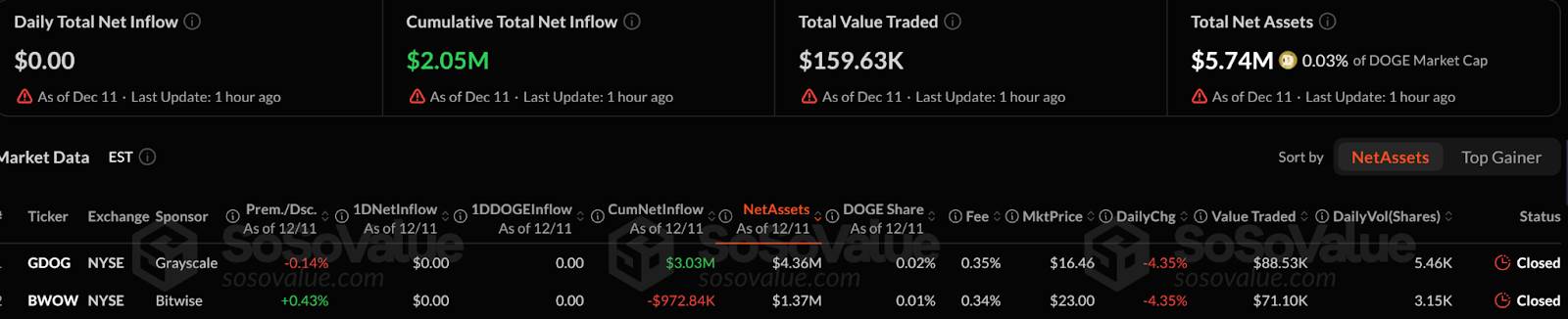
According to the latest data from SoSoValue, the cumulative net inflow for DOGE physical ETFs so far is approximately $2.05 million, indicating that the amount of funds allocated to DOGE is quite limited. In terms of trading activity, the turnover of DOGE ETFs is also relatively low. Although there were transactions worth millions of dollars on the first day, the overall transaction structure is uneven, with frequent fluctuations in capital inflows and outflows. This indicates that institutional investors are reluctant to allocate significant amounts of funds to DOGE ETFs.
6. LINK Physical ETF

Source: https://sosovalue.com/assets/etf
The first spot ETF in the United States that supports LINK (Chainlink) was launched on the New York Stock Exchange on December 2, 2024. The Grayscale Chainlink Trust ETF, with the code GLNK, has been officially listed since then. Since its launch, the ETF has received approximately $52 million in net inflows, with an asset management volume of $76 million. One of the reasons for the ETF’s attractiveness is its practical use in blockchain data infrastructure, which has led some long-term institutional investors to allocate funds to this ETF strategically.
In terms of price, LINK itself remains highly influenced by overall market trends, but the allocation of funds through the ETF may provide a relatively stable demand base for future prices.
Summary of the performance of listed altcoin ETFs
From the performance of these ETFs, it can be seen that the US altcoin spot ETF market shows clear differences among various ETFs:
● Large investors mainly invest in XRP and Solana ETFs. These ETFs have a high issuance rate, rapid accumulation of funds, and large asset management volumes. They are therefore the focus of the altcoin ETF market.
● Medium-sized asset ETFs like HBAR and LINK have stable performance, showing a balance between ecological value and institutional recognition. However, they still struggle to compete with leading assets.
● ETFs for LTC and DOGE, on the other hand, appear to be marginalized. They have small scale, low trading activity, and no clear support from coin prices, resulting in insufficient attention from the market.
● Overall, the performance of altcoin ETFs after their launch is generally pressured. This indicates that market sentiment and macro factors continue to influence prices. The attractiveness of ETFs as investment instruments has not immediately led to price increases.
总体来看,山寨币ETF虽然尚未达到BTC/ETH ETF的市场深度和规模,但已经展现出细分配置、长线资金流入、机构参与度提升的趋势,构成了山寨币市场“制度化投资”新时代的雏形。
四、山寨币ETF的机遇与风险分析
随着美国山寨币现货ETF密集获批并陆续上市,市场开始进入一个新的制度化投资阶段。尽管当前规模尚远不及比特币和以太坊ETF,但其发展潜力和示范效应不容忽视。
1、从制度化到分化:山寨币ETF的结构性机遇
1)制度红利兑现:比特币和以太坊现货ETF的成功为山寨币产品打开了合规通道。SEC在2025年修订ETF通用上市标准,并通过“快速通道”和《1933年证券法》第8(a)条款等制度性机制,使山寨币ETF能够更高效地进入交易所市场—这种转变缩短了审批路径并增加了产品多样性,整体上降低了机构进入壁垒。
2)机构资金重新配置的机会:Market data for November 2025 shows that despite the significant outflow of funds from Bitcoin and Ethereum spot ETFs, altcoin ETFs managed to attract approximately $1.3 billion in capital. This capital mainly flowed into products related to XRP and Solana, indicating that institutions are willing to reconsider their allocation of altcoins in the short term. More importantly, this capital flow isn’t driven solely by market sentiment; it reflects institutions' preference for assets based on their fundamental value, compliance requirements, and ecological benefits. For example:
● XRP ETFs have gained attention due to their clear regulatory framework and cross-border payment capabilities;
● Solana ETFs, with their profit-oriented structures such as staking rewards, are expected to attract institutional investors seeking long-term investments.
This trend, where capital flows from BTC/ETH to altcoin ETFs, indicates that the market's enthusiasm for single-asset investments has become more diversified. It also shows that the idea of altcoins as long-term investment targets is gradually being accepted by institutions.
3) ETFs serve as a compliant tool to attract both retail and institutional investors: Altcoin ETFs provide ordinary investors with a simplified way to access blockchain assets—without the need for managing wallets and private keys, or relying on centralized exchanges. The risk is more manageable compared to custodial solutions. For institutional investors, ETFs are a mature tool for compliant investment entry, allowing them to incorporate them into their portfolios alongside pension funds, hedge funds, and wealth management products, thereby expanding their capital base.
The existence of ETFs also enhances the visibility and transparency of the industry. As a result, investment in altcoins can no longer rely solely on decentralized transactions and OTC liquidity. Instead, traditional financial instruments can now be incorporated into investment portfolios.
2. Key risks: Challenges related to markets, regulations, and technology coexist.
Despite the opportunities, altcoin ETFs still face numerous risks. These risks stem from both the characteristics of the assets themselves and the macroeconomic and regulatory environment.
1) There is still uncertainty in the regulatory environment: Although the approval process has improved, the U.S. SEC remains highly cautious regarding altcoin ETFs. The legal status of regulatory bodies, classification standards, and potential changes in compliance requirements all affect the continued operation and liquidity of ETFs. The SEC continues to focus on defining the nature of certain assets (whether they are securities or commodities). Any policy changes or judicial decisions could lead to adjustments or suspension of these products from the market. In addition, although the approval process is accelerating, the “default-effective” mechanism raises concerns among investors. This means that some products may still require further compliance improvements after going live. This uncertainty can have a significant impact on price fluctuations and capital allocation.
2) There are significant risks related to market depth and liquidity:相较于BTC或ETH混沌深厚的交易深度,许多山寨币的市场流动性仍较弱。ETF大规模流入时可能造成较大的市场冲击,而在市场调整时,ETF赎回压力也可能加剧流动性紧张。例如,Solana ETF虽然吸金势头强劲,但面临SOL价格下跌压力,而价格未能随资金流入同步上扬,这说明市场对山寨币的定价并非仅由资本流动驱动,还深受市场情绪和流动性条件影响。此外,对一些更边缘的山寨币而言,如DOGE、LTC ETF的吸金能力较弱,其市场深度同样不足以支持大额机构资金的快速进出,这在剧烈市场波动中可能导致更大的滑点风险。
3)市场饱和与产品竞争风险:随着山寨币ETF数量激增,资本可能被“分散”在不同产品之间,导致单个ETF的资金规模难以增强,从而削弱其价格推动力与市场关注度。据观察,目前已有超百个加密ETF文件提交至SEC,山寨币不断增多,这在一定程度上稀释了投资者关注度。如果市场供应过剩、“ETF降费战”成为常态,可能导致通过降低费率吸引资金而牺牲产品本身质量和投资价值,这对长期持有者不利。
4)高波动性与价格风险:山寨币资产本质上相较BTC/ETH更具波动性,这意味着即使ETF为投资者提供了合规入口,价格仍可能剧烈波动。就像某些山寨币ETF上线后价格未持续走高一样,资金流入并不能保证价格上涨。市场可能因宏观情绪、流动性紧缩、强平事件等因素出现较大回撤,这对风险承受能力较低的投资者形成挑战。尤其是在散户参与度高的产品中,山寨币ETF更易受到市场情绪波动的影响,这种非理性行为可能被放大。
5)技术与操作风险:ETF作为金融产品,需要依赖交易所托管、清算机制和底层资产安全。山寨币的智能合约风险、交易所托管风险以及僵尸订单簿风险(交易活跃度不足导致买卖价差扩大)均可能给ETF运行带来技术性风险。对于更小型山寨币而言,资产易受“交易孤岛效应”影响,一旦ETF规模增长放缓,这些风险可能迅速显现。
五、山寨币ETF趋势展望与结论
展望未来,山寨币ETF的发展将继续深刻影响加密资产市场格局。随着制度性红利逐步兑现、监管环境逐渐明确、机构资金配置兴趣增强,这一细分赛道正进入从萌芽到成熟的关键阶段。
● From a institutional perspective, the U.S. Securities and Exchange Commission (SEC) has made significant changes to its approval guidelines for crypto ETFs. The SEC has introduced standardized listing requirements and significantly reduced the approval process from several hundred days to approximately 75 days. This should lead to faster and more predictable review processes for altcoin ETFs. Such institutional improvements not only improve regulatory efficiency but also pave the way for more assets such as SOL, XRP, LTC, and HBAR to be listed on ETF markets. This move moves the industry towards larger-scale implementation rather than ad-hoc approvals. Therefore, it is likely that we will see more altcoin ETFs obtaining approval and being traded in the coming quarters.
● In terms of market sentiment, industry participants and analysts generally expect a high probability of approval for altcoin ETFs. Bloomberg’s ETF analysts estimate that the chances of successful approval for mainstream altcoin spot ETFs like Solana, XRP, and LTC are over 90%. Some analysts believe that certain products are almost certain to be approved and could begin trading within the next few months. This cautious optimism reflects the regulatory authorities’ recognition of compliance, transparency, and market maturity, which helps attract more institutions and long-term investors to this sector.
● On the international level, the development of crypto ETFs is also progressing in various markets. Markets in Canada, Europe, and Asia already have crypto ETFs or similar products, each with unique design and regulatory frameworks. These products not only provide institutional and operational references for the US market, but also promote complementary and comparative effects when global capital allocates digital assets across different markets. For example, support for crypto asset index ETFs in France and Germany, along with options/futures tools for altcoins offered by some Asian exchanges, will provide American investors with broader data and strategic insights.
● Within the market, there is also a trend towards “layered allocation”: leading assets such as XRP, SOL, ETH, and BTC remain the core of institutional and compliant investment strategies. Meanwhile, ETFs for smaller altcoins like DOT, ADA, AVAX, and INJ may become options for investors seeking high-risk, high-reward investments. As the number of products increases, investors will focus more on ecological value, liquidity, and long-term fundamentals when constructing their portfolios, rather than just chasing short-term trends.
It’s important to note that although the overall trend is positive, crypto ETFs still carry cyclical and structural risks. Minor changes in regulatory policies, fluctuations in market liquidity, and the impact of macroeconomic conditions on the pricing of risky assets can all lead to differences in asset performance. This means that investors must pay attention to risk management and dynamic adjustments when deploying ETF products, while also keeping an eye on key factors such as policy changes, market sentiment, and capital flows.
总之,山寨币ETF是传统金融与加密市场融合的必然产物,其持续推进符合市场需求分化及监管适配趋势。预计到2026年上半年,随着监管累积经验、审批流程进一步优化,十余家资管公司提交的数十至上百个山寨币ETF产品将陆续落地,形成更加成熟、多样且具有分层价值的ETF生态体系。对于普通投资者而言,这不仅提供了合规、便利的投资渠道,也推动整个加密市场步入一个制度化、分散化与专业化并存的新阶段。山寨币ETF的潮流已然开启,未来的投资机会与风险并存,关键在于如何理性参与和结构性布局。