Exchange Ranking
 Top Exchanges
 24h Volume Ranking
 Popularity Ranking
 Exchange BTC Balance
 Proof of Reserves
 Decentralized Exchanges
 Funding Rate
 Funding Heatmap
 Liquidation Data
 Max Pain
 Long/Short Ratio
 Whale L/S Ratio
 Binance/Okex/Huobi L/S
 Bitfinex Margin L/S
 ETF Tracker
 Solana ETF
 XRP ETF
 Hong Kong ETF
 Bitcoin Treasuries
 Crypto Reversal
 Ethereum Reserves
 HyperLiquid Wallet Analysis
 Hyperliquid Whale Watch
 Large Transactions
 On-chain Movement
 Bitcoin ROI
 Stablecoin Market Cap
 Options Analysis
 News
 Articles
 Economic Calendar
 Features
 Wallet
 Contract Calculator


 Security
 Collections
 Watchlist
 Following
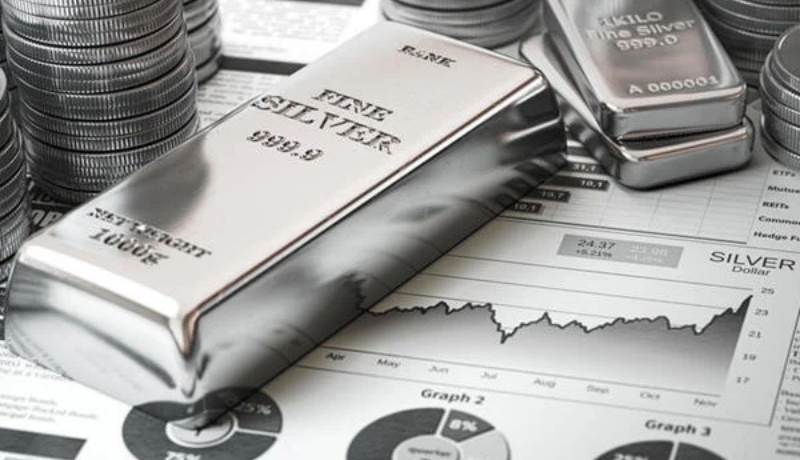
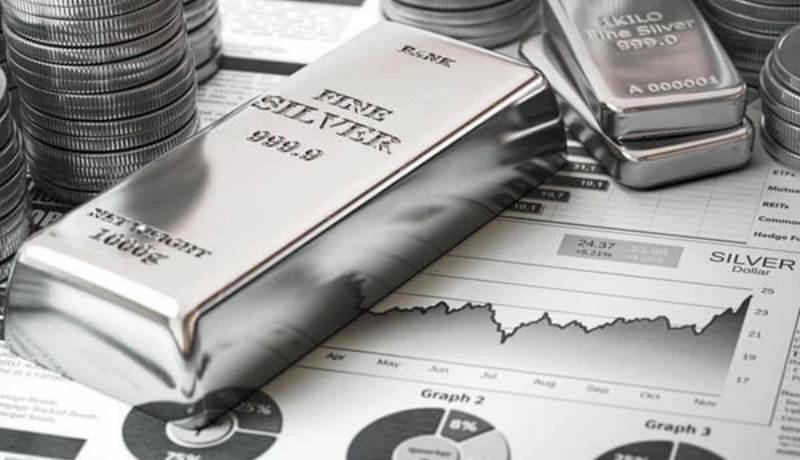
In December, the asset that attracted the most attention wasn’t Bitcoin or gold, but silver, which experienced a sharp rise in value. Silver prices quickly surpassed $40 and reached $50, then $60. On December 12th, silver reached as high as $64.28 per ounce, but then plummeted again. The increase in silver prices was nearly 110% compared to gold, which saw a similar increase of around 60% during the same period. Against the backdrop of increased liquidity expectations and investors seeking high-beta assets, this seemingly logical surge in silver prices actually reveals signs similar to those seen in the crypto market: excessive emotional excitement, increased volatility, and both opportunities and risks are being highlighted at the same time.
The crisis behind this rise
Why is silver rising?
Because it seems like it deserves to rise in value.
According to mainstream analysts, everything makes sense.
Expectations of interest rate cuts by the Federal Reserve have boosted the demand for precious metals. Recent employment and inflation data have been weak, leading markets to expect further interest rate cuts by early 2026. As a highly volatile asset, silver reacts more intensely than gold.
Industrial demand is also driving up the price of silver. The explosive growth of solar energy, electric vehicles, data centers, and AI infrastructure highlights silver’s dual nature as a precious metal and an industrial commodity.
The continuous decline in global inventories only adds to the problem. Mining production in Mexico and Peru fell short of expectations in the fourth quarter, and the amount of silver ingots stored in major exchanges has decreased year by year.
……
If we only consider these reasons, the rise in silver prices is a “consensus”—even if it’s a late revaluation of its value.
But the danger lies in the following:
The increase in the price of silver seems reasonable, but it’s not entirely reliable. The reason is simple: silver isn’t like gold. It doesn’t have the same consensus support, and it lacks the “national central banks” that play a crucial role in stabilizing markets. Gold remains strong because central banks around the world are buying it. Over the past three years, central banks have purchased over 2,300 tons of gold, which is stored in the balance sheets of various countries. This represents an extension of sovereign credit. Silver, on the other hand, behaves differently. Global central banks hold more than 36,000 tons of gold in their reserves, while official silver reserves are virtually zero. Without any central bank support, silver lacks any systematic stability mechanisms when markets experience extreme fluctuations. It’s essentially an “island asset”. The difference in market liquidity is even more significant. The daily trading volume of gold is approximately $150 billion, while that of silver is only $5 billion. If we compare gold to the Pacific Ocean, then silver is at most equivalent to Poyang Lake. Silver has a much smaller volume, fewer market makers, insufficient liquidity, and limited physical reserves. Most importantly, the main form of trading in silver isn’t physical transactions, but rather “paper silver”. Futures, derivatives, and ETFs dominate the market. This is a dangerous structure. In this situation, a sudden influx of capital can cause a market that wasn’t deep enough to be disrupted quickly, leading prices to deviate from their normal levels. What caused the price of silver to deviate from its normal trajectory wasn’t the seemingly reasonable fundamental reasons mentioned above. The real cause lies in the price wars in the futures market.正常情况下,白银的现货价格应该略高于期货价格,这很好理解,持有实物白银需要仓储成本、保险费用,而期货只是一张合约,自然便宜一些,这种价差一般称之为“现货升水”。
但从今年第三季度开始,这个逻辑颠倒了。
期货价格开始系统性地高于现货价格,而且价差越来越大,这意味着什么?
有人在期货市场疯狂推高价格,这种“期货升水”现象通常只会在两种情况下出现:要么是市场极度看涨未来,要么是有人在逼仓。
考虑到白银基本面的改善是渐进式的,光伏和新能源需求不会在几个月内指数暴增,矿山产量也不会突然枯竭,期货市场的激进表现更像后者:有资金在推高期货价格。
更危险的信号来自实物交割市场的异常。
全球最大的贵金属交易市场COMEX(纽约商品交易所)的运营历史数据显示,贵金属期货合约中的实物交割比例不足2%,其余98%通过美元现金结算或合约展期来完成。
然而过去几个月,COMEX的白银实物交割量激增,远超历史平均水平。越来越多的投资者不再信任“纸白银”,他们要求提取真正的银锭。
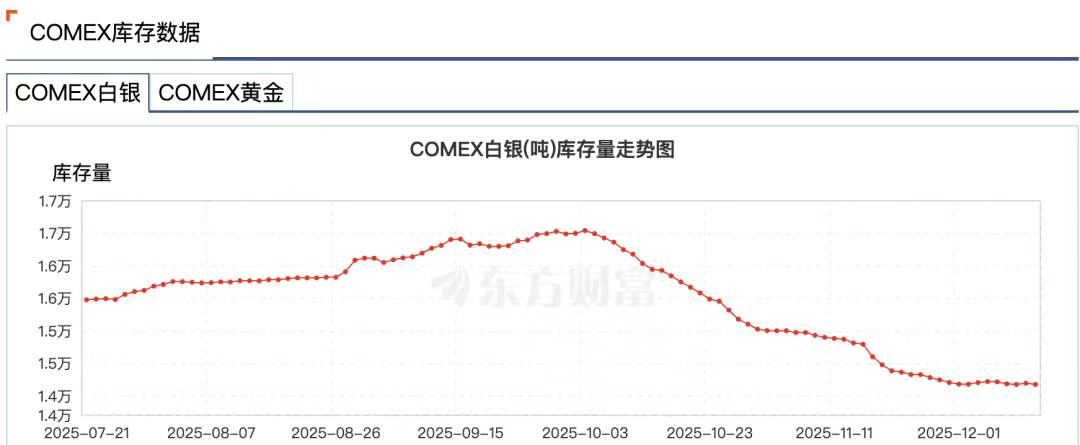
A similar phenomenon occurred with the silver ETFs as well. While large amounts of capital flowed into the market, some investors began to redeem their holdings, preferring to receive physical silver rather than ETF shares. This “runs on” situation put pressure on the ETFs’ reserves of silver bars.
This year, three major silver markets—NYCOMEX in New York, LBMA in London, and the Shanghai Metal Exchange—all experienced runs on their markets.
According to Wind data, on November 24th, the silver inventory at the Shanghai Gold Exchange decreased by 58.83 tons, reaching a new low of 715.875 tons since July 3, 2016. The silver inventory at CMOEX plummeted from 16,500 tons at the beginning of October to 14,100 tons, a decrease of 14%.
The reasons for this are easy to understand. Under the dollar interest rate cuts, people are reluctant to settle transactions in dollars. Another hidden concern is that exchanges may not have enough silver available for settlement purposes.
The modern precious metals market is a highly financialized system. Most of the “silver” is merely a nominal figure; real silver bars are repeatedly mortgaged, rented, or traded as derivatives around the world. One ounce of physical silver may correspond to dozens of different certificates.
Senior trader Andy Schectman took London as an example. The LBMA has only a floating supply of 140 million ounces, but its daily trading volume reaches 600 million ounces. However, there are over 2 billion ounces of paper claims associated with those 140 million ounces.
This “ fractional reserve system” works fine under normal circumstances, but when everyone wants physical silver, the entire system faces liquidity crises.
When the shadow of crisis looms, it seems that a strange phenomenon occurs in financial markets, commonly referred to as “pulling out the network cable.”
On November 28th, the CME system experienced a nearly 11-hour outage due to problems with data center cooling systems. This marked the longest outage in history, resulting in the inability of COMEX gold and silver futures to be updated properly.
Interestingly, this outage occurred at a critical moment when silver prices reached historical highs. Spot silver prices exceeded $56 that day, and silver futures prices even surpassed $57.
There were rumors in the market that the outage was intended to protect market makers who were exposed to extreme risks and potentially faced significant losses.
Later, CyrusOne, the data center operator, claimed that the outage was caused by human error, which further fueled various conspiracy theories.
In short, this situation, driven by futures market congestion, inevitably led to extreme volatility in the silver market. Silver has essentially shifted from being a traditional safe-haven asset to a high-risk investment.
Who is behind this manipulation?
Among those involved in this manipulation, one name cannot be ignored: JPMorgan Chase.
The reason is simple: JPMorgan Chase is widely recognized as a major player in the silver market.
Over an eight-year period, from 2008 to 2016, JPMorgan Chase manipulated gold and silver market prices through traders.
Their method was straightforward: they placed large orders to buy or sell silver contracts in the futures market, creating an illusion of supply and demand. They then lured other traders to follow suit, and then canceled their orders in the last second, profiting from price fluctuations.
This practice, known as “spoofing,” resulted in JPMorgan Chase being fined $920 million in 2020, setting a new record for the largest single fine imposed by the CFTC.
But real textbook-level market manipulation goes far beyond this. On one hand, JPMorgan Chase used massive short-selling and fraudulent transactions in the futures market to drive down silver prices. On the other hand, they purchased large quantities of physical silver at low prices. Starting from 2011, when silver prices reached nearly $50 per ounce, JPMorgan Chase began stockpiling silver in its COMEX warehouses. While other major institutions reduced their silver holdings, JPMorgan Chase continued to accumulate, eventually holding up to 50% of COMEX’s total silver inventory. This strategy took advantage of the structural flaws in the silver market: the price of paper silver dominated the actual price of physical silver. JPMorgan Chase could influence the price of paper silver, and at the same time, it was one of the largest holders of physical silver. In this situation of forced selling in the silver market, what role did JPMorgan Chase play? On the surface, it seems that JPMorgan Chase has “reformed itself.” After the settlement in 2020, it implemented systematic compliance reforms, including hiring hundreds of new compliance officers. There is no evidence that JPMorgan Chase participated in any fraudulent activities during this period. However, in the silver market, JPMorgan Chase still holds significant influence. According to the latest data from the CME on December 11th, JPMorgan Chase owns approximately 196 million ounces of silver under the COMEX system, accounting for nearly 43% of the exchange’s total inventory. Additionally, JPMorgan Chase also serves as the custodian of Silver ETFs. As of November 2025, it had custody of 517 million ounces of silver, worth $32.1 billion.
More importantly, in the case of “Eligible Silver” (i.e., silver that meets the delivery requirements but has not yet been registered for delivery), JPMorgan Chase controls more than half of the market volume.
In any situation where silver prices become extremely volatile, there are essentially two key factors at play: first, who can provide physical silver; second, whether and when such silver is allowed to be included in the delivery pool.
Unlike in the past, when JPMorgan Chase was known as a major opponent of silver markets, now it sits in a position of control over the silver supply chain.
Currently, only about 30% of the total inventory consists of “Registered Silver”. With most of the eligible silver being controlled by a few institutions, the stability of the silver futures market actually depends on the actions of a very small number of individuals.
The paper-based system is gradually becoming ineffective.
If we had to describe the current state of the silver market in just one sentence, it would be:
The market continues to move forward, but the rules have changed.
The market has undergone an irreversible transformation, and trust in the “paper-based system” of silver trading is eroding.
Silver isn’t an isolated case. Similar changes have taken place in the gold market as well.
The gold inventory at the New York Mercantile Exchange continues to decline. Registered gold has repeatedly reached low levels, forcing exchanges to use “Eligible Gold”—which isn’t intended for delivery—to facilitate transactions.
On a global scale, funds are quietly shifting their locations.
过去十多年,主流资产配置的方向是高度金融化的,ETF、衍生品、结构化产品、杠杆工具,所有东西都可以被“证券化”。
现在,越来越多的资金开始从金融资产中撤离,转而寻找不依赖金融中介、不依赖信用背书的实物资产,典型的就是黄金和白银。
央行持续、大规模增持黄金,几乎无一例外选择实物形式,俄罗斯禁止黄金出口,连德国、荷兰等西方国家都要求运回海外存放的黄金储备。
流动性,正在让位于确定性。
当黄金供应无法满足巨大的实物需求时,资金开始寻找替代品,白银自然成为首选。
这场实物化运动的本质,是弱美元,去全球化背景下货币定价权的重新争夺。
据彭博社10月报道,全球黄金正在从西方向东方转移。
美国CME和伦敦金银市场协会(LBMA)的数据显示,自4月底以来,已有超过527吨黄金从美国纽约和英国伦敦这两个最大的西方市场的金库中流出,与此同时,中国等亚洲黄金消费大国的黄金进口量增加,中国8月黄金进口量创下了四年来的新高。
为了应对市场变化,2025年11月底,摩根大通将其贵金属交易团队从美国转移到了新加坡。
黄金白银大涨背后,是“金本位”概念的回归。短期内或许不现实,但可以确定的是:谁掌握更多实物,谁就拥有更大定价权。
当音乐停止时,只有拿着真金白银的才能安然入座。