Exchange Ranking
 Top Exchanges
 24h Volume Ranking
 Popularity Ranking
 Exchange BTC Balance
 Proof of Reserves
 Decentralized Exchanges
 Funding Rate
 Funding Heatmap
 Liquidation Data
 Max Pain
 Long/Short Ratio
 Whale L/S Ratio
 Binance/Okex/Huobi L/S
 Bitfinex Margin L/S
 ETF Tracker
 Solana ETF
 XRP ETF
 Hong Kong ETF
 Bitcoin Treasuries
 Crypto Reversal
 Ethereum Reserves
 HyperLiquid Wallet Analysis
 Hyperliquid Whale Watch
 Large Transactions
 On-chain Movement
 Bitcoin ROI
 Stablecoin Market Cap
 Options Analysis
 News
 Articles
 Economic Calendar
 Features
 Wallet
 Contract Calculator


 Security
 Collections
 Watchlist
 Following
 TAO
 PUMP
 HYPER
Key developments of the period: World launched “Super Apps”; payment blockchain Tempo opened its test network; Farcaster underwent strategic transformation, etc.
1. World introduced “Super Apps”, adding encrypted chat and cryptocurrency payment features.
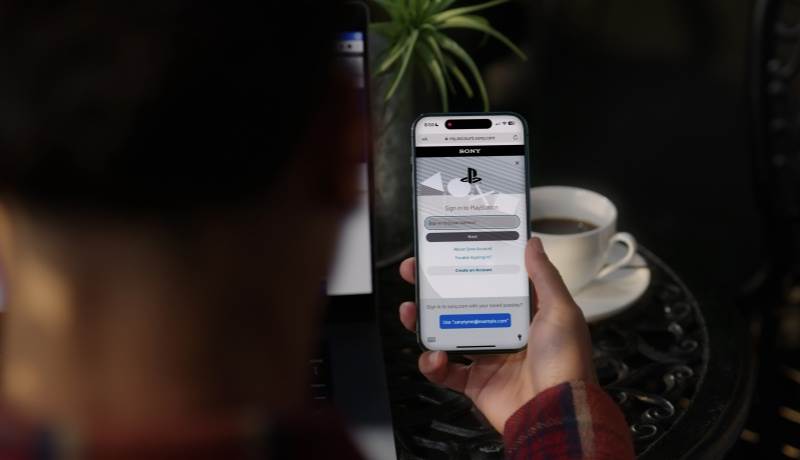
The biometrics authentication platform World (co-founded by Sam Altman) released a new version of its app, featuring end-to-end encrypted chat functionality called World Chat, as well as cryptocurrency payment capabilities similar to Venmo. The new app also allows users to receive salaries and make deposits through virtual bank accounts. Funds can be converted into cryptocurrency without needing to undergo World’s authentication process. World Chat uses end-to-end encryption, similar to Signal, and color indicators indicate whether the other party has been authenticated through the World system.
2. Pump Fun’s PUMP token repurchase program has reached a total of over $205 million.
Pump Fun’s PUMP token repurchase program has already exceeded $205 million, surpassing Raydium to become the protocol with the highest cumulative repurchase amount in the Solana ecosystem. This repurchase program has been in operation for five months, and currently, approximately 13.8% of the circulating supply has been repurchased.
3. Stripe and Paradigm jointly launched the payment blockchain Tempo, which is now available for public testing.
The payment blockchain project Tempo, jointly developed by Stripe and Paradigm, has officially opened its test network to the public. Tempo focuses on providing stablecoins for cross-border payments, allowing direct payment of gas fees using stablecoins. It also offers dedicated payment channels to ensure low transaction fees and stable transactions. Several organizations have already joined the project, including OpenAI, Shopify, Visa, Mastercard, UBS, and Klarna. Klarna plans to launch its own stablecoin, KlarnaUSD, on Tempo next year. Industry experts believe that Tempo will compete directly with Circle’s payment blockchain Arc, whose test network has attracted participation from Visa, BlackRock, and GS.
The circulation volume of PayPal’s US dollar stablecoin, PYUSD, has increased significantly in recent months, reaching over $3.8 billion.
PayPal’s PYUSD has seen a significant increase in circulation over the past few months. Driven by DeFi protocols and incentives, its value has risen to over $3.8 billion, representing a growth of約224% in three months. Currently, PYUSD is the sixth-largest stablecoin in the world, behind World Liberty Financial’s USD1. The decentralized protocol Ethena is the largest holder of PYUSD, holding approximately $1.2 billion in the coin through its custody provider Copper.
The token trading volume on OpenSea has been below $100 million over the past three weeks. This represents a decrease of over 90% compared to the peak volume in October, when weekly transactions exceeded $1 billion. However, token transactions still account for 70%-90% of the platform’s total transactions. The weekly NFT sales volume has dropped to less than $30 million. Farcaster has announced a strategic shift, moving from a social-focused approach to a wallet-driven approach to growth.
Farcaster’s co-founder Dan Romero announced that Farcaster is undergoing a major strategic transformation. The company has officially abandoned the “social-first” approach that failed to achieve product-market fit over the past 4.5 years, and instead shifting towards a “wallet-driven” growth model. The team views the newly launched, rapidly growing in-app wallet as the most effective way to achieve product-market fit so far. They have adopted a strategy of using tools like wallets first, before focusing on building a decentralized network. The goal is to convert every new wallet user into an active user of the protocol. Romero emphasized that the protocol itself remains open and decentralized, but the official application will focus on integrating wallets with social features. Previously, Farcaster acquired the token issuance platform Clanker.
7. Bittensor will experience its first token halving on December 14th. The total supply of TAO will be limited to 21 million units.
Bittensor, a decentralized network focused on artificial intelligence, will also undergo a token halving on December 14th. The daily issuance of TAO will decrease from 7200 units to 3600 units. Its circulation model is similar to Bitcoin’s, with a total supply limit of 21 million units. Grayscale analysts believe this event marks the network’s entry into a mature stage. Bittensor currently has more than 100 sub-networks, including Chutes, which provides AI serverless computing, and Ridges, which focuses on AI agent crowdsourcing development.
8. ZKsync will phase out its early version, ZKsync Lite, in 2026.
ZKsync announced that it will discontinue the ZKsync Lite network, which was launched in 2020 (originally known as ZKsync 1.0), in 2026. This decision does not affect other systems of ZKsync, and specific timelines and migration guidelines will be announced next year. ZKsync stated that Lite has fulfilled its purpose as a preliminary solution. Currently, approximately $50 million in assets are still connected to this network, and withdrawals will continue to be available.
9. Sky’s on-chain capital allocation platform, Keel, announced a $500 million investment initiative
. This initiative aims to attract more RWA tokens to Solana. The plan is called “Tokenization Regatta” and was announced by Breakpoint in Abu Dhabi. It involves providing direct funding for projects that issue RWA tokens such as bonds, credits, and funds on Solana. As an independent capital allocation institution for Sky, Keel will use approximately $6 billion in USDC reserves for income-oriented investments, with the profits re-invested back into Sky and USDC holders.
10. Hyperliquid will introduce Portfolio Margin during its network upgrade, enabling unified trading of spot and perpetual contracts.
Hyperliquid区块链将在即将到来的网络升级中引入portfolio margin机制,目前已在测试网以pre-alpha形式上线。该机制将现货与永续合约交易统一至同一账户体系,以提升资本效率,并使账户中未被占用的可借资产自动获得收益;现货与永续头寸的盈亏可相互对冲,从而降低永续仓位的清算风险。Portfolio margin支持包括现货持仓对冲永续空头等交易结构,适用于所有HIP-3 DEX,但并非所有抵押资产均可借用,未来HyperCore新资产类别也将逐步支持。