Exchange Ranking
 Top Exchanges
 24h Volume Ranking
 Popularity Ranking
 Exchange BTC Balance
 Proof of Reserves
 Decentralized Exchanges
 Funding Rate
 Funding Heatmap
 Liquidation Data
 Max Pain
 Long/Short Ratio
 Whale L/S Ratio
 Binance/Okex/Huobi L/S
 Bitfinex Margin L/S
 ETF Tracker
 Solana ETF
 XRP ETF
 Hong Kong ETF
 Bitcoin Treasuries
 Crypto Reversal
 Ethereum Reserves
 HyperLiquid Wallet Analysis
 Hyperliquid Whale Watch
 Large Transactions
 On-chain Movement
 Bitcoin ROI
 Stablecoin Market Cap
 Options Analysis
 News
 Articles
 Economic Calendar
 Features
 Wallet
 Contract Calculator


 Security
 Collections
 Watchlist
 Following
Last month, Tejaswini wrote an article discussing the concept of “new cryptocurrency banks” and the reasons why they can operate successfully today. She explained the current regulatory framework surrounding stablecoins, the convenience of banking infrastructure, and why many people store a significant portion of their wealth on the blockchain. In short, using wallets for transactions is much more convenient than using traditional banks.
That article pointed out that the basic structure of blockchain-based banks is now in place. This model is no longer just theoretical. But since the infrastructure is already operational, the question arises: where does the true value of this market lie? After all, it’s clearly not just about issuing bank cards or allowing users to use USDC. These are already fundamental features.
Some new types of banks generate value through income and savings. Others earn value through transaction volume and the circulation of stablecoins. Still others position themselves closer to the infrastructure level, where profit margins can be quite different.
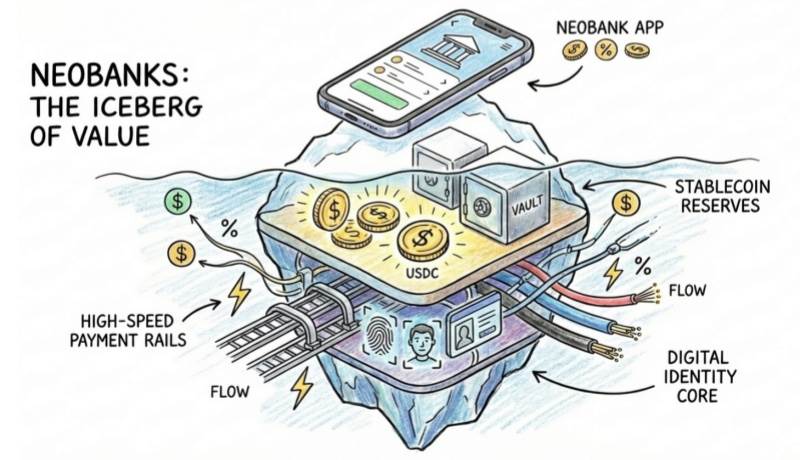
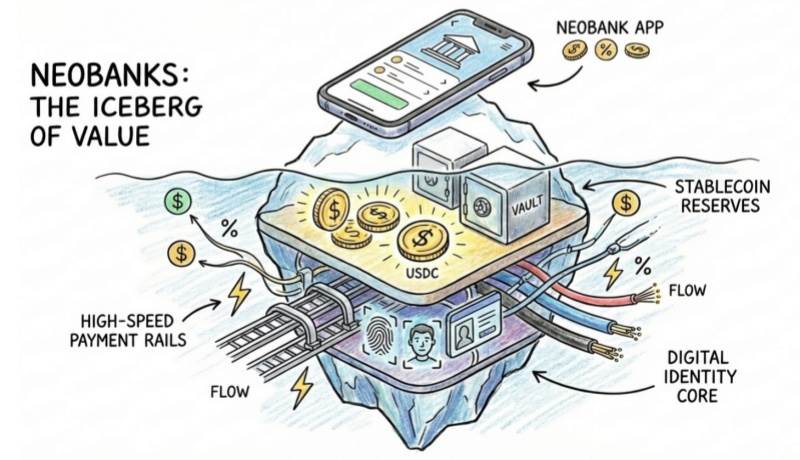
Today’s article will explore the next level of this category, and how this group can be further divided based on differences in economic efficiency. Let’s get started!
Where exactly does the value lie within new banks?
纵观全球最大的几家新兴银行,最有价值的并非一定是拥有最多客户的银行,而是那些能够从每位客户身上获得可观收益的银行。Revolut就是一个典型的例子。它的客户数量少于Nubank,但估值却更高,因为它的盈利模式涵盖外汇、交易、财富管理和高端服务等多个领域。而Nubank则通过持有信贷并收取利息而非依赖信用卡手续费来构建其庞大的业务。微众银行的运营模式则截然不同,它通过极低的成本和直接融入腾讯生态系统来实现盈利。
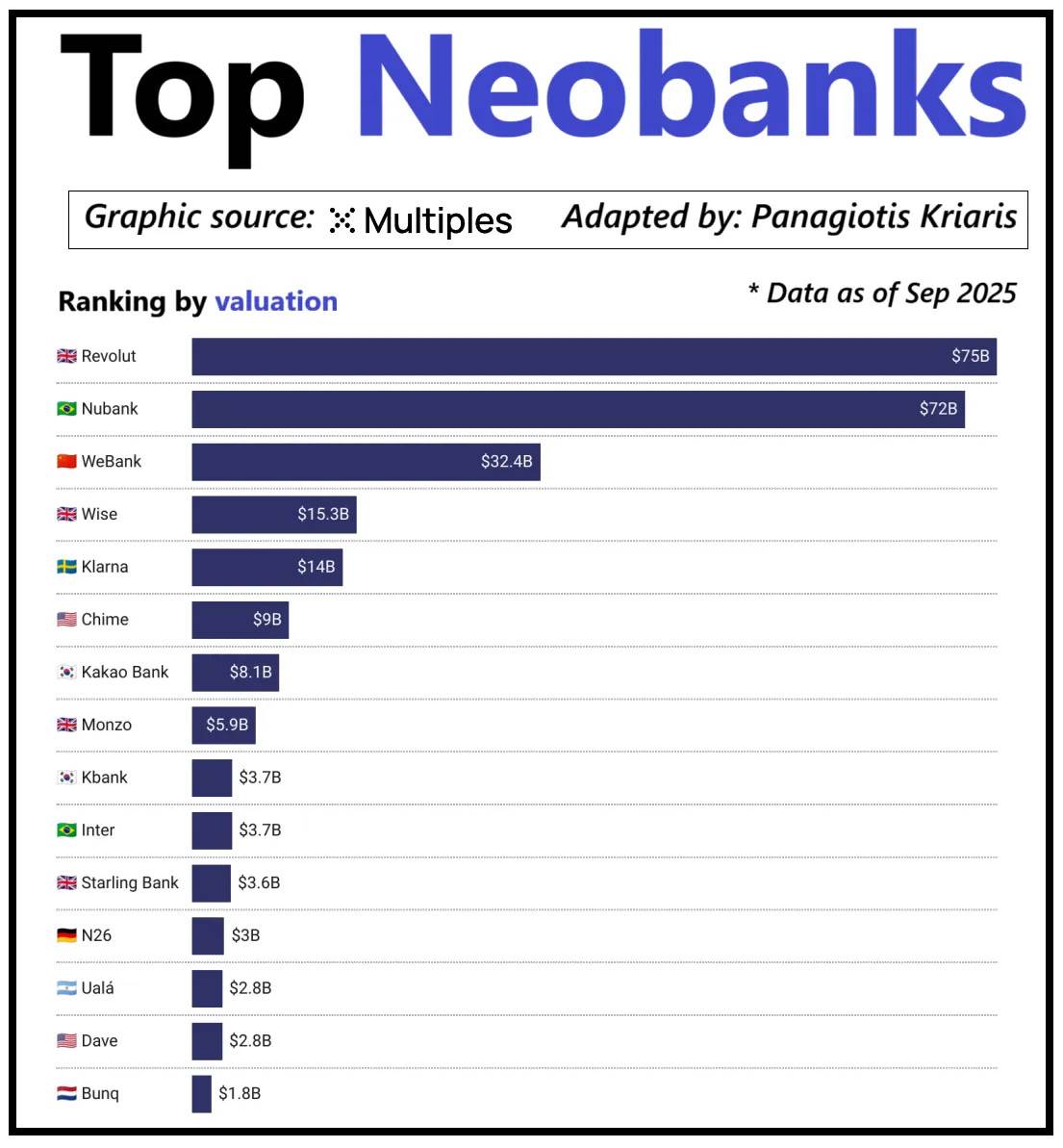
@Multiples
加密新银行如今正步入这个阶段。仅仅推出一款带卡的钱包并不是一种商业模式;任何人都可以做到。真正的区别在于每个平台选择的盈利模式。有些平台选择从客户余额中获利,有些平台选择通过其平台进行稳定币支付,还有一些平台则选择发行或管理稳定币本身,因为这才是最稳定、最可预测的收入来源。
This is also the reason why stablecoins are now considered to be particularly important. In stablecoins supported by reserves, the actual returns come from the interest earned on the reserves held in government bonds or cash equivalents. This income belongs to the issuer, rather than being distributed to the virtual banks that allow users to hold or use tokens. This mechanism isn’t unique to cryptocurrencies. Even in traditional financial systems, virtual banks don’t earn interest on customers’ deposits; only the cooperating banks that actually hold the funds can receive interest. The role of stablecoins is to make this separation even more apparent and centralized. In stablecoins backed by reserves, entities that hold government bonds and cash equivalents earn interest, while consumer applications are mainly responsible for distributing tokens and providing a good user experience.
As the use of stablecoins increases, the applications responsible for user registration, transaction matching, and establishing trust often don’t benefit from the underlying reserves at all. It’s this gap that drives companies to undergo vertical transformation, no longer merely acting as mere interfaces, but instead becoming more deeply involved in the systems that actually hold and manage the funds.
This is why companies like Stripe and Circle are deepening their involvement in the field of stablecoins. They no longer limit themselves to just distribution layers, but instead expand their operations into areas such as settlement and reserve management. After all, these aspects are crucial for achieving real economic benefits. Stripe has launched Tempo, a new blockchain designed for low-cost, immediate transfer of stablecoins. Stripe doesn’t rely on existing blockchains like Ethereum or Solana. Instead, it builds its own infrastructure to handle settlement, fees, and throughput—all of which directly contribute to better economic outcomes.
Circle also uses Arc to achieve similar functionality. Arc is Circle’s own settlement network for USDC. It allows USDC to be transferred between institutions quickly, without causing congestion on public blockchains or incurring high fees. In essence, Arc enables Circle to operate as the “backend” of USDC, without relying on external infrastructure.
Privacy is also extremely important. As Praktek explains in his book “Making Blockchain Great Again,” public blockchains record every transaction involving stablecoins in a transparent ledger. While this works well for open financial systems, it creates problems in business scenarios such as salary payments, vendor payments, and fund management, where the amount of transactions, counterparties, and payment methods are sensitive information.
In fact, this level of transparency allows third parties to easily use block explorers and chain analysis tools to reconstruct a company’s internal financial structure. Arc avoids this situation by allowing institutions to settle transactions using USDC within the public block space. This ensures that while maintaining the speed and efficiency of stablecoin transactions, the confidentiality of transactions is also preserved.

Stablecoins are breaking away from the old payment system
. If stablecoins truly represent the core value, then the traditional payment system becomes outdated. Today’s payment systems involve multiple intermediate steps: payment gateways handle payments, payment processors route payments, card networks approve transactions, and banks handle final settlements. Each step adds to costs and delays.
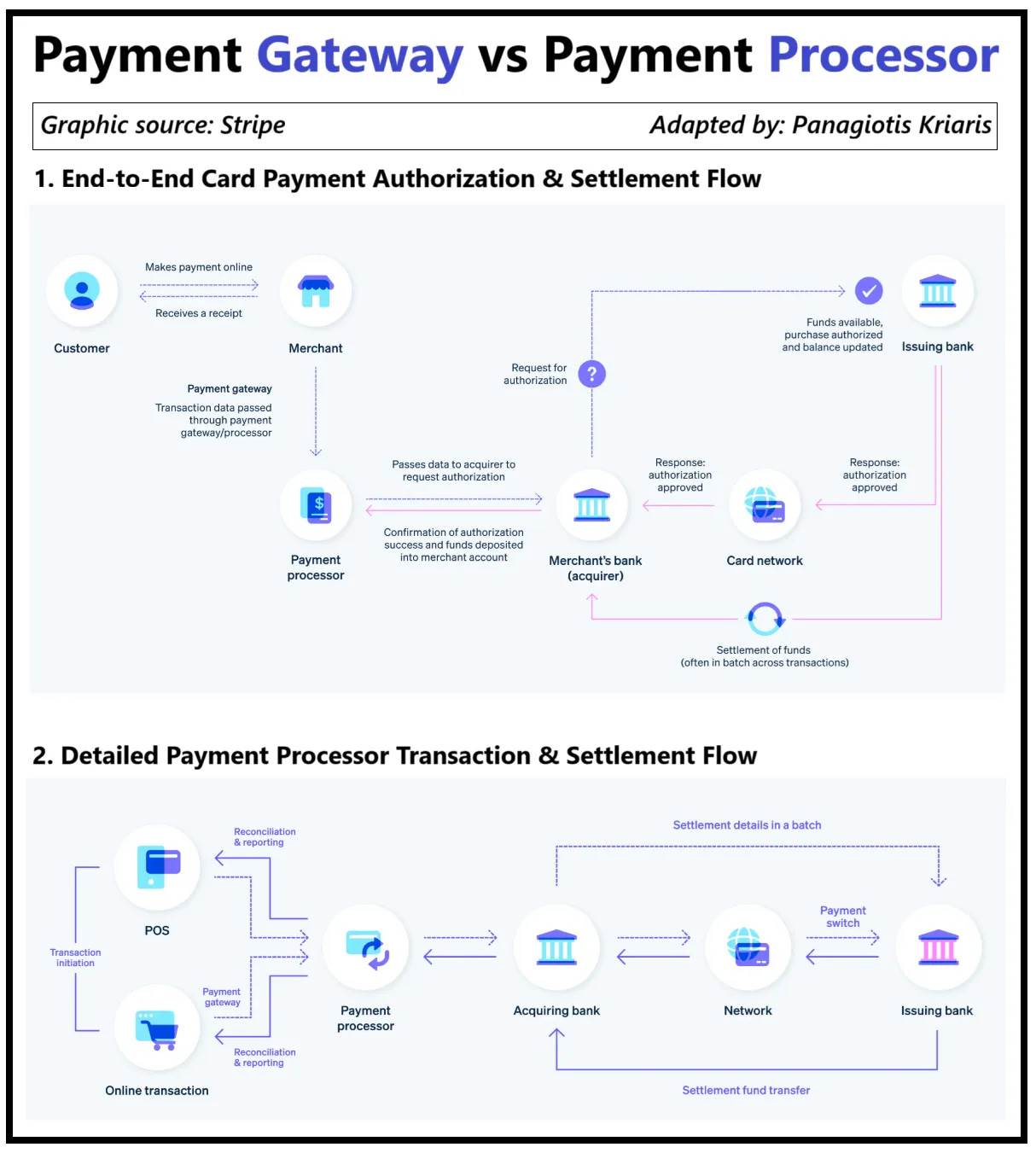
@Panagiotis Kriais
Stablecoins bypass most of these payment steps. Sending stablecoins doesn’t require card networks, acquiring institutions, or bulk settlement processes. It’s a direct transfer, with “the track” being merely the network through which the transaction is settled. This is crucial for new types of banks, as it changes users’ expectations. If users can transfer funds instantly to other locations, they won’t accept the slow or expensive transfer methods used by traditional banks. New banks must either integrate closely with these stablecoin tracks or risk becoming one of the slowest links in the payment chain.
This transformation also changed the business model. In the old system, since payment networks were integrated throughout the entire process, new banks could earn predictable profits from credit card transactions. However, in the new system, such profit margins have significantly decreased. When stablecoins are used for peer-to-peer transactions, there are no fees to be charged at all. Therefore, those new banks that rely entirely on credit card payments now have to compete with a payment channel that eliminates all fees.
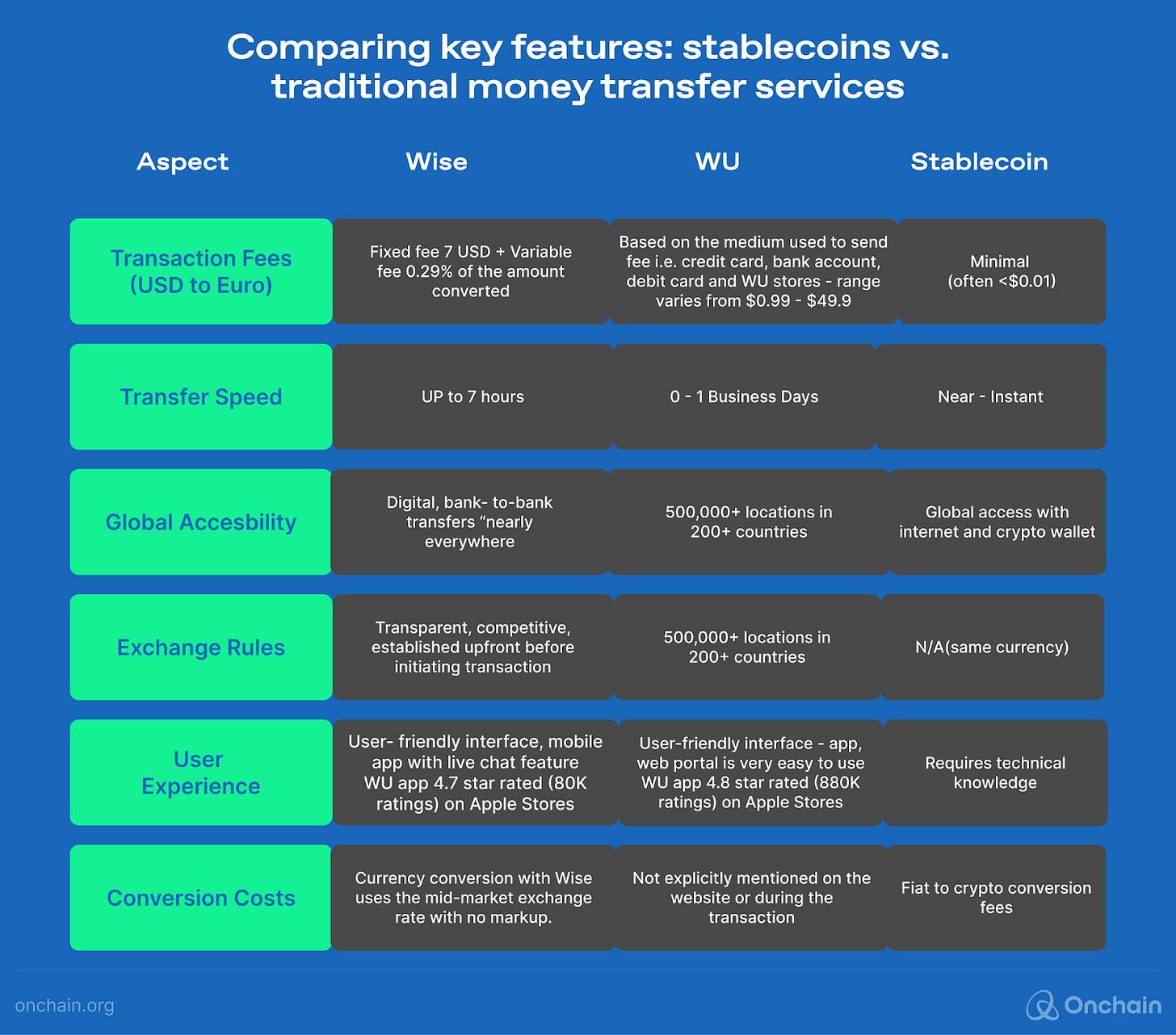
As a result, the role of new banks has shifted from being “card issuers” to being more like gateways for financial transactions. New banks must become hubs for stablecoin transactions, as payment methods are shifting from bank cards to direct transfers. Banks that can handle these transactions effectively will gain a significant advantage, as once users start using new banks as their default method for transferring funds, it becomes difficult for other alternatives to take over.
Identity is becoming the new “account”.
With stablecoins becoming faster and cheaper, identity verification becomes equally important. The old system treated identity verification as a separate step: banks collected documents, stored them, and processed them in the background. But when funds flow between wallets instantly, every transaction depends on credible identities. Without credible identities, compliance, fraud control, and even basic permission management may fail.
This is why identity verification is now integrated directly with payments. The world is moving away from fragmented KYC processes across various applications, and instead adopting portable, verified identities that can be used across services, countries, and platforms.
欧洲正在通过欧洲数字身份钱包(EUDIW)实现这一转变。欧盟正在构建一个由政府支持、所有居民和企业均可使用的单一身份钱包,取代以往每个银行、应用程序和服务各自运行验证流程的做法。该钱包不仅存储身份信息,还包含经过验证的凭证(年龄、居住地、驾照、税务信息),允许用户签署文件,并直接集成支付功能。用户只需一步即可完成身份验证、仅分享必要信息并完成支付。
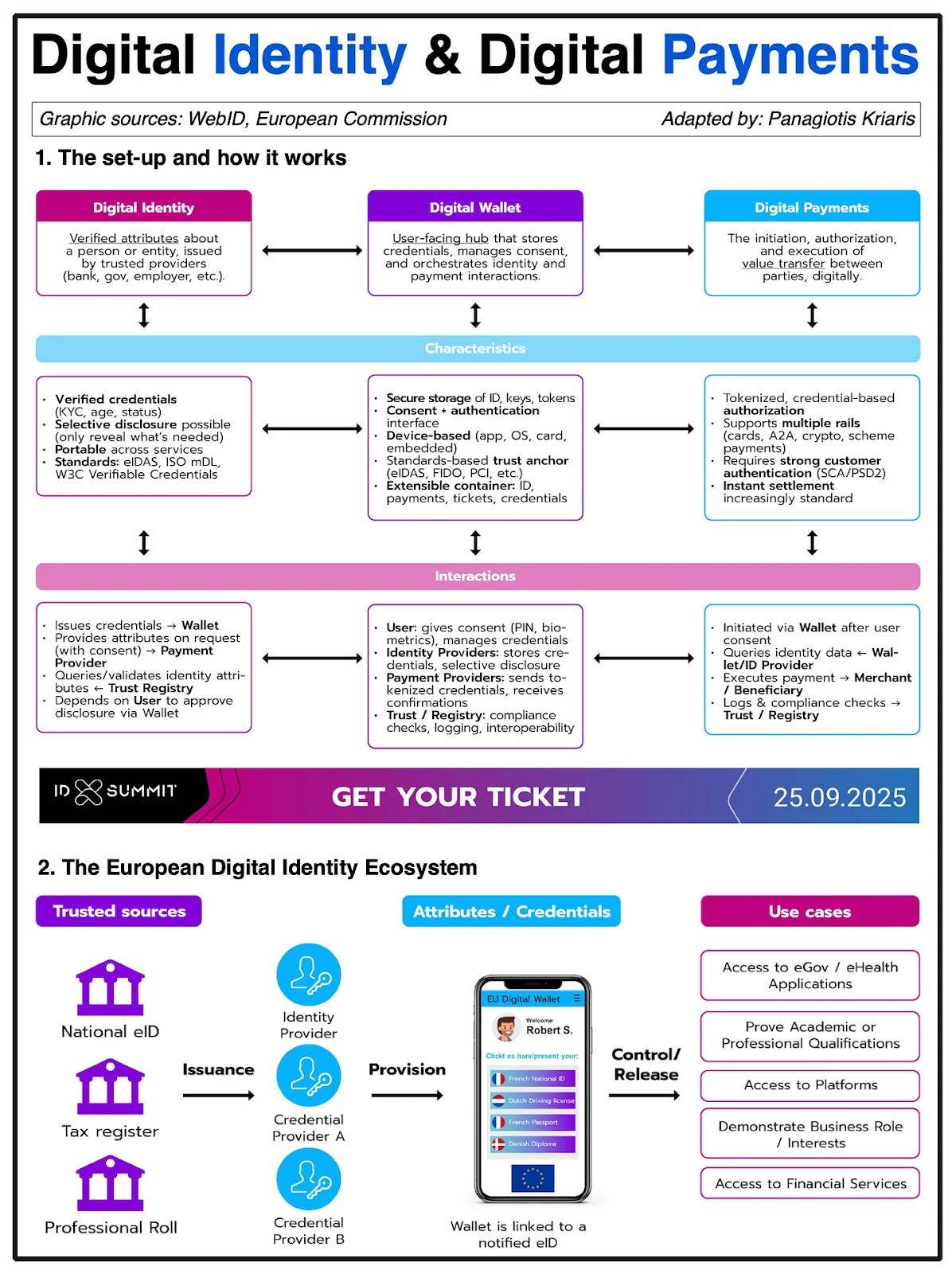
@Panagiotis Kriais
如果欧盟身份识别与福利倡议(EUDIW)成功,它将彻底颠覆整个欧洲银行体系。你的身份将成为核心,而非你的银行账户。这将使身份成为公共产品,并使传统银行和新型银行变得可以相互替代,除非它们建立在这个可信赖的身份基础之上。
加密货币的发展方向也相同。链上身份认证实验已经进行了多年,虽然没有一个是完美的,但它们都指向同一个方向。例如:
● Worldcoin试图创建一个全球性的人格证明机制,以确认用户是独一无二的人类,同时避免泄露不必要的信息。
● Gitcoin Passport整合了多种信誉和验证信号,以减少治理和奖励机制中的女巫攻击。
● Polygon ID、zkPass和ZK-proof框架Users are allowed to prove certain facts without revealing underlying data (for example, “I am over 18 years old”, “I live in Germany”, “I have completed KYC verification”).
● ENS+ off-chain credentials now allow wallets to display not only balances but also social and identity-related information.
Most cryptocurrency identity projects aim to solve the same problem: enabling users to prove their identity or provide specific information about themselves, without having to store this information on a single platform. This aligns with the direction pursued by Europe through the EUDIW initiative: an identity can be moved along with the user and used across different applications, without having to start from scratch each time.
If this becomes the norm, it will also change how new types of banks operate. Currently, new banks view identity as something they can control: users register, the bank verifies their identity, and then a “account” is created for them. But if identities are carried by the users themselves, new banks can become one of the services that allow access to verified identities. This will simplify registration processes, comply with regulations, and reduce the frequency of repeated verifications. It also means that wallets (rather than new banks) will become the primary means of holding user ownership.
What is this title?
In summary, it appears that those elements that were once crucial in the new banking architecture are no longer so important today. The number of users isn’t a sustainable advantage anymore; bank cards aren’t such an advantage either. Even a simple user interface isn’t enough to create a competitive edge. The real differentiation lies in three aspects: the financial products through which new banks generate profits, the channels they use for fund transfer, and the identity information they leverage. Everything else is becoming increasingly interchangeable.
Successful new banks won’t be mere simplifications of traditional banks. They’re more like financial systems centered around users’ wallets, relying on a single core economic engine, as this determines their profitability and resilience. Overall, this engine can be divided into three categories:
1. New banks that rely on returns as their main source of income
These platforms succeed by becoming the default place where users store stablecoins. If they manage large amounts of users’ balances, they can earn profits from various sources—such as stablecoins supported by the government, blockchain-based revenues, or collateralized investments—without needing millions of users. Their advantage lies in the fact that holding funds is more profitable than simply transferring them. These new banks are more like modern savings platforms disguised as wallets, offering the most seamless experience for “holding and earning returns”.
2. Payment-centric new banks
Here, value stems from trading volume. These new types of banks have become the primary channels for users to send, receive, and use stablecoins. They are closely integrated with payment processors, merchants, remittance and withdrawal services, as well as cross-border transactions. Their business model is similar to that of global payment companies: the profit margin per transaction is relatively low, but by becoming the preferred choice for users, they can achieve significant overall revenue. Their advantage lies in user familiarity and reliability, as well as being the preferred option when users need to transfer funds.
3. Stablecoin infrastructure-based banks
This is the most advanced category, with the greatest potential for development. These new banks not only trade stablecoins; their goal is to own the stablecoins themselves, or at least control part of the underlying infrastructure. This includes issuance, redemption, reserve management, and settlement processes. The profit margins are highest because those who control the reserves can earn the most. These banks combine consumer functionality with infrastructure development goals. They are close to becoming complete financial networks, rather than just applications.
In simple terms: profit-oriented banks make money when users stay with them; payment-oriented banks make money when users switch. Infrastructure-based banks, on the other hand, can make money regardless of user behavior.
I expect the market to be divided into two distinctly different groups of participants. One group will continue to develop applications for consumers, focusing on integrating existing payment systems into these applications, with the goal of making them simple and easy to use, allowing users to switch between different applications more conveniently. The other group will engage more deeply in those aspects of the system that can create value: stablecoin issuance, routing, settlement, and identity integration. These participants can be described not as “applications,” but rather as infrastructure that operates under the guise of consumer applications. They are harder to replace, as they will gradually become the operating systems through which funds flow within the blockchain environment.